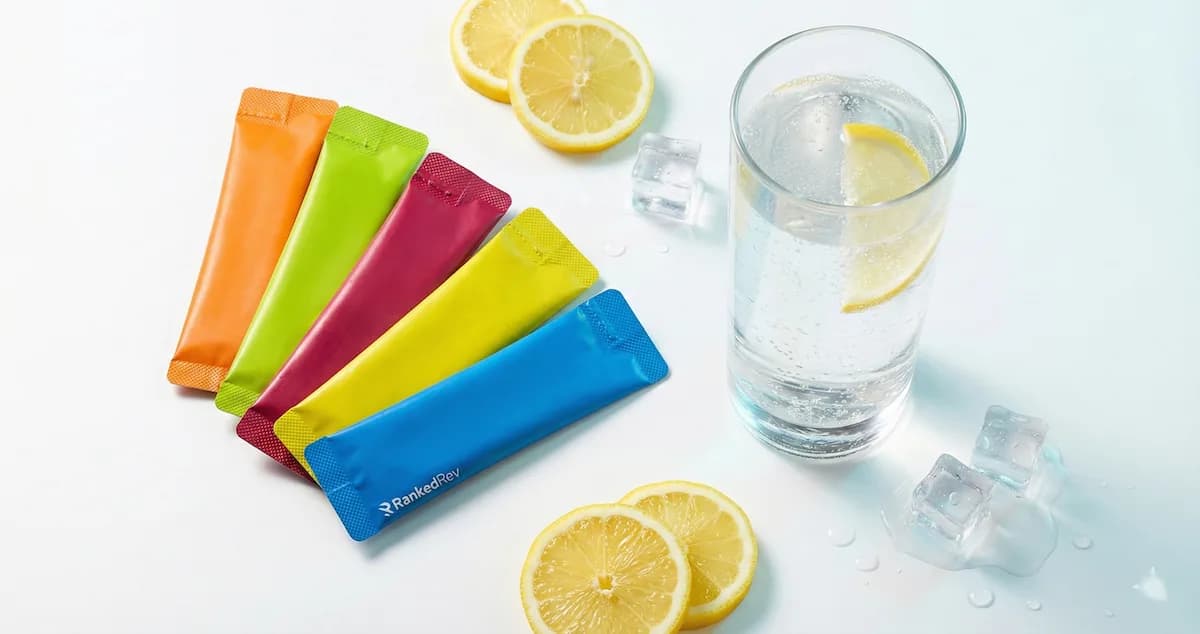
Best Electrolytes in 2026
Powders, tablets, and ready-to-drink — we compared the top electrolyte supplements for hydration, taste, sodium content, and value.

Water Is Not Enough (and the Sports Drink Industry Knows It)
The standard advice for hydration has been "drink more water" for decades. And for most sedentary people in temperate climates, that advice is fine. But if you exercise regularly, live in a hot climate, follow a low-carb diet, or have ever experienced the afternoon brain fog that a glass of water does not fix, the problem is not water volume. The problem is electrolytes.
Electrolytes, sodium, potassium, magnesium, and calcium, are minerals that carry electrical charges in your body. They regulate nerve signaling, muscle contraction, fluid balance, and pH levels. When you sweat, you lose them. When you drink plain water without replacing them, you dilute what remains in your bloodstream. The result is not dramatic dehydration. It is the subtle kind: reduced cognitive performance, earlier fatigue during exercise, muscle cramps, and the vague feeling that something is off even though you have been "drinking plenty of water."
The sports drink industry recognized this decades ago, but their solution, Gatorade, Powerade, and their imitators, dumps 34 grams of sugar into a bottle alongside modest electrolyte doses. The newer generation of electrolyte products takes a different approach: higher sodium, meaningful potassium and magnesium, zero or minimal sugar, and no artificial colors or flavors. This guide covers the best electrolytes in that newer category, evaluated using our scoring methodology.
What to Look For in an Electrolyte Supplement
Not all electrolyte products are created equal. Here are the criteria that separate effective hydration from expensive flavored water.
Sodium content. Sodium is the primary electrolyte lost in sweat, approximately 800-1500mg per liter for most people, though heavy sweaters can lose significantly more. Most sports drinks provide only 150-300mg per serving, which barely replaces what you lose during a moderate workout. The best electrolyte supplements provide 500-1000mg of sodium per serving. If you are exercising, sweating, or following a low-carb diet (which increases sodium excretion through the kidneys), you want a product in this range.
Potassium content. Potassium works in concert with sodium to regulate fluid balance and muscle function. The recommended daily intake is 2,600-3,400mg, and most Americans get far less. A good electrolyte supplement provides 200-400mg per serving to supplement dietary intake without overshooting.
Magnesium content. Roughly 50% of Americans are estimated to be deficient in magnesium, and deficiency symptoms, muscle cramps, poor sleep, anxiety, overlap heavily with dehydration symptoms. A quality electrolyte product includes 50-100mg of magnesium per serving, ideally in a bioavailable form like magnesium citrate or malate rather than the cheaper magnesium oxide.
Sugar and artificial sweetener content. Traditional sports drinks use sugar as a carbohydrate fuel source during exercise, which has legitimate applications for endurance athletes. But for everyday hydration, sugar is unnecessary calories. The best modern electrolyte products use zero sugar or minimal amounts, with sweetness from stevia, monk fruit, or small amounts of citric acid. Avoid products that use artificial sweeteners like sucralose and acesulfame potassium if ingredient purity is a priority.
Artificial ingredients. Artificial colors, flavors, and preservatives have no business in a hydration product. The best options on this list use natural flavoring and coloring, or none at all.
Form factor. Electrolyte supplements come as powders (stick packs or tubs), tablets (fizzy drop-in), and liquids. Powders offer the best value per serving and the most flexibility in concentration. Tablets are convenient for travel but typically provide lower doses. Liquids are the most expensive per serving but require zero prep.
When you actually need electrolytes. Not every workout or warm day requires supplementation. If you exercise for under 60 minutes at moderate intensity in a comfortable climate and eat a balanced diet, food and water are likely sufficient. Electrolyte supplementation becomes genuinely important during prolonged exercise (60+ minutes), heavy sweating, hot or humid conditions, low-carb or fasting protocols (which increase electrolyte excretion), and during illness involving vomiting or diarrhea.
Our Top Picks
Redmond Re-Lyte Hydration: Best Overall

Redmond Re-Lyte has earned its reputation by doing something that sounds simple but most brands fail at: providing therapeutic doses of electrolytes from clean sources without unnecessary additives. Each serving delivers 810mg of sodium (from Redmond Real Salt, an unrefined ancient sea salt), 400mg of potassium, 75mg of magnesium, 60mg of calcium, and 150mg of chloride. That sodium-potassium ratio closely mirrors what the body actually loses in sweat.
The ingredient list is remarkably short: Redmond Real Salt, potassium citrate, magnesium malate, calcium citrate, coconut water powder, citric acid, natural flavors, and stevia leaf extract. No artificial colors, no artificial flavors, no sugar, no fillers. The magnesium is in the malate form, which is one of the better-absorbed forms and less likely to cause digestive issues than magnesium citrate or oxide.
What makes Redmond unique is the salt source. Redmond Real Salt is mined from an ancient sea bed in Utah and contains over 60 trace minerals alongside its sodium content. Whether those trace minerals make a meaningful physiological difference is debated, but the principle of using a minimally processed, mineral-rich salt source rather than refined sodium chloride is sound.
The Mixed Berry flavor is subtle rather than overpowering, it tastes like lightly flavored mineral water rather than a sugary fruit punch. This is a feature, not a bug. You can drink it all day without flavor fatigue, which matters if you are using it for daily hydration rather than just during workouts. At 60 servings per jar and a price around $0.38 per serving, the value is outstanding.
The downside is the stevia aftertaste, which is noticeable if you are sensitive to it. The unflavored version eliminates this issue entirely and mixes invisibly into any beverage. Read our full review for the complete analysis.
LMNT Electrolyte Drink Mix: Best for Keto and Fasting
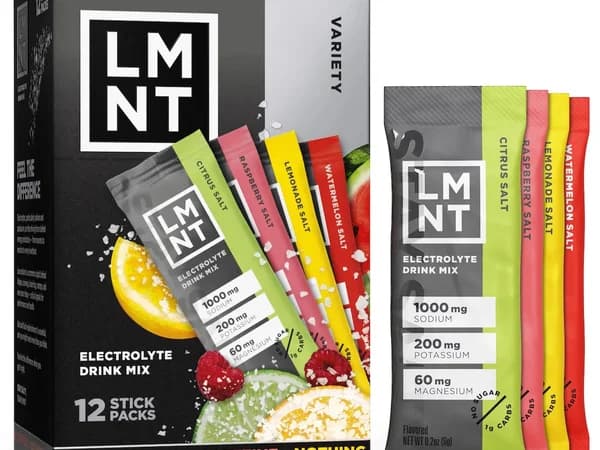
LMNT made a bold bet when it launched: 1000mg of sodium per stick pack, zero sugar, and a price point that made people blink. The bet paid off. LMNT has become the default electrolyte recommendation in the keto, fasting, and low-carb communities, and the reason is simple, when you restrict carbohydrates, your kidneys excrete more sodium, and LMNT provides enough to compensate.
Each stick pack delivers 1000mg of sodium, 200mg of potassium, and 60mg of magnesium. That sodium number is intentionally high and is LMNT's defining feature. For people on standard diets who get ample sodium from food, it may be more than necessary. For low-carb dieters, heavy sweaters, and endurance athletes, it is exactly what they need.
The ingredient list is clean: salt, potassium chloride, magnesium malate, citric acid, natural flavors, and stevia leaf extract. No sugar, no artificial ingredients, no fillers. The flavor range is excellent, Citrus Salt, Watermelon Salt, Raspberry Salt, and several limited-edition options. The taste is salty (obviously) but the flavoring balances it well. If you have ever put a pinch of salt in your water, LMNT is a more sophisticated version of that idea.
The stick-pack format is convenient for travel and portion control, but it makes LMNT the most expensive option on this list at approximately $1.50 per serving when purchased individually. Buying in bulk through a subscription brings the price down, but it is still a premium product. For the sodium dose and convenience, many users find it worth the cost. See our full review for our testing results.
Transparent Labs Hydrate: Best for Training
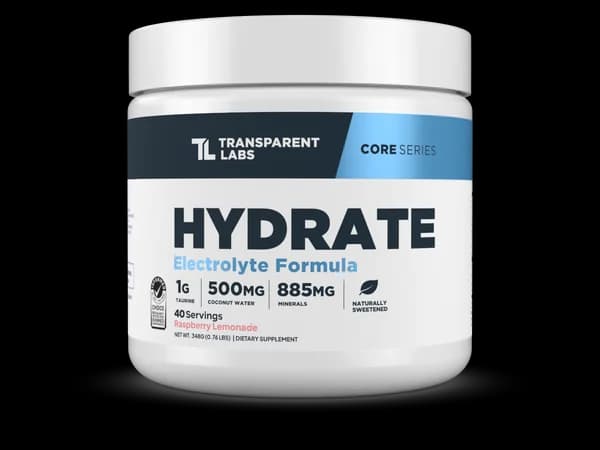
Transparent Labs builds every product around the same principle: list every ingredient with its exact dose, publish third-party lab results, and use no proprietary blends. Their Hydrate formula is no exception. Each serving provides 500mg of sodium, 300mg of potassium, 100mg of magnesium, and 50mg of calcium, plus 200mg of coconut water powder and a vitamin complex including B6, B12, and vitamin C.
What sets Hydrate apart from pure electrolyte products is the inclusion of performance-supporting ingredients. The formula adds 1000mg of taurine (an amino acid that supports cellular hydration and has anti-cramping properties), 100mg of coconut water powder for natural potassium and trace minerals, and a vitamin B complex for energy metabolism. This makes it a more complete intra-workout hydration product than straight electrolyte formulas.
The ingredient quality is high: magnesium bisglycinate (the most bioavailable form), no artificial colors or flavors, and sweetened with stevia. Transparent Labs publishes Certificates of Analysis for every batch on their website, which is the same transparency practice I highlighted in their protein powder. If you have read my best protein powders guide, you know Transparent Labs takes label accuracy seriously.
At 40 servings per tub and roughly $0.75 per serving, Hydrate sits in the mid-range for pricing. The Raspberry Lemonade flavor is the standout, tangy and refreshing without being sweet. The downside is the lower sodium dose compared to Re-Lyte and LMNT. At 500mg, it is adequate for most training sessions but may not be enough for heavy sweaters or extended endurance work. Read our full review for the full breakdown.
Gnarly Nutrition Hydrate: Best Budget Option

Gnarly Nutrition is a Utah-based brand that started in the climbing and outdoor sports community before expanding to general fitness. Their Hydrate formula is NSF Certified for Sport, the same gold-standard certification that I look for in protein powders and bars, which means independent labs have verified the label accuracy and screened for banned substances.
Each serving provides 240mg of sodium, 150mg of potassium, and 50mg of magnesium, along with a vitamin and mineral blend including zinc, selenium, and B vitamins. The sodium dose is the lowest on this list, which makes Gnarly best suited for lighter activity, daily hydration top-ups, or as a complement to dietary sodium intake rather than as a standalone heavy-sweat replacement.
The formula uses organic cane sugar (4 grams per serving) rather than artificial sweeteners or stevia. This is a deliberate choice, the small amount of glucose actually enhances sodium absorption through the SGLT1 cotransporter in the small intestine, which is the same principle behind oral rehydration solutions used in medical settings. If you prefer some sugar over stevia, Gnarly's approach has a physiological rationale.
At approximately $0.50 per serving with 40 servings per bag, Gnarly offers solid value with the added reassurance of NSF certification. The Orange Pineapple flavor is bright and tropical without being cloying. The trade-off is the lower electrolyte doses, for serious athletic hydration, you may need to double-scoop. See our full review for the detailed assessment.
Head-to-Head: Redmond Re-Lyte vs LMNT
These two dominate the clean electrolyte market, and the comparison comes down to priorities.
Sodium per serving: LMNT leads at 1000mg versus Re-Lyte's 810mg. For keto dieters and heavy sweaters who need maximum sodium replacement, LMNT provides more per serving.
Potassium per serving: Re-Lyte wins at 400mg versus LMNT's 200mg. The higher potassium supports better sodium-potassium balance, which is important for cardiovascular health and muscle function.
Magnesium quality: Both use magnesium malate, and Re-Lyte provides slightly more (75mg vs 60mg). A narrow edge for Re-Lyte.
Ingredient sourcing: Re-Lyte uses Redmond Real Salt with its trace mineral profile. LMNT uses standard salt. Both are clean formulas with no artificial ingredients. The trace mineral argument gives Re-Lyte a slight edge for purists.
Taste and flavor range: LMNT offers more flavors and has a more polished taste profile. Re-Lyte's flavors are subtler and more functional. This is purely personal preference.
Value: Re-Lyte wins decisively at roughly $0.38 per serving versus LMNT's $1.50. LMNT's stick-pack format adds convenience but also cost.
The verdict: For daily hydration and overall electrolyte balance on a budget, Re-Lyte is the better choice. For keto-specific sodium needs, travel convenience, and a premium flavor experience, LMNT justifies its price for those who can afford it. Both are excellent products that I recommend without hesitation.
Who Actually Needs Electrolyte Supplementation?
Electrolyte marketing would have you believe that everyone needs supplementation all the time. That is not true. Here is a realistic breakdown of who benefits most.
Athletes and regular exercisers. If you train for 60+ minutes, especially in heat, you are losing meaningful amounts of sodium, potassium, and magnesium through sweat. Electrolyte supplementation during and after training can improve performance, reduce cramping, and accelerate recovery. The harder and longer you train, the more you need.
Low-carb and keto dieters. This is the group that benefits most dramatically. When carbohydrate intake drops below 50 grams per day, the kidneys shift from retaining sodium to excreting it. The "keto flu", headaches, fatigue, brain fog, muscle cramps, that many people experience in the first week of a low-carb diet is primarily an electrolyte deficiency, not a carbohydrate withdrawal. Supplementing sodium (3-5 grams per day) and potassium (1-3 grams per day) typically resolves symptoms within 24-48 hours.
People in hot climates. If you live somewhere that regularly exceeds 85 degrees Fahrenheit and you spend time outdoors, you are sweating more electrolytes than you realize. Even if you are not exercising, ambient heat increases sweat production and electrolyte loss.
During illness. Vomiting, diarrhea, and fever all deplete electrolytes rapidly. This is why oral rehydration solutions (essentially water, sodium, potassium, and a small amount of glucose) are the front-line treatment for dehydration in medical settings worldwide. Having electrolyte packets on hand for sick days is a simple and effective precaution.
The average sedentary person in a temperate climate eating a balanced diet probably does not need electrolyte supplementation. Whole foods, bananas, avocados, leafy greens, nuts, dairy, and salted foods, provide sufficient electrolytes for most people who are not sweating heavily. If you fall into this category, save your money.
The Bottom Line
The best electrolytes in 2026 have moved well beyond the sugar-loaded sports drinks of the previous generation. The products on this list deliver therapeutic doses of sodium, potassium, and magnesium from clean sources without the artificial ingredients, excessive sugar, or underwhelming doses that plague most hydration products.
Redmond Re-Lyte (9.1) earns the top spot for its balanced electrolyte ratios, mineral-rich salt source, and exceptional value at $0.38 per serving. LMNT (8.9) is the keto and fasting specialist with the highest sodium dose and best flavor range, though at a premium price. Transparent Labs Hydrate (8.9) adds training-specific ingredients like taurine and B vitamins for a more complete workout hydration solution. And Gnarly Nutrition Hydrate (8.2) provides NSF Certified for Sport assurance at the most accessible price point.
Hydration is not just about water volume. It is about what is in the water. Get the electrolytes right, and you will notice the difference in how you feel, train, and recover.
Frequently Asked Questions
Can you take too many electrolytes?
Yes. Excessive sodium intake can raise blood pressure, and excessive potassium supplementation can cause dangerous cardiac arrhythmias in people with kidney impairment. For healthy individuals with normal kidney function, the amounts in these products are safe within recommended servings. If you are taking multiple servings per day, especially of high-sodium products like LMNT, monitor your total daily sodium intake and consult your doctor if you have hypertension or kidney concerns.
Do electrolytes break a fast?
Pure electrolyte supplements with zero calories, like LMNT, Re-Lyte, and Transparent Labs Hydrate, do not break a fast in any meaningful metabolic sense. They contain no calories, no protein, and no carbohydrates that would trigger an insulin response. In fact, electrolyte supplementation during fasting is recommended by most fasting researchers because fasting increases electrolyte excretion through the kidneys.
Is salt really good for you?
The relationship between sodium and health is more nuanced than "salt is bad." Current research suggests that the optimal sodium intake for most adults is 3-5 grams per day, higher than the outdated 2.3-gram recommendation from older guidelines. Both very low and very high sodium intakes are associated with increased cardiovascular risk. For active people who sweat regularly, the risk of too little sodium is often greater than the risk of too much. That said, individuals with salt-sensitive hypertension should follow their doctor's guidance.
What is the difference between electrolyte powder and electrolyte tablets?
Powders dissolve fully in water and typically provide higher electrolyte doses per serving, plus more flexibility in concentration (you can add more or less powder to taste). Tablets (fizzy drop-in style) are more portable and convenient but usually provide lower doses of each electrolyte. Powders are generally better value per serving. Tablets are better for travel and on-the-go use. If you are choosing one format, powders are more versatile.


