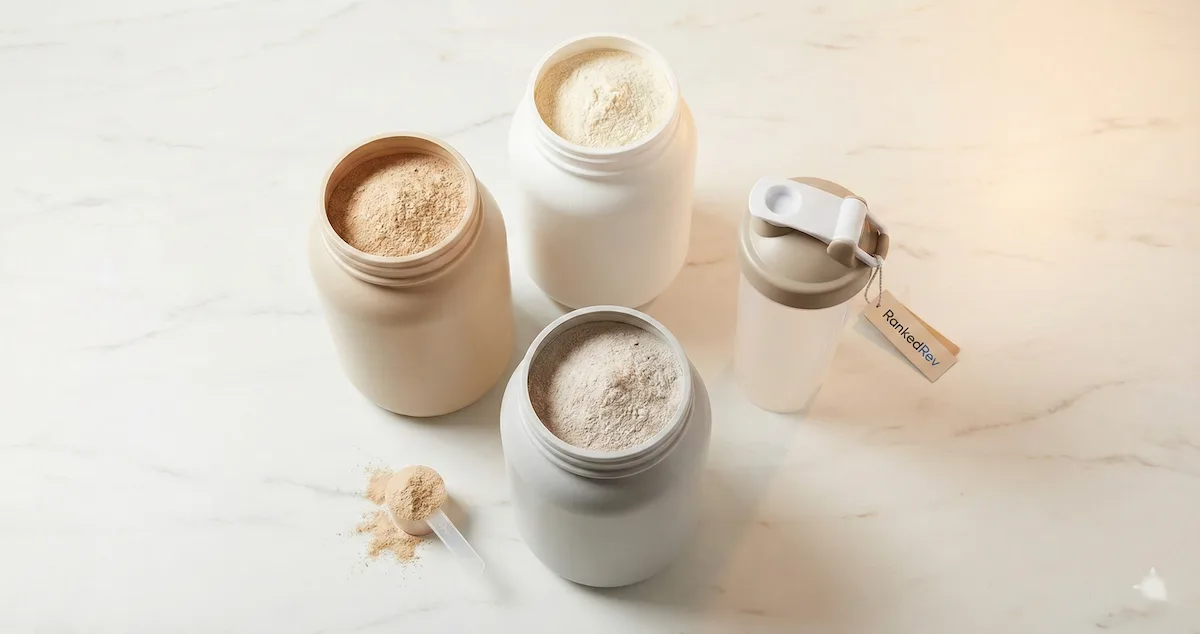
Best Protein Powders in 2026
Whey, casein, plant-based — we compared the top protein powders for taste, mixability, nutrition profile, and value per serving.

The Protein Powder Industry Has a Trust Problem
Walk into any supplement store and you will find protein powders making claims that sound almost medical, "clinically dosed," "pharmaceutical grade," "lab tested." But the supplement industry in the United States is not regulated like food or pharmaceuticals. The FDA does not require pre-market approval for protein powders, and manufacturers are responsible for their own testing. That is like asking students to grade their own exams.
The result is an industry where label accuracy is disturbingly inconsistent. A 2024 analysis by the Clean Label Project found that 75% of the protein powders they tested contained measurable levels of lead, and 55% contained measurable levels of BPA. A separate study by Labdoor found that actual protein content deviated from label claims by an average of 15% across the products they tested. Some powders contained 30% less protein than advertised.
This guide takes a different approach from most protein powder roundups. Instead of ranking by taste or mixability, I am prioritizing the things that actually matter for your health: third-party testing certifications, heavy metal screening results, ingredient transparency, and label accuracy. Because the best-tasting protein powder in the world is worthless if you cannot trust what is in it. For the complete ranked list, see our best protein powders category page.
What Actually Matters When Choosing a Protein Powder
Before I walk through specific products, here are the criteria that separate trustworthy protein powders from marketing-first brands. These are the same factors behind our scoring methodology.
Third-party testing certifications. NSF Certified for Sport and Informed Sport are the two gold standards. Both require batch-by-batch testing for banned substances, label accuracy verification, and facility audits. If a protein powder carries one of these certifications, you can be confident that what is on the label matches what is in the tub.
Heavy metal screening. Protein powders can accumulate heavy metals, lead, arsenic, cadmium, and mercury, from soil contamination, manufacturing processes, or ingredient sourcing. Plant-based proteins are particularly susceptible because plants absorb heavy metals from soil. Look for brands that publish their heavy metal testing results or carry Clean Label Project certification.
Protein per serving and amino acid profile. Not all protein is created equal. A complete amino acid profile, meaning all nine essential amino acids are present in adequate amounts, is critical for muscle protein synthesis. Whey and casein are naturally complete. Plant proteins like pea and rice are incomplete individually but complementary when combined.
Ingredient list length and artificial additives. A protein powder with five ingredients is telling you something different than one with twenty-five. Artificial sweeteners (sucralose, acesulfame potassium), artificial flavors, and synthetic dyes are not dangerous in the amounts used, but their presence often correlates with brands that prioritize taste engineering over ingredient quality.
Cost per gram of protein. This is the metric that actually compares value across products. A $50 tub with 25 grams per serving and 30 servings costs $0.067 per gram. A $35 tub with 20 grams per serving and 25 servings costs $0.070 per gram. The cheaper tub is actually more expensive per gram of protein.
Our Top Picks
Momentous Essential Whey Isolate: Best Overall
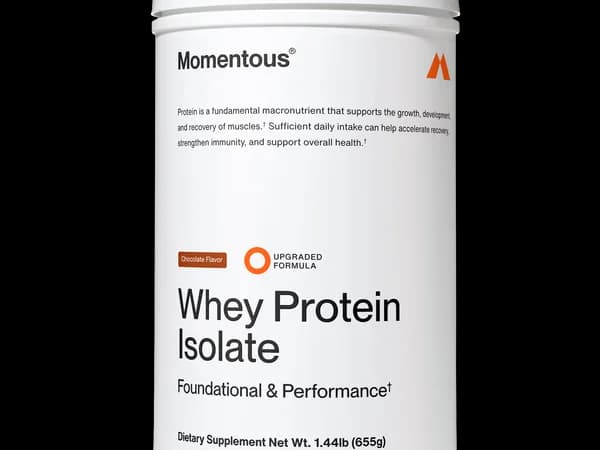
Momentous has built its entire brand around one premise: supplements should meet the same testing standards as what professional athletes use. Every batch of the Essential Whey Isolate is NSF Certified for Sport and Informed Sport certified, a dual certification that I have not seen from any other mainstream protein powder. This means independent labs have verified the label accuracy, screened for over 200 banned substances, and audited the manufacturing facility.
The protein itself is a grass-fed whey isolate delivering 24 grams per serving with a complete amino acid profile, including 5.5 grams of naturally occurring BCAAs. The ingredient list is remarkably short: whey protein isolate, natural flavors, sunflower lecithin, monk fruit extract, and sea salt. That is it. No artificial sweeteners, no gums, no fillers. The chocolate flavor tastes clean without the chemical aftertaste that plagues many "natural" protein powders.
Momentous has also earned a reputation in the professional sports world, they are the official protein partner of several NFL and MLB teams, and their products are used by numerous Olympic athletes. This is not just marketing; it is a testament to the trust that organizations with rigorous testing requirements place in the brand.
The downside is price. At approximately $2.50 per serving, Momentous costs more than most competitors. But when you factor in the dual third-party certifications, the grass-fed sourcing, and the clean ingredient profile, you are paying for a level of accountability that cheaper brands simply do not provide. See our full review for the complete breakdown.
Klean Athlete Klean Isolate: Best for Athletes
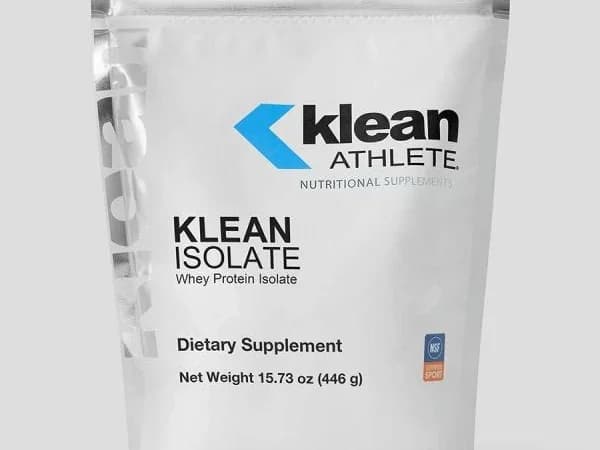
Klean Athlete is a brand that was designed from the ground up for competitive athletes who face drug testing. The Klean Isolate carries NSF Certified for Sport certification, and every product in the Klean Athlete line is produced under pharmaceutical-grade GMP (Good Manufacturing Practices) standards, the same standards applied to actual medications.
The formula delivers 20 grams of whey protein isolate per serving with minimal ingredients: whey protein isolate and sunflower lecithin. The unflavored version has literally two ingredients. This ultra-minimal approach eliminates virtually every variable that could introduce contaminants or allergens. For athletes who need to know exactly what is going into their bodies with zero ambiguity, Klean Isolate is as safe as protein powder gets.
The taste reflects the minimalist approach, the unflavored version is genuinely neutral, which makes it versatile for mixing into smoothies, oatmeal, or recipes. The flavored options are mildly sweetened with stevia and taste clean but unremarkable. This is not a protein powder you buy for the flavor experience.
At roughly $2.20 per serving, Klean Isolate sits in the premium tier alongside Momentous. The 20 grams of protein per serving is lower than Momentous's 24 grams, which means the cost per gram of protein is actually higher. But for competitive athletes who need NSF Certified for Sport and the absolute minimum ingredient list, Klean Isolate delivers exactly that. Read our full review for detailed testing results.
Transparent Labs Whey Isolate: Best Label Transparency
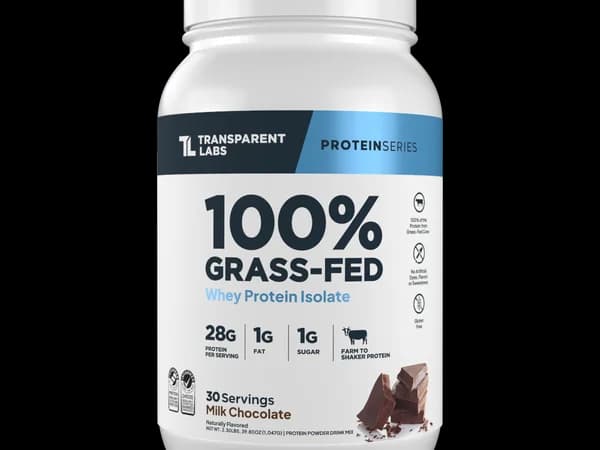
Transparent Labs built its brand identity around the idea that supplement labels should hide nothing, no proprietary blends, no undisclosed ingredients, no ambiguous sourcing. The 100% Grass-Fed Whey Protein Isolate delivers on that promise. Every ingredient is listed with its exact amount, and the company publishes third-party lab test results (Certificates of Analysis) directly on their website for every product.
The formula provides 28 grams of protein per serving, the highest on this list, sourced from grass-fed, hormone-free whey. The ingredient list includes whey protein isolate, natural flavors, sea salt, stevia, and monk fruit. No artificial sweeteners, no artificial colors, no soy lecithin. The amino acid profile is printed on the label in full, which is unusual and welcome.
Transparent Labs does not carry NSF Certified for Sport certification, which is the main gap compared to Momentous and Klean Athlete. They conduct third-party testing through independent labs and publish the results, but the lack of the formal NSF or Informed Sport badge means competitive athletes subject to drug testing may want to stick with certified options.
At approximately $1.80 per serving with 28 grams of protein, the cost per gram is among the best on this list. For recreational athletes and fitness enthusiasts who prioritize ingredient transparency and label accuracy but do not need sport-certified testing, Transparent Labs offers excellent value. See our full review for the full analysis.
Ritual Essential Protein: Best Plant-Based
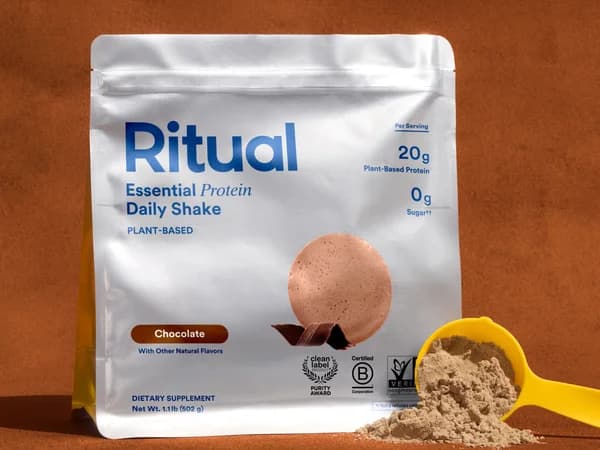
Finding a plant-based protein powder that meets high transparency standards is harder than it should be. Plant proteins are more susceptible to heavy metal contamination, and the market is flooded with brands that use proprietary blends to hide the actual amounts of each protein source. Ritual breaks that pattern with a formula that is both transparent and rigorously tested.
The Essential Protein Daily Shake delivers 20 grams of organic pea protein per serving, fermented for improved digestibility and bioavailability. Ritual publishes the sourcing origin for every ingredient, you can trace the pea protein back to its specific supplier and country of origin. Every batch is third-party tested for heavy metals, and the results are published on their website. The heavy metal levels consistently test well below California Prop 65 limits, which is notable for a plant-based protein.
The formula includes L-methionine to complete the amino acid profile (pea protein is naturally low in this essential amino acid), plus a prebiotic fiber blend for digestive support. The ingredient list is clean: no artificial sweeteners, no gums, no natural flavors, just real food ingredients. The vanilla flavor is mild and slightly earthy, which is typical of pea protein but handled better here than most competitors.
At roughly $2.30 per serving, Ritual is priced at a premium, and the 20 grams of protein per serving means the cost per gram is higher than whey-based options. For vegans, those with dairy allergies, or anyone who prefers plant-based nutrition and demands ingredient traceability, Ritual sets the standard. For a deeper comparison of protein types, see our whey vs plant protein comparison. Read our full review for the complete breakdown.
Ascent Native Fuel Whey: Best Natural Ingredients
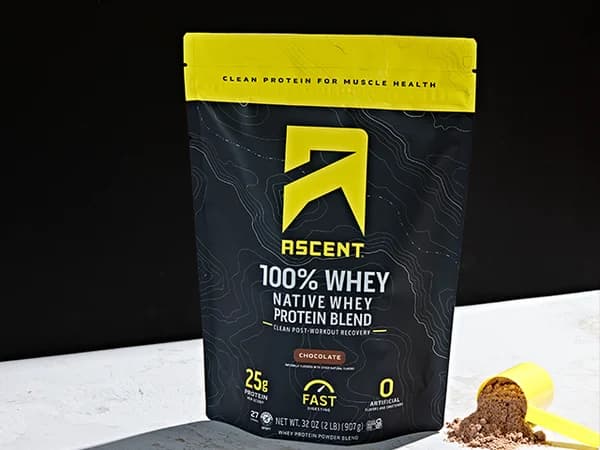
Ascent takes a unique approach to whey protein by using a native whey process, the protein is extracted directly from milk rather than being a byproduct of cheese manufacturing. This preserves the protein in a less processed state with a higher proportion of undenatured (intact) protein fractions, which some research suggests may offer improved bioavailability.
The formula delivers 25 grams of protein per serving and is Informed Sport certified, providing the third-party banned substance testing that competitive athletes require. The ingredient list is short: native whey protein, natural flavors, sunflower lecithin, and monk fruit extract. No artificial ingredients, no added sugars, and no amino acid spiking, a practice where manufacturers add cheap amino acids like glycine or taurine to inflate the protein count.
The chocolate flavor is genuinely good, rich and smooth without the metallic or artificial taste that haunts many natural protein powders. Mixability is above average, blending smoothly with just a shaker bottle.
At approximately $1.75 per serving with 25 grams of protein, Ascent offers a strong cost-per-gram ratio combined with Informed Sport certification. For athletes who want a clean, natural whey protein with sport certification but do not want to pay the Momentous premium, Ascent hits the sweet spot. Read our full review for performance testing.
Understanding Third-Party Testing
Third-party testing is the single most important factor in choosing a protein powder, and it is worth understanding what the different certifications actually mean.
NSF Certified for Sport is the most rigorous certification available. It requires product testing for over 270 banned substances, label claim verification, manufacturing facility audits, and ongoing compliance monitoring. If a product carries this seal, an independent lab has confirmed that what is on the label matches what is in the product, and that the product is free from athletic banned substances.
Informed Sport is a comparable certification from LGC Group, requiring batch-by-batch testing against the World Anti-Doping Agency (WADA) prohibited list. It is widely recognized in professional and Olympic sports.
Clean Label Project focuses specifically on contaminant testing, heavy metals, BPA, pesticides, and other industrial chemicals. It does not test for banned athletic substances but fills a gap that NSF and Informed Sport do not fully cover.
Self-published lab results (like Transparent Labs' Certificates of Analysis) are better than nothing but are not equivalent to third-party certification. The brand chooses the lab, chooses which tests to run, and chooses which results to publish. Useful information, but not independently verified in the same way.
Budget vs Premium: Is It Worth the Upgrade?
A generic whey protein from a big-box store costs roughly $0.60-0.80 per serving. The premium options on this list run $1.75-2.50 per serving. Is the two to three times price difference justified?
It depends on what you are paying for. The premium is not buying you more protein, a generic whey isolate delivers similar grams per serving. What you are buying is accountability: verified label accuracy, banned substance screening, heavy metal testing, and ingredient traceability. You are paying to know that the 25 grams of protein on the label is actually 25 grams in the scoop, and that the powder does not contain meaningful levels of lead or cadmium.
For competitive athletes subject to drug testing, NSF Certified for Sport is non-negotiable and worth every penny. For recreational athletes and general fitness enthusiasts, the calculation is more personal. If you are consuming protein powder daily for years, the cumulative exposure to heavy metals in untested products is a legitimate concern. If you use it occasionally, the risk profile is lower.
My recommendation: for daily use, invest in a certified product. For occasional supplementation, a reputable brand with published testing is sufficient. For an understanding of which protein type suits your goals, check our protein timing and dosing guide.
The Bottom Line
The best protein powders in 2026 are defined not by marketing claims or flavor profiles but by verifiable testing and transparent ingredient sourcing.
Momentous Essential Whey Isolate (9.1) leads with dual NSF and Informed Sport certification, the highest accountability standard in the market. Klean Athlete Klean Isolate (8.8) offers pharmaceutical-grade simplicity for competitive athletes. Transparent Labs (8.6) sets the bar for label transparency with published lab results and the highest protein per serving. Ritual Essential Protein (8.3) proves that plant-based protein can meet rigorous testing standards. And Ascent Native Fuel Whey (8.3) delivers Informed Sport certification at the best value point.
Trust the label or verify it yourself. In the protein powder market, the brands worth buying are the ones that have already verified it for you.
Frequently Asked Questions
How much protein do I actually need per day?
The current evidence-based recommendation for active individuals is 1.6-2.2 grams of protein per kilogram of body weight per day. For a 170-pound (77kg) person, that is roughly 123-170 grams daily. Most people can meet this through food alone, but protein powder is a convenient way to close the gap, especially around training.
Does grass-fed whey protein actually matter?
Grass-fed whey has a modestly different fatty acid profile (more omega-3s, more CLA) compared to conventional whey, but whey protein isolate has most of the fat removed during processing. The practical nutritional difference is minimal. The more meaningful distinction is what grass-fed sourcing implies about farming practices and supply chain transparency.
Are plant-based proteins as effective as whey for building muscle?
When matched for total protein and leucine content, recent research shows that plant-based proteins can support muscle protein synthesis comparably to whey. The key is ensuring a complete amino acid profile, which is why blends (pea + rice) or supplemented formulas (like Ritual's added L-methionine) outperform single-source plant proteins.
How do I read a protein powder label for amino acid spiking?
Check for added free-form amino acids like glycine, taurine, or creatine in the ingredient list. These are cheap nitrogen sources that inflate the total protein number without contributing the full spectrum of amino acids your body needs for muscle synthesis. A clean protein powder lists the protein source and minimal additives, nothing else.
You Might Also Like
Best Password Managers in 2026
 Rachel Foster
Best Portable Power Stations in 2026
 James Mitchell
Best Mechanical Keyboards in 2026
 Marcus Rivera