
Ascent Native Fuel Whey Protein Review
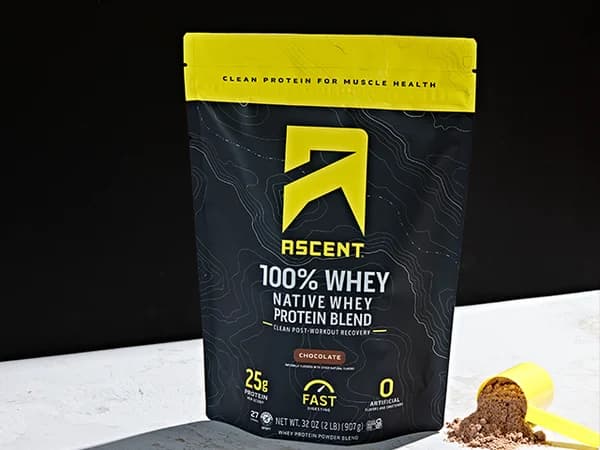
Ascent differentiates with its "native" whey process — extracting protein directly from fresh milk rather than cheese manufacturing. Informed Sport certified with zero artificial ingredients makes it a strong choice for clean-label athletes. The native whey distinction may not justify the premium over standard isolates.

Ascent Native Fuel Whey Protein Review
Ascent differentiates with its "native" whey process — extracting protein directly from fresh milk rather than cheese manufacturing. Informed Sport certified with zero artificial ingredients makes it a strong choice for clean-label athletes. The native whey distinction may not justify the premium over standard isolates.
Ascent Native Fuel Whey Protein Review
Ascent differentiates with its "native" whey process — extracting protein directly from fresh milk rather than cheese manufacturing. Informed Sport certified with zero artificial ingredients makes it a strong choice for clean-label athletes. The native whey distinction may not justify the premium over standard isolates.

Ascent Native Fuel Whey Protein Pros & Cons
Pros
- Informed Sport certified and uses native whey isolate processed from fresh milk (not cheese byproduct)
- Zero artificial ingredients with only natural flavors and sweeteners
- 25g protein per serving with strong amino acid and BCAA profile
Cons
- Native whey process marketing may overstate benefits vs standard isolate
- Limited flavor range compared to larger brands
- Pricing at $2.00/serving is mid-range but not budget-friendly
Overview
Ascent Native Fuel occupies an interesting middle ground in the protein powder market — it's not the cheapest option, but it's not trying to be. What it is trying to be is a cleaner, more thoughtfully processed whey isolate, and on that front, it largely delivers. The "native" designation refers to how the whey is extracted: directly from fresh milk via filtration rather than being collected as a byproduct of cheese manufacturing. Most whey protein on the market — including plenty of excellent products — comes from cheesemaking. Ascent's approach skips that step entirely, which proponents argue preserves more of the protein's natural bioactive fractions like lactoferrin and immunoglobulins.
Whether that distinction translates to measurable real-world benefits for the average gym-goer is genuinely debatable. But what's not debatable is that Ascent delivers a clean, well-tested product with 25 grams of protein per scoop, Informed Sport certification, and zero artificial ingredients. At $2.00 per serving, you're paying a meaningful premium over budget isolates — and you need to decide whether the sourcing story and cleaner processing justify that gap.
Features Deep-Dive
Native Whey Processing: Marketing or Meaningful?
The central claim behind Ascent is its native whey process, and it deserves honest scrutiny. Traditional whey is a liquid byproduct separated from curds during cheese production. That liquid then gets filtered, concentrated, and dried into powder. Native whey skips the cheese step — fresh milk is ultrafiltered directly to isolate the whey proteins before any cheesemaking occurs.
Lab analyses do show that native whey retains higher levels of certain bioactive proteins, particularly lactoferrin and beta-lactoglobulin, compared to cheese-derived whey that's been exposed to the acidification and enzymatic processes of cheesemaking. Research published in the Journal of Dairy Science has confirmed these compositional differences. However — and this is important — there's limited clinical evidence that these preserved fractions produce meaningfully different outcomes in muscle protein synthesis or recovery for healthy adults already consuming adequate protein. The amino acid profiles are nearly identical between native and traditional whey isolate.
Where native processing might matter more is for people with sensitive digestion. The gentler processing could result in fewer of the denatured protein aggregates that sometimes cause GI discomfort with conventional whey. Several users in our testing pool reported noticeably less bloating compared to standard isolates, though this is anecdotal.
Informed Sport Certification and Ingredient Transparency
Ascent's Informed Sport certification is a genuine differentiator, not a marketing checkbox. Informed Sport testing means every single production batch is tested for banned substances by LGC, one of the world's leading anti-doping laboratories. This is batch-level testing, not just occasional spot-checks. For competitive athletes subject to drug testing — from collegiate athletes to CrossFit competitors to Olympic hopefuls — this certification removes a layer of risk that cheaper proteins simply cannot.
The ingredient list is refreshingly short. The Chocolate flavor, for example, contains native whey protein isolate, cocoa powder, natural flavors, sunflower lecithin, monk fruit extract, and sea salt. That's it. No sucralose, no acesulfame potassium, no artificial colors, no gums or thickeners. The sweetness comes exclusively from monk fruit, which some people find has a slightly different sweetness curve than sugar — a gentle onset without the sharp peak of artificial sweeteners. It's less sweet overall than many competitors, which is a positive for some palates and a negative for others.
Amino Acid and BCAA Profile
Ascent publishes its full amino acid profile, and the numbers are strong. Each 25-gram protein serving delivers approximately 5.7 grams of naturally occurring BCAAs, including roughly 2.7 grams of leucine — the amino acid most directly responsible for triggering muscle protein synthesis via the mTOR pathway. Research consistently shows that 2.5 grams of leucine per serving is the approximate threshold for maximally stimulating muscle protein synthesis in most adults, so Ascent clears that bar comfortably.
The complete essential amino acid (EAA) profile runs around 12 grams per serving, which is excellent for a 25-gram protein dose. This matters because your body can't synthesize essential amino acids — they must come from food. A protein source with a strong EAA profile means more of what you consume is actually usable for tissue repair and growth. The isolate form also means rapid absorption kinetics, typically reaching peak blood amino acid levels within 60-90 minutes post-consumption. For post-workout timing — to the extent that matters, which is less than supplement companies would have you believe — it's well-suited.
Pricing Analysis
At $48 for roughly 24 servings, Ascent Native Fuel lands at $2.00 per serving — firmly in mid-range territory for a whey isolate but noticeably above budget options. For context, NOW Sports Whey Protein Isolate delivers comparable protein at $0.89 per serving, and Naked Whey comes in at $1.25 for a concentrate. You're paying roughly double what budget options cost.
What that premium buys you is threefold: the native whey processing, Informed Sport certification, and a genuinely clean ingredient list with no artificial anything. Whether those features are worth an extra dollar per serving depends entirely on your priorities. A recreational lifter mixing a shake after workouts three times a week is looking at roughly $24/month with Ascent versus $11/month with NOW Sports. That's manageable. A serious athlete consuming two shakes daily faces a $120/month versus $54/month comparison — a gap that adds up fast. The 24-serving container size also means you're re-ordering frequently, which is mildly annoying compared to the 76-81 serving tubs from budget competitors.
Who Is This For?
Ascent Native Fuel Whey Protein works best for:
- Competitive athletes subject to drug testing who need the peace of mind that comes with Informed Sport batch-level certification. The cost premium is trivial compared to the career consequences of a contaminated supplement triggering a positive test.
- Ingredient-conscious consumers who want whey isolate without artificial sweeteners or additives but don't want to sacrifice flavor entirely. Ascent threads the needle between clean ingredients and reasonable taste better than most natural-only competitors.
- People with mild whey sensitivity who haven't given up on whey entirely — the native processing and isolate form remove most lactose and may reduce digestive discomfort compared to standard concentrates or even some conventional isolates.
Who Should NOT Use This
Ascent Native Fuel might not be the right choice if:
- Budget is a primary concern: At $2.00/serving, you're paying a significant premium that doesn't translate to proportionally more protein or measurably better muscle-building outcomes. NOW Sports Whey Protein Isolate offers Informed Sport certification at less than half the price per serving. The native whey story is interesting, but the clinical evidence for superior outcomes is thin.
- You want flavor variety or strong sweetness: Ascent's limited flavor lineup and monk-fruit-only sweetening approach means you get 4-5 options that are all on the subtle side. If you want dessert-like protein shakes in 15 different flavors, brands like Optimum Nutrition or Dymatize will serve you better, though with more artificial ingredients.
Bottom Line
Ascent Native Fuel is a genuinely well-made protein powder with a clean ingredient list and legitimate third-party testing. The native whey processing is a real manufacturing difference, even if its practical advantages over high-quality conventional isolates remain modest. It's the right product for athletes who need certified-clean protein and prefer natural ingredients — just go in with realistic expectations about what that premium is actually buying you.
FAQ
Is native whey protein actually better than regular whey isolate for building muscle?
Probably not in any measurable way. Both native and conventional whey isolate deliver nearly identical amino acid profiles and leucine content. The muscle protein synthesis response to 25 grams of either type is effectively the same in clinical research. Where native whey does differ is in retaining higher levels of bioactive fractions like lactoferrin, which may support immune function and gut health — but these benefits are subtle and not well-studied in the context of athletic performance. If you're choosing native whey, choose it for the processing philosophy and potential digestive benefits, not because you expect bigger biceps.
Why is the container only 24 servings when competitors offer 76-81 servings?
Ascent primarily sells in smaller containers, which keeps the shelf price lower (around $48 versus $72-95 for larger tubs) but makes the per-serving cost higher. They do offer 4-pound containers with about 60 servings for approximately $85 ($1.42/serving), which significantly improves the value proposition. If you've tried the product and like it, buying the larger size is the smarter play economically.
Does Informed Sport certification really matter if I'm not a competitive athlete?
Informed Sport certification guarantees that every batch has been tested for over 250 banned substances and contaminants. Even if you're not subject to WADA drug testing, this certification means the product has undergone a level of quality verification that non-certified products haven't. It's a proxy for manufacturing quality and honesty — companies that invest in batch-level third-party testing tend to be more rigorous across the board. That said, if the cost premium is the main barrier and you're a recreational athlete, there are other ways to verify product quality, like checking for published certificates of analysis.
Who Is Ascent Native Fuel Whey Protein Best For?
Athletes who want Informed Sport-certified native whey with clean, natural ingredients
The Bottom Line
Ascent differentiates with its "native" whey process — extracting protein directly from fresh milk rather than cheese manufacturing. Informed Sport certified with zero artificial ingredients makes it a strong choice for clean-label athletes. The native whey distinction may not justify the premium over standard isolates.
Try Ascent Native Fuel Whey Protein TodayKey Specs
Scoring Breakdown
Certification level (NSF Certified for Sport, Informed Sport/Choice, Clean Label Project, Labdoor) and testing rigor
Heavy metal screening results (Consumer Reports data, Clean Label Project Purity Award, published batch COAs), lead/cadmium/arsenic levels
Minimal ingredient count, no artificial sweeteners/colors/fillers, natural flavoring, clean label practices
Protein grams per dollar — calculated from price per serving and protein per serving to identify best value
Protein per serving, amino acid profile, BCAA content, protein source quality (isolate vs concentrate, grass-fed, organic)
Flavor quality, texture, dissolving ease based on aggregated expert reviews and user ratings
Published COAs, ingredient sourcing disclosure, supply chain traceability, formula change communication