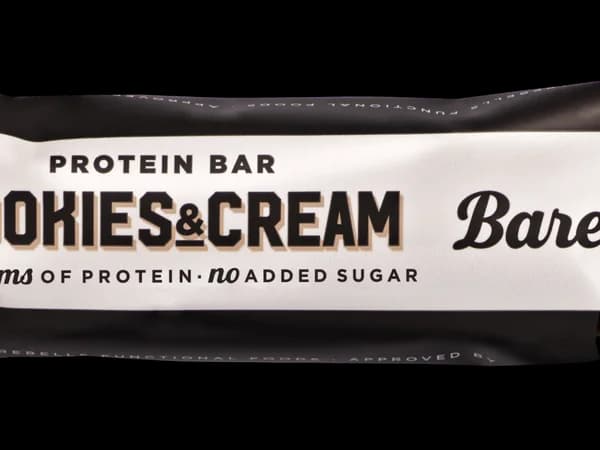
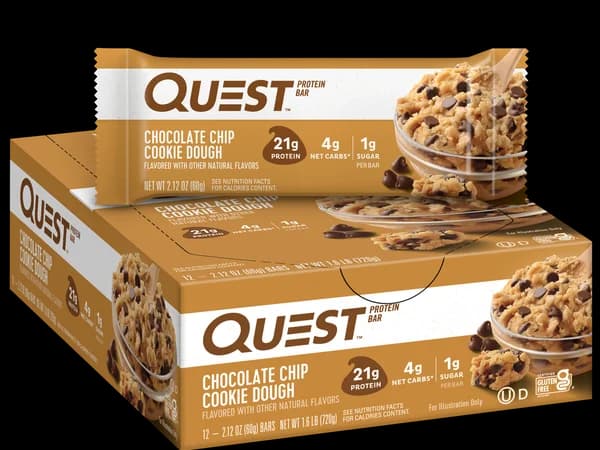
Barebells wins on taste, texture, and overall eating experience. Quest wins on macros, availability, and cost per gram of protein. Choose Barebells if you want a protein bar that genuinely tastes like a candy bar. Choose Quest if you want the absolute best protein-to-calorie ratio at the widest availability.
Barebells Cookies & Cream Protein Bar
Taste-first consumers who want the best-tasting high-protein bar and can tolerate sugar alcohols
Quest Chocolate Chip Cookie Dough Protein Bar
Macro-focused gym-goers who prioritize protein-to-calorie ratio above ingredient purity

Score Comparison
Quick Verdict
Barebells and Quest represent the two dominant approaches to macro-optimized protein bars, and both sacrifice ingredient purity to achieve their numbers. Barebells delivers 20g protein with 1g sugar in a bar that genuinely rivals candy for taste — but uses maltitol, a sugar alcohol that causes digestive issues for some. Quest pushes macros even further with 21g protein and less than 1g sugar — but leans on both sucralose and erythritol to get there. Neither bar will win any clean-eating awards. The question is which trade-off you prefer: a sugar alcohol (Barebells) or artificial sweeteners (Quest).
Head-to-Head Comparison
Macronutrient Profile
Winner: Quest (marginally)
Quest edges ahead with 21g protein versus Barebells' 20g, and achieves less than 1g sugar compared to Barebells' 1g. The calorie counts are comparable — Quest at roughly 190 calories and Barebells at roughly 200. On a pure protein-to-calorie ratio, Quest scores 9.5 in our macro-balance criterion versus Barebells' 9.0.
The practical difference is minimal. One gram of protein and fractions of a gram of sugar will not meaningfully affect anyone's daily nutrition. Both bars deliver approximately 20g of high-quality protein at under 210 calories, placing them in the top tier of the entire protein bar market for macronutrient efficiency.
Where Quest holds a genuine edge is in fiber content — approximately 14g of soluble corn fiber per bar versus Barebells' more modest fiber profile. That fiber contributes to satiety and digestive health, though it comes from a processed source (soluble corn fiber) rather than whole food fiber.
Taste and Texture
Winner: Barebells (decisively)
This is Barebells' defining advantage and the reason it has developed a cult following. The Cookies & Cream bar features a real chocolate coating over a creamy, nougat-like center with cookie pieces distributed throughout. It tastes like a candy bar that happens to contain 20g of protein. The Swedish confectionery heritage shows in the texture engineering — it is smooth, satisfying, and does not have the chalky, artificial quality that plagues most protein bars.
Quest's Chocolate Chip Cookie Dough has improved significantly over the years and scores a respectable 8.5 for taste in our comparison. The texture is soft and chewy with discernible chocolate chips. But it still reads as a protein bar — there is an unmistakable supplement undertone from the protein isolates and a slight artificial sweetness from the sucralose that reminds you this is functional food.
If you closed your eyes and tasted both, Barebells would be the one you mistook for a candy bar. Quest would be the one you correctly identified as a protein bar. For many consumers, that difference is the entire purchasing decision.
Sweetener Approach
Winner: Barebells (marginally)
Neither bar takes a clean approach to sweetening, but their strategies differ meaningfully.
Barebells uses maltitol, a sugar alcohol, primarily in the chocolate coating. Maltitol provides sweetness at roughly 75% the intensity of sugar with fewer calories, and it does not trigger the same insulin response. The downside is well-documented: maltitol has a higher glycemic index than other sugar alcohols (35 versus erythritol's 0) and is the sugar alcohol most likely to cause gastrointestinal distress — bloating, gas, and laxative effects at higher doses.
Quest uses a combination of sucralose and erythritol. Sucralose is one of the most controversial artificial sweeteners in health-conscious circles, with some research raising concerns about gut microbiome effects and insulin signaling. Erythritol is generally well-tolerated as a sugar alcohol (with a glycemic index of 0), but recent studies have questioned its cardiovascular implications at high consumption levels.
The choice between these approaches is genuinely personal. If you are specifically avoiding artificial sweeteners like sucralose, Barebells wins by default. If you are specifically avoiding sugar alcohols for digestive reasons, Quest's erythritol may actually be better tolerated than Barebells' maltitol. Neither approach would satisfy a clean-eating purist — both bars scored in the bottom half of our ingredient purity rankings.
Ingredient Purity
Winner: Barebells (slight edge)
Barebells scores 5.5 on ingredient purity versus Quest's 3.0 — both are in the lower tier of our comparison, but Quest is notably worse. Quest's ingredient list includes sucralose, erythritol, soluble corn fiber, palm oil, and a lengthy list of processed additives. Barebells uses maltitol and several processed ingredients but avoids the double-sweetener penalty that drags Quest's score down.
To put this in context: the cleanest bars in our comparison (ALOHA, GoMacro) score 9.5 on ingredient purity. Neither Barebells nor Quest is anywhere close. If ingredient quality matters to you at all, both bars should be lower on your list — and that is the honest trade-off of macro-optimized protein bars. Excellent macros require processing that purists will not accept.
Protein Source Quality
Winner: Quest (slight edge)
Quest uses a combination of milk protein isolate and whey protein isolate — both among the highest-bioavailability protein sources available. Milk protein isolate provides a blend of casein (slow-digesting) and whey (fast-digesting), creating a sustained amino acid release. Whey protein isolate has a near-perfect PDCAAS score of 1.0 and is the gold standard for muscle protein synthesis.
Barebells uses whey protein concentrate and milk protein as its primary sources. Whey concentrate is slightly less refined than isolate, containing more lactose and fat alongside the protein. The bioavailability is still excellent — concentrate scores just slightly below isolate — but the distinction matters for lactose-sensitive individuals who may tolerate isolate better.
Both bars use dairy-based protein, making them unsuitable for vegans and potentially problematic for those with lactose sensitivity. Quest's isolate-based approach is marginally cleaner from a protein-purity perspective.
Availability and Price
Winner: Quest
Quest bars are ubiquitous. You can find them at grocery stores, convenience stores, gas stations, pharmacies, gyms, and vending machines across the United States. At approximately $2.08 per bar ($25 for 12), they deliver strong macros at a competitive price point. The cost per gram of protein is about $0.10 — among the best in the category.
Barebells has expanded significantly from its Swedish origins but still has narrower distribution than Quest. At approximately $2.58 per bar ($31 for 12), it commands a 24% premium over Quest. The cost per gram of protein is about $0.13 — reasonable but noticeably higher.
For consumers who want a protein bar they can grab anywhere, anytime, Quest's distribution advantage is substantial. Barebells requires slightly more planning or online ordering, though it has become increasingly available at Target, Walmart, and most gym retail locations.
Certifications and Transparency
Winner: Neither (both weak)
Barebells scores 4.5 on certifications and 5.0 on transparency. Quest scores 5.5 and 5.0 respectively. Neither bar carries USDA Organic, NSF Certified for Sport, Non-GMO Project Verified, or other meaningful third-party health certifications.
Quest does carry some retail-level certifications and has been Kosher certified, giving it a slight edge in the certifications category. But neither brand demonstrates the commitment to third-party verification and ingredient traceability that distinguishes the top-scoring bars in our comparison.
If certifications matter to you, neither of these bars should be in your cart. Both are firmly in the "trust the brand" tier rather than the "trust the certification" tier.
When to Choose Barebells
Barebells is the right choice when:
- Taste is the deciding factor — if you have tried protein bars before and quit because they tasted terrible, Barebells is the bar most likely to change your mind
- You can tolerate maltitol without digestive issues and prefer a sugar alcohol over artificial sweeteners like sucralose
- You want a protein bar that doubles as a dessert — Barebells genuinely satisfies sweet cravings in a way that most protein bars cannot
- You are willing to pay a slight premium for a meaningfully better eating experience
When to Choose Quest
Quest is the right choice when:
- Macros are everything — Quest delivers the highest protein-to-calorie ratio in this comparison with 21g protein at under 200 calories
- Availability and convenience matter — Quest bars are available virtually everywhere, making them the protein bar you can always find when you need one
- Budget optimization drives your choice — at $2.08 per bar with 21g protein, Quest offers one of the best protein-per-dollar values on the market
- High fiber content is a priority — Quest's 14g of soluble corn fiber adds meaningful satiety and digestive bulk
Final Recommendation
Choose Barebells if you want a protein bar that you will actually crave. Its candy-bar taste with 20g protein is a genuine achievement in food science, and for many people, the enjoyment factor is what makes a protein bar habit sustainable. Accept the maltitol trade-off or avoid if you are sensitive.
Choose Quest if you want the most efficient protein delivery at the widest availability and lowest cost. Quest's macro dominance is unquestioned, and its distribution means you never have to plan ahead. Accept the sucralose-erythritol trade-off or look elsewhere if artificial sweeteners are a dealbreaker.
The deeper question both bars raise is whether macro efficiency or ingredient quality matters more to you. In our overall rankings, both bars land in the middle of the pack because our scoring weights ingredient purity heavily. If your personal weighting leans toward pure macros, both of these bars jump to the top of your list — and the choice between them becomes a taste preference.
Pricing & Features
Making Your Decision

When to Choose Barebells Cookies & Cream Protein Bar
Taste-first consumers who want the best-tasting high-protein bar and can tolerate sugar alcohols
Barebells is arguably the best-tasting protein bar on the market — it genuinely tastes like a candy bar. The 20g protein and 1g sugar macros are excellent. The catch is maltitol in the coating, which dings ingredient purity and sugar profile scores. If you prioritize taste and macros over ingredient purity, Barebells wins.
Strengths
- Exceptional taste that rivals actual candy bars — consistently top-rated for flavor
- 20g whey protein with only 1g sugar makes for an outstanding macro profile
- Swedish-designed with a satisfying chocolate coating and creamy center
Limitations
- Contains maltitol in the chocolate coating — a sugar alcohol that can cause digestive issues
- No USDA Organic, NSF, or other major health-focused certifications
- Ingredient list includes several processed additives beyond the maltitol

When to Choose Quest Chocolate Chip Cookie Dough Protein Bar
Macro-focused gym-goers who prioritize protein-to-calorie ratio above ingredient purity
Quest dominates on macros — 21g protein, <1g sugar, widely available everywhere. But it achieves this with sucralose AND erythritol, earning the lowest ingredient purity and sugar profile scores in our comparison. If you only count macros, Quest is king. If ingredient quality matters, look elsewhere.
Strengths
- Industry-leading macros with 21g protein and less than 1g sugar per bar
- Milk protein isolate and whey isolate provide high bioavailability and complete amino acids
- Widely available in virtually every grocery store, gas station, and gym in the country
Limitations
- Contains BOTH sucralose and erythritol — double artificial sweetener and sugar alcohol penalty
- Heavily processed ingredient list with numerous additives beyond the protein
- Sucralose is one of the most controversial artificial sweeteners in health-conscious circles