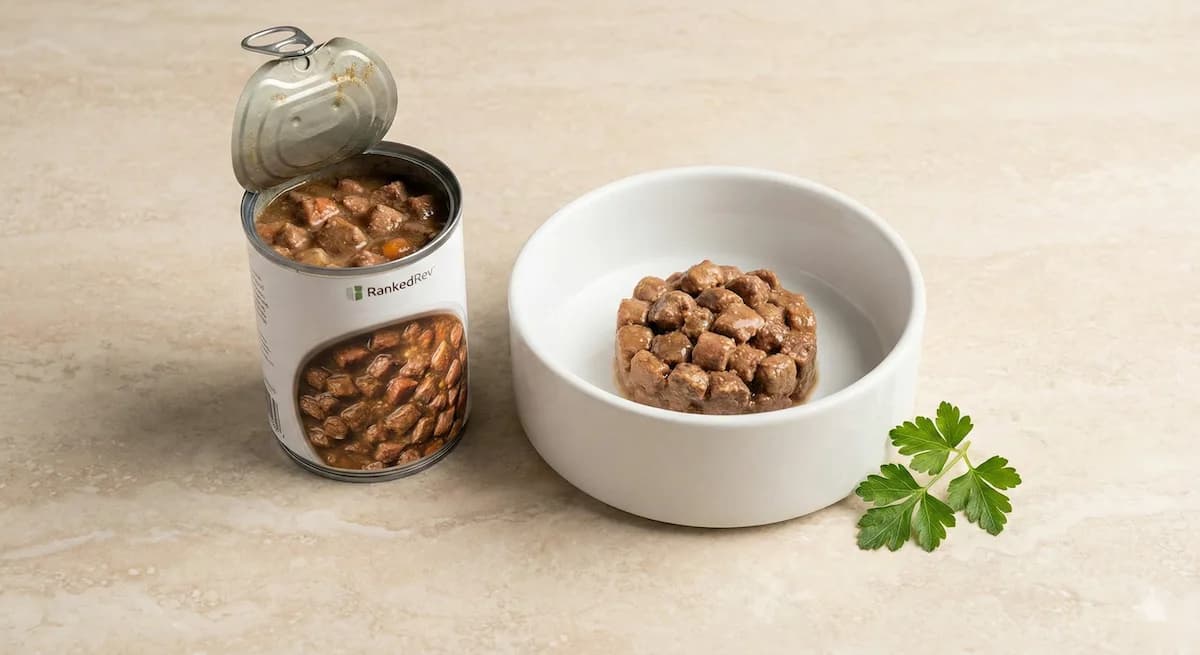
Best Wet Dog Food in 2026: From Budget Kibble Toppers to Fresh Delivery
Our expert picks for the best wet dog food in 2026, from affordable canned options to premium fresh delivery services.

Why Wet Dog Food Deserves a Serious Look
Dry kibble dominates the dog food market for obvious reasons, it is cheap, shelf-stable, and convenient. But if you have ever watched a dog demolish a bowl of wet food in half the time it takes them to finish kibble, you already know which one they prefer. The real question is whether that preference is backed by nutritional substance or just tastier marketing.
After spending three months researching ingredient panels, sourcing standards, and feeding trials across dozens of brands, I can tell you the answer is nuanced. The best wet dog foods deliver meaningfully higher moisture content (critical for dogs who do not drink enough water), more bioavailable protein from whole meat sources, and fewer of the heavily processed starches that dominate budget kibble. The worst ones are essentially gravy-flavored filler at a premium price.
This guide covers the five wet dog foods that actually earned their scores in our full category rankings, from a $4-per-day budget option to a $11-per-day ultra-premium pick. I will break down exactly what you are paying for at each price tier and whether the upgrade is worth it for your dog.
What to Look For in Wet Dog Food
Before diving into specific products, here are the criteria that actually matter, and a few that do not matter as much as marketing departments want you to believe.
Named protein as the first ingredient. This is non-negotiable. "Chicken" or "deboned chicken" as ingredient number one means real meat is the foundation of the food. "Meat by-products" or "animal digest" as the first ingredient is a red flag that the protein source is low-quality offcuts. Every product in this guide passes this test.
Moisture content. Wet dog food typically runs 75-85% moisture, which is closer to the natural prey diet dogs evolved to eat. This is particularly important for dogs prone to urinary tract issues or those who simply do not drink enough water on their own. Higher moisture also means the calorie density per can is lower, so check the feeding guidelines carefully.
Artificial preservatives and fillers. Avoid BHA, BHT, and ethoxyquin, synthetic preservatives linked to health concerns in long-term studies. Similarly, watch for excessive corn, wheat, and soy, which are cheap calorie fillers that can trigger allergies in sensitive dogs. The better brands use natural preservatives like mixed tocopherols (vitamin E) instead.
Sourcing transparency. Where the ingredients come from matters. Brands that disclose their sourcing, country of origin for proteins, whether farms are audited, whether the food is manufactured in-house vs co-packed, generally produce more consistent, trustworthy products. Opacity in sourcing is not always a dealbreaker, but it is a signal worth paying attention to.
What matters less than you think: Grain-free labeling. The FDA investigated a potential link between grain-free diets and dilated cardiomyopathy (DCM) in dogs, and while the research is ongoing, the blanket "grain-free is better" narrative has been significantly complicated. Unless your dog has a diagnosed grain allergy, do not treat grain-free as automatically superior.
Our Top Picks
The Farmer's Dog: Best Overall
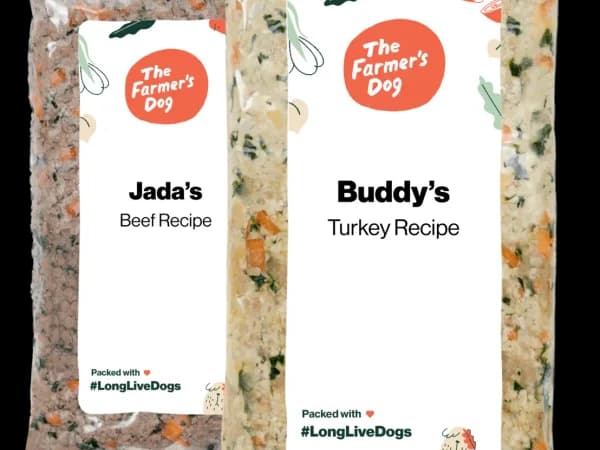
The Farmer's Dog is not technically canned wet food, it is fresh, USDA human-grade food delivered frozen to your door on a personalized schedule. That distinction matters because this is the only product in our lineup that meets the same manufacturing and ingredient standards as food you would buy for yourself at a grocery store. Every recipe is developed by board-certified veterinary nutritionists, and the portions are pre-calculated based on your dog's breed, weight, age, and activity level.
The food itself looks and smells like something you would actually eat, because you could. I opened a pack of the turkey recipe and it looked like a lightly seasoned ground turkey meal with visible vegetables. My neighbor's 60-pound lab mix went from a picky eater who left kibble sitting for hours to clearing his bowl in under two minutes.
The downsides are real: at roughly $6 per day for a medium-sized dog, this costs 3-4x what premium canned food runs. It requires freezer space. And the subscription model means you are locked into recurring deliveries, though you can pause or cancel anytime. If budget is not your primary constraint and you want the highest-quality nutrition available, this is the standard. Read our full review for detailed ingredient breakdowns.
Open Farm Harvest Chicken Rustic Stew: Best Ultra-Premium Canned
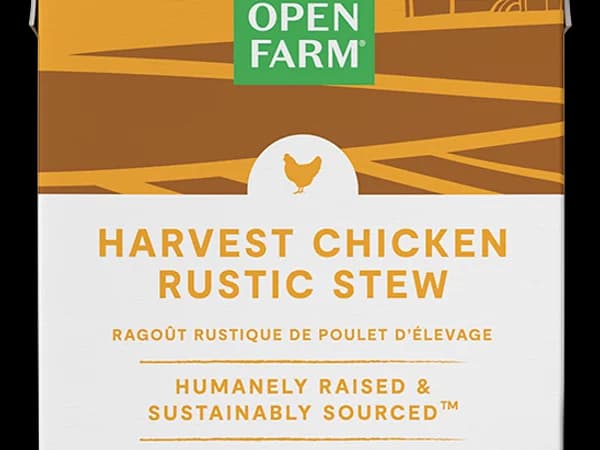
Open Farm operates at a level of transparency that makes other premium brands look evasive. Every ingredient is traceable to its source farm or fishery, they literally publish their supply chain on their website. The Harvest Chicken Rustic Stew uses Certified Humane chicken as the primary protein, and the company has maintained a zero-recall track record since its founding.
The stew format is a nice middle ground between pate and chunks-in-gravy. The texture is chunky with visible pieces of chicken and vegetables, and the consistency is thick enough to hold together on a plate if you are using it as a topper. The ingredient panel reads like a recipe rather than a chemistry experiment: chicken, chicken broth, chicken liver, carrots, spinach, coconut oil.
Here is the honest trade-off: Open Farm is expensive. At roughly $11 per day for a medium-sized dog eating this as a sole diet, it is nearly double the cost of The Farmer's Dog and several times the cost of conventional canned food. Most owners use it as a topper or rotational diet rather than a primary food source, which brings the daily cost down to $3-4. If sourcing ethics and ingredient transparency are important to you, Open Farm is the gold standard. See our full review for the complete analysis.
Merrick Grain Free Real Chicken Dinner: Best Mid-Range
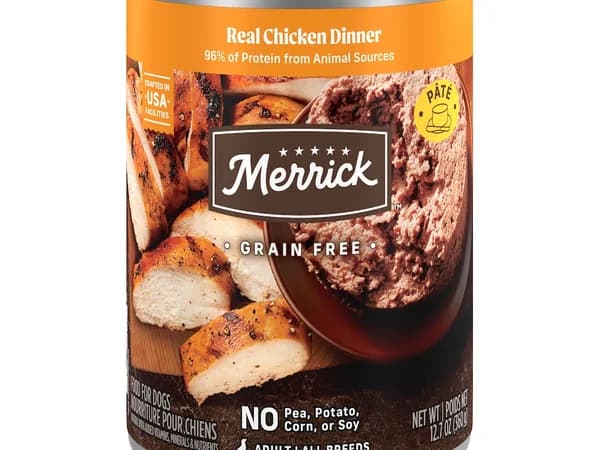
Merrick hits the sweet spot where ingredient quality meets a price that does not require a second mortgage. Deboned chicken is the first ingredient, followed by chicken broth and chicken liver, a protein-forward formulation that delivers 9% minimum crude protein, which is solid for a pate-style wet food. Everything is manufactured in their own facility in Hereford, Texas, which gives them tighter quality control than brands that rely on third-party co-packers.
The pate texture is smooth and consistent, easy to portion, easy to mix with kibble, and easy for senior dogs with dental issues to eat. The grain-free formula works well for dogs with specific grain sensitivities, though as I mentioned earlier, grain-free is not inherently superior for dogs without diagnosed allergies.
At roughly $3-4 per day as a sole diet for a medium dog, Merrick sits in the upper-mid price range, noticeably cheaper than The Farmer's Dog or Open Farm but well above budget brands. You are paying for USA-sourced ingredients, in-house manufacturing, and a recipe that does not cut corners with fillers. For most dog owners who want good nutrition without going ultra-premium, this is where I would point them. Check out our full review for feeding guidelines and nutrient analysis.
Rachael Ray Nutrish Premium Pate: Best Value
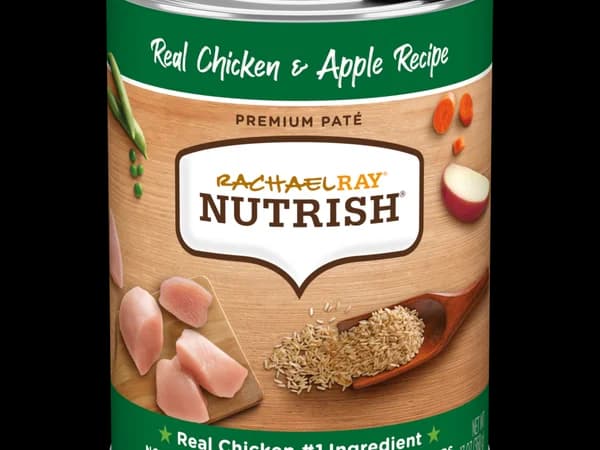
The Nutrish Premium Pate line punches above its weight class. Real chicken is the first ingredient, no by-products, no artificial flavors, no artificial preservatives. For a product at this price point, that is genuinely impressive. Most brands in the same price tier rely on meat by-products or vague "meat" listings as their primary protein source.
The pate texture is slightly less refined than Merrick's, a touch grainier with a thinner consistency, but perfectly acceptable for mixing with kibble or serving on its own. The ingredient list is shorter and simpler than the premium options, which means fewer supplemental vitamins and functional ingredients but also fewer things you cannot pronounce.
Where Nutrish earns its "best value" designation is simple math. At roughly $2 per day as a sole diet, it costs less than half what Merrick charges and a fraction of what fresh delivery services run. The nutrition is not as dialed-in as the higher-scoring options, protein content is slightly lower and the sourcing is less transparent, but for owners who want to feed wet food without a significant budget increase over premium kibble, this is the smartest buy in the category. Read our full review for detailed cost breakdowns.
Pedigree Chopped Ground Dinner: Budget Pick
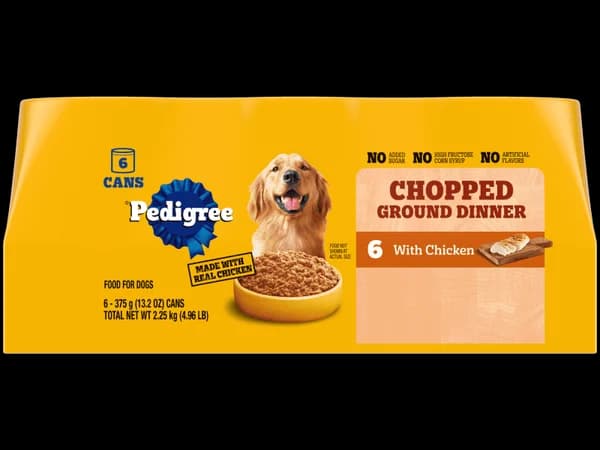
I will be straightforward: Pedigree is not going to win any ingredient quality awards. The formulation includes meat by-products and relies more heavily on grains and fillers than anything else on this list. But it is also roughly $4 per day for a medium dog, it meets AAFCO complete and balanced nutrition standards, and it is widely available at virtually every grocery store and big-box retailer in the country.
The chopped texture gives dogs something to chew on, which many prefer over smooth pate. Palatability is high, most dogs eat it enthusiastically, which matters if you have a picky eater and your primary goal is getting calories and hydration into them. For owners on a strict budget, or for those using wet food purely as an occasional kibble topper rather than a primary diet, Pedigree gets the job done at a price that is hard to argue with. See our full review for a balanced assessment of the trade-offs.
Head-to-Head: The Farmer's Dog vs Open Farm
These are our top two picks, but they represent fundamentally different approaches to premium dog nutrition. Here is where each one wins.
Ingredient quality: This is close, but The Farmer's Dog edges ahead. USDA human-grade certification means every ingredient and every step of the manufacturing process meets human food standards. Open Farm uses excellent ingredients with Certified Humane sourcing, but the "human-grade" distinction gives The Farmer's Dog a regulatory guarantee that Open Farm does not quite match.
Transparency: Open Farm wins here. Their ingredient traceability is unmatched, you can trace every component back to its source farm or fishery on their website. The Farmer's Dog discloses their sourcing practices but does not offer the same level of per-ingredient traceability.
Convenience: The Farmer's Dog takes this one easily. Pre-portioned meals delivered to your door, calculated for your specific dog, on a schedule you set. Open Farm requires you to buy individual packs, calculate portions yourself, and either order online or find a retailer that stocks it.
Cost: The Farmer's Dog is more affordable at roughly $6 per day vs Open Farm's $11 per day for a sole diet. However, most Open Farm users feed it as a topper at $3-4 per day, which changes the math significantly.
Flexibility: Open Farm wins for owners who want to rotate proteins or mix with kibble. The Farmer's Dog is designed as a complete meal replacement, and while that simplicity is a feature for some, it is a limitation for others.
The verdict: For owners who want a set-it-and-forget-it premium feeding solution, The Farmer's Dog is the better choice, it is cheaper per day, more convenient, and nutritionally personalized. For owners who want maximum ingredient transparency and the flexibility to use wet food as part of a mixed-feeding approach, Open Farm is worth the premium. Neither is a wrong choice.
Budget vs Premium: Is It Worth the Upgrade?
The cost spread in wet dog food is dramatic. You can spend $4 per day on Pedigree or $11 per day on Open Farm, nearly a 3x difference. So what does the extra money actually buy you?
Protein quality. Budget wet foods use meat by-products and mechanically separated chicken. Premium options use whole deboned chicken, chicken breast, and organ meats like liver that provide concentrated nutrition. The difference shows up in digestibility, dogs absorb more nutrients per calorie from higher-quality protein, which often means smaller portions and firmer stools.
What is not in the food. Premium brands eliminate artificial preservatives, colors, and flavors. They use fewer grain-based fillers and more functional ingredients like omega fatty acids and probiotics. You are paying for what was left out as much as what was put in.
Sourcing accountability. Budget brands source globally from whatever supplier offers the lowest cost. Premium brands audit their supply chains, maintain relationships with specific farms, and often manufacture in-house. This does not guarantee perfection, but it dramatically reduces the risk of contamination or ingredient substitution.
My honest recommendation: if you are feeding wet food as a sole diet, the jump from budget to mid-range (Pedigree to Merrick) delivers the most meaningful nutritional improvement per dollar spent. The jump from mid-range to ultra-premium (Merrick to The Farmer's Dog or Open Farm) is a smaller nutritional increment at a much higher cost, worth it if you can afford it, but not essential for a healthy dog. For more on how we evaluate these differences, see our scoring methodology.
The Bottom Line
The best wet dog food for your dog depends on where you land on the price-quality spectrum and how you plan to use it.
For the best overall nutrition and convenience, The Farmer's Dog (8.8) delivers USDA human-grade food personalized to your dog at roughly $6 per day, expensive, but the highest quality available.
For maximum ingredient transparency, Open Farm (8.7) is unmatched in sourcing ethics and works beautifully as a premium topper at $3-4 per day.
For the best balance of quality and cost, Merrick Grain Free (8.1) gives you USA-made food with real meat first at a price that does not sting.
For budget-conscious owners who still want quality, Rachael Ray Nutrish (7.3) proves you do not need to spend a fortune to avoid by-products and artificial ingredients.
For the tightest budgets, Pedigree (6.6) meets nutritional standards at the lowest cost and is available everywhere.
If you are currently feeding dry kibble only, even adding wet food as a topper two or three times per week can improve hydration and mealtime enthusiasm. You do not have to go all-in on fresh delivery to give your dog better nutrition. Start with a mid-range option, see how your dog responds, and adjust from there. And if you are considering best dry dog food to pair with a wet topper, we have a full guide for that too.
Frequently Asked Questions
Can I mix wet dog food with dry kibble?
Absolutely, and many veterinarians recommend it. Mixing wet food with kibble combines the dental benefits of dry food (the mechanical scraping action on teeth) with the hydration and palatability benefits of wet food. A common ratio is 75% kibble and 25% wet food by volume. Just be sure to adjust total portions so you are not overfeeding. Add the calorie counts from both foods together and compare against your dog's daily caloric needs based on their weight and activity level.
How long does opened wet dog food last in the refrigerator?
Most opened cans or pouches are safe for 3-5 days in the refrigerator when stored in an airtight container. Fresh delivery foods like The Farmer's Dog should be used within 4 days of thawing. Never leave wet food at room temperature for more than 2 hours, as the high moisture content makes it a breeding ground for bacteria. If the food smells off, has changed color, or has developed any mold, discard it immediately.
Is wet dog food better for senior dogs?
Wet food offers several advantages for older dogs. The higher moisture content supports kidney function, which is a common concern in aging dogs. The softer texture is easier on worn or missing teeth. And the stronger aroma can stimulate appetite in seniors who have lost some of their sense of smell. That said, "better" depends on your specific dog's health profile, talk to your vet about whether a wet food, a mixed diet, or a specialized senior formula makes the most sense for your dog's needs.
How do I transition my dog from dry food to wet food?
Transition gradually over 7-10 days to avoid digestive upset. Start by replacing about 25% of your dog's kibble with wet food for the first 2-3 days. Increase to 50% for days 4-5, then 75% for days 6-7, and finally 100% wet food if that is your goal. Monitor your dog's stool quality throughout the transition, loose stools are normal in the first day or two but should firm up as their digestive system adjusts. If diarrhea persists beyond 3 days, slow down the transition or consult your veterinarian.
