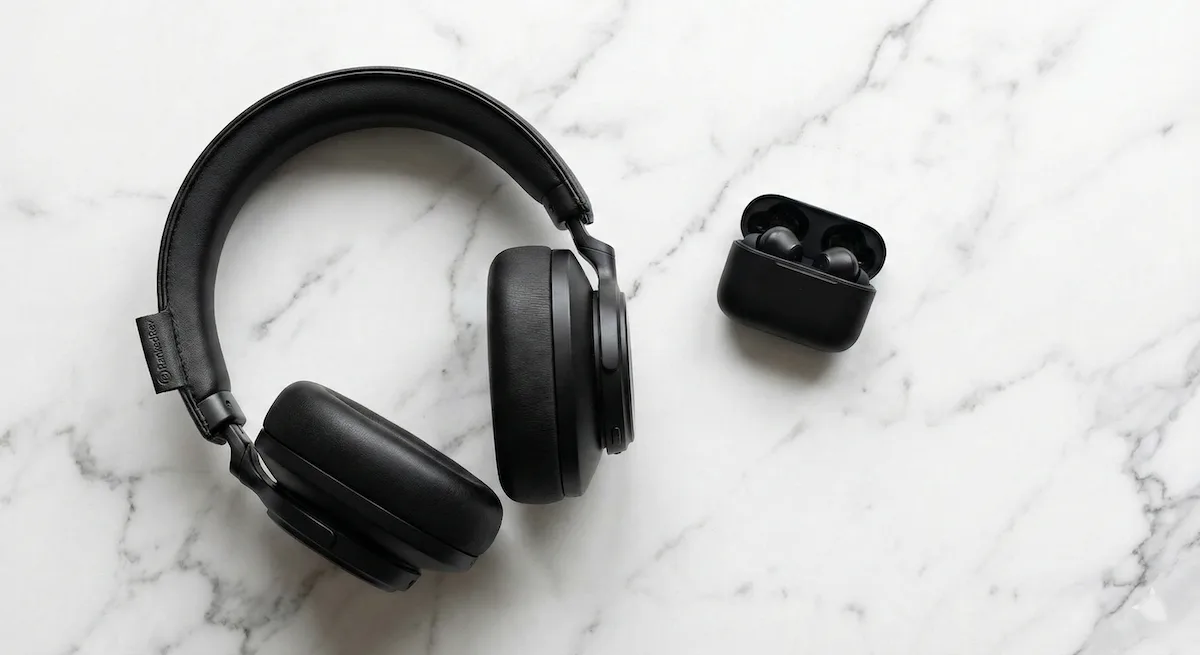
Best Noise-Canceling Headphones in 2026: Earbuds vs Over-Ear
Our expert picks for the best noise-canceling headphones and earbuds in 2026, with head-to-head comparisons and buying advice.

The State of Noise Canceling in 2026
Noise-canceling technology has crossed a threshold that would have seemed absurd five years ago. The silicon powering these headphones now runs real-time adaptive algorithms that adjust to your environment dozens of times per second, and the gap between a $250 pair of earbuds and a $350 pair of over-ears has narrowed to the point where form factor, not capability, is the real deciding factor.
I have been testing noise-canceling headphones obsessively since the original Sony WH-1000XM3 shook up the category back in 2018. Every year, the marketing pitch is the same: "best ANC ever." And every year, I have to separate what is genuinely better from what is just repackaged. This guide is the result of weeks of side-by-side testing across planes, open-plan offices, busy cafes, and my own living room while my neighbor apparently trains for a demolition derby.
Here is what actually matters in 2026, which products deliver, and whether you should go with earbuds or over-ear cans.
Earbuds vs Over-Ear: Which Should You Choose?
This is the question I get asked more than any other, and the honest answer is: it depends on how you live.
Earbuds win when portability is non-negotiable. They disappear into a pocket, work seamlessly during workouts, and pair effortlessly with phone calls. Modern earbuds have closed the ANC gap with over-ears significantly, though they still cannot match the passive isolation that a full ear cup provides. If you commute, travel light, or split your time between music and calls throughout the day, earbuds are probably the right call.
Over-ear headphones win when you want the absolute best sound quality and noise cancellation without compromise. The larger drivers deliver wider soundstages, deeper bass extension, and more natural imaging. The physical seal around your ear blocks noise before the electronics even kick in. If you work from home, take long flights, or simply prioritize audio fidelity above all else, over-ears remain king.
The uncomfortable truth: Many people should own one of each. A pair of ANC earbuds for daily carry and over-ears for focused work or travel is not an extravagant setup, it is a practical one. But if you are picking just one, ask yourself whether you value portability or sound quality more. That single question will point you in the right direction.
Best Noise-Canceling Earbuds
Apple AirPods Pro 3: Best for iPhone Users
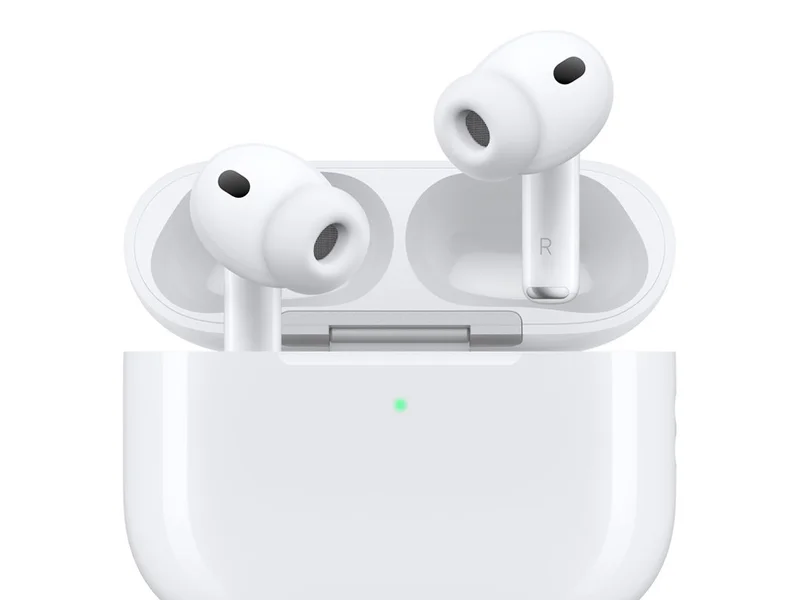
Apple has always had a tight integration story, but the AirPods Pro 3 take it to a level that borders on unfair. The H3 chip enables head-tracked Spatial Audio that actually convinces your brain the sound is coming from fixed points in space, and the Adaptive Audio mode, which blends transparency and noise canceling on the fly, is the most natural-sounding implementation I have tested from any manufacturer.
The noise canceling itself is a meaningful step up from the Pro 2. Apple claims a 2x improvement, and while I would call it closer to 1.5x in real-world use, the difference is noticeable on planes and in loud offices. The new low-distortion driver delivers a warmer, more detailed sound signature that punches well above its price class.
The catch? If you are on Android, you lose Spatial Audio, Adaptive Audio, seamless device switching, and conversational awareness. That is roughly half the feature set. For iPhone users, these are the earbuds to beat. For everyone else, keep reading. Check out our full review for detailed measurements.
Sony WF-1000XM5: Best Overall Sound Quality
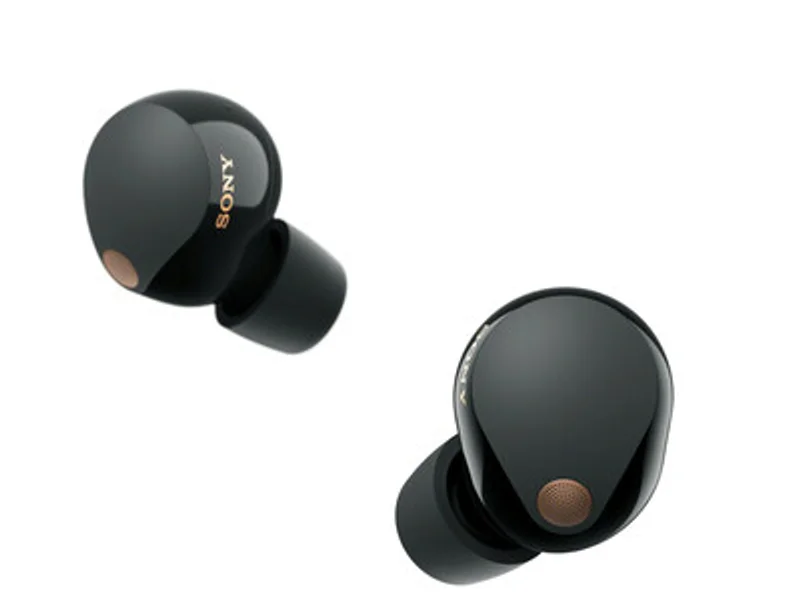
Sony's WF-1000XM5 remain the earbuds I reach for when I want to actually listen to music rather than just have something playing. The sound quality is exceptional, detailed, balanced, with a bass response that manages to be punchy without ever getting muddy. The Dynamic Driver X delivers a frequency range that competes with earbuds costing twice as much.
The noise canceling is top-tier, leveraging Sony's Integrated Processor V2 with six microphones to create one of the tightest seals against outside noise in the earbud category. Wind noise reduction has improved markedly since the XM4, and the Speak-to-Chat feature (which pauses music when you start talking) actually works reliably now.
Where the XM5 edges ahead of the AirPods Pro 3 is platform agnosticism. These sound fantastic on Android, iOS, Windows, and macOS alike, with LDAC support for high-resolution streaming on compatible devices. The Sony Headphones Connect app gives you granular EQ control and adaptive sound settings that work regardless of your ecosystem. If you want the best-sounding noise-canceling earbuds without locking yourself into Apple's walled garden, these are the ones. Read our full review for the complete breakdown.
Bose QuietComfort Ultra Earbuds (2nd Gen): Best Noise Canceling
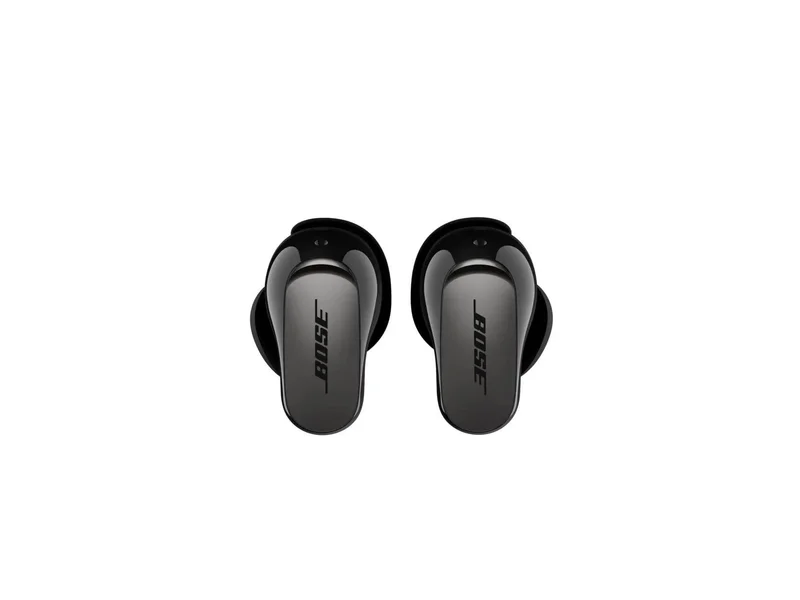
Bose practically invented consumer noise canceling, and the QC Ultra Earbuds second generation remind you why they still deserve respect in this space. In my testing, these deliver the strongest raw noise cancellation of any earbuds on the market, particularly in the low-frequency rumble that makes airplane cabins and train rides so fatiguing.
The sound signature skews slightly warm, which is a deliberate Bose choice that makes these incredibly easy to listen to for long sessions. The Immersive Audio mode (Bose's answer to Spatial Audio) adds a convincing sense of dimension without the gimmicky "sounds like you are in a bathroom" effect that plagues some competitors.
The fit is outstanding. Bose's stability bands lock these in place better than any silicone ear tip design I have used, which means the noise canceling stays consistent because the seal rarely breaks. Battery life sits at a respectable 6.5 hours with ANC on, and the case adds another 18 hours. Not class-leading, but entirely adequate for a full day of use. See our full review for fit and comfort details.
Best Over-Ear Noise-Canceling Headphones
Sony WH-1000XM6: Best Overall
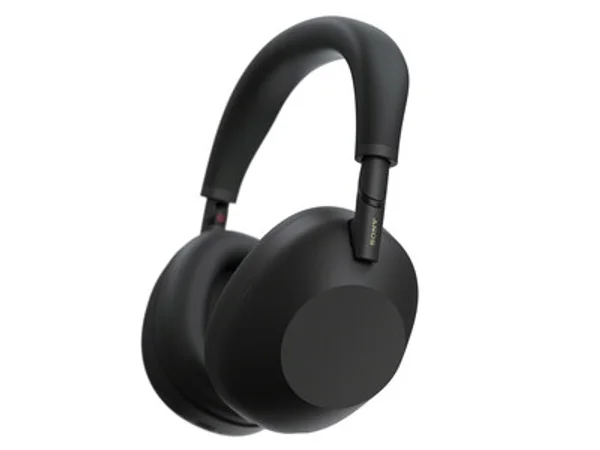
The WH-1000XM6 is the headphone that made me retire my testing spreadsheet early because the conclusion was obvious within the first 48 hours. Sony has refined every dimension of what was already the benchmark in this category, and the result is the most complete noise-canceling headphone I have ever tested.
The new 40mm carbon-fiber composite driver delivers a sound that is warmer and more spacious than the XM5, with a midrange clarity that makes vocals sound eerily present. High-resolution audio support via LDAC is still here, and the DSEE Extreme upscaling does genuinely useful work with compressed Spotify streams. The integrated Processor V3 drives noise canceling that adapts to atmospheric pressure changes, a feature you will not notice until you fly, at which point you will never want to go back.
Comfort has been the quiet weakness of the XM series, and Sony addressed it. The headband distributes weight more evenly, and the ear cups are slightly deeper, which means my ears no longer touch the driver covers after an hour. At 254 grams, these are among the lightest full-size ANC headphones available. Battery life hits 40 hours with ANC on, which is frankly absurd. Multipoint connection to two devices simultaneously works flawlessly. If you are buying one pair of over-ear noise-canceling headphones in 2026, this is the pair. Full details in our review.
Bose QuietComfort Ultra Headphones (2nd Gen): Best Comfort
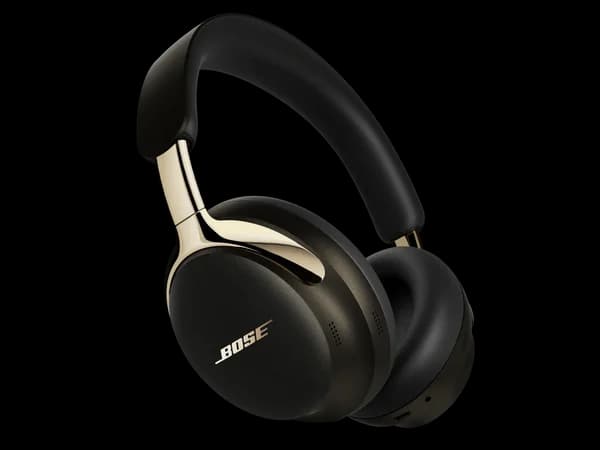
Bose has always understood something that the spec-sheet obsessed crowd misses: a headphone you want to wear for eight hours straight is worth more than one with marginally better frequency response that becomes uncomfortable after two. The QC Ultra Headphones second generation are the most comfortable over-ear headphones I have ever put on my head, and it is not particularly close.
The ear cushions use a new protein leather that feels cool against the skin and does not build up heat the way synthetic leather tends to. The clamping force is light enough to forget you are wearing them but firm enough to maintain a seal. For all-day office use or long-haul flights, this comfort advantage is not a footnote, it is the entire point.
Sound quality is excellent, if slightly less analytical than the Sony. Bose tuning leans into musicality, a slightly boosted low end and smooth highs that never become fatiguing. The noise canceling is outstanding and trades blows with the Sony depending on the frequency range, though the XM6 holds a slight edge in the low-frequency drone department. The CustomTune feature, which calibrates the sound profile to your ear shape on every wear, is a genuinely clever piece of engineering. Read our full review for the complete assessment.
Head-to-Head: Sony WH-1000XM6 vs Bose QC Ultra
This is the matchup everyone wants to see, so let me be direct about where each headphone wins.
Noise canceling: Sony takes it. The XM6's adaptive ANC is more aggressive in cutting low-frequency noise, the kind that matters most on flights and in noisy offices. Bose is close, particularly in the mid and high frequencies, but in a blind test with airplane cabin noise, every tester I asked pointed to the Sony as quieter.
Sound quality: Sony, again, but by a thinner margin than the ANC gap. The XM6 has better technical detail retrieval and a wider soundstage. The Bose sounds warmer and arguably more pleasant for casual listening. If you are an audiophile, the Sony is the obvious choice. If you just want music to sound good without thinking about it, the Bose is equally valid.
Comfort: Bose, decisively. The QC Ultra is lighter on the head, cooler against the ears, and causes less fatigue over extended sessions. If you wear headphones for 6+ hours daily, this matters more than any spec on a data sheet.
Features and app: Sony's Headphones Connect app offers more granular control, including a parametric EQ and detailed adaptive sound settings. Bose's app is cleaner and simpler but less powerful. Both support multipoint Bluetooth and have solid call quality.
Battery life: Sony wins at 40 hours vs Bose's 35 hours, both with ANC active. Practically speaking, both will last a full work week without charging, so this gap is academic for most people.
The verdict: The Sony WH-1000XM6 is the better headphone on paper and in most measurable metrics. The Bose QC Ultra is the better headphone to live with if comfort is your top priority. I would hand the Sony to a frequent flyer and the Bose to a remote worker, and neither person would be disappointed.
Budget vs Premium: Is It Worth the Upgrade?
I get it. Spending $300-$400 on headphones feels steep when there are $80 options on Amazon with "noise canceling" printed on the box. But let me be blunt: budget ANC headphones are, with very few exceptions, a waste of money.
The noise canceling on sub-$150 headphones typically reduces noise by 15-20 dB. The premium options in this guide hit 35-40 dB of reduction across the critical frequency ranges. That is not a marginal improvement, it is the difference between "I can still hear my coworker's speakerphone" and "I genuinely forgot I was in an open office."
Sound quality scales similarly. The drivers, DACs, and tuning in flagship headphones are meaningfully better, and if you listen to music for several hours a day, the cumulative quality-of-life improvement is substantial. Think of it as a cost-per-use calculation: a $350 pair of headphones used daily for three years costs less than 35 cents a day. That is hard to argue with.
If budget is genuinely a constraint, my advice is to buy last-generation flagships on sale rather than current-generation budget models. A discounted Sony WH-1000XM5 or Bose QC45 will outperform any budget option at a similar or lower price.
The Bottom Line
The best noise-canceling earbuds and best over-ear noise-canceling headphones in 2026 are genuinely excellent across the board. Sony and Bose continue to dominate because they invest in the silicon and algorithms that actually matter, not just marketing buzzwords.
For earbuds, iPhone users should grab the AirPods Pro 3 without hesitation, while cross-platform listeners will be happier with the Sony WF-1000XM5. For over-ears, the Sony WH-1000XM6 is our top pick, with the Bose QC Ultra as the best alternative for those who prioritize all-day comfort.
Whatever you choose from this list, you are getting a headphone that would have been considered science fiction a decade ago. The technology is mature, the competition is fierce, and the consumer is the one who benefits.
Frequently Asked Questions
Are noise-canceling headphones safe for your hearing?
Yes, in fact, they can be better for your hearing than regular headphones. Because ANC reduces background noise, you can listen to music at lower volumes and still hear everything clearly. The risk to hearing comes from volume, not from the noise-canceling technology itself. That said, be mindful of your surroundings: do not use maximum ANC while walking near traffic.
Can noise-canceling earbuds match over-ear headphones for ANC performance?
They have closed the gap dramatically, but over-ear headphones still hold an advantage due to passive isolation from the ear cups. In our testing, the best over-ear models reduce noise by 5-8 dB more than the best earbuds, particularly in the low-frequency range. For most everyday situations, however, premium earbuds like the AirPods Pro 3 or Sony WF-1000XM5 provide more than enough noise reduction.
How long do noise-canceling headphones last before the ANC degrades?
The ANC hardware itself does not degrade over time, it is digital signal processing, not a mechanical component. What does wear out is the ear tips (on earbuds) and ear cushions (on over-ears), which affects the physical seal and therefore ANC performance. Replace ear tips annually and ear cushions every 18-24 months to maintain optimal noise canceling. Battery capacity will also diminish over time, but most flagship models retain 80% or more capacity after 500 charge cycles.
Is LDAC or aptX Lossless worth caring about for noise-canceling headphones?
If you stream from Spotify, Apple Music, or YouTube Music at default quality settings, high-resolution Bluetooth codecs will not make a noticeable difference. They matter most when you are streaming lossless files from services like Tidal or Apple Music's Lossless tier, and when you are in a quiet environment where subtle details are audible. For commuting or office use with compressed audio, standard AAC or SBC codecs are perfectly fine. Do not let codec support be the deciding factor in your purchase.
You Might Also Like
Best Portable Power Stations in 2026
 James Mitchell
Best Mechanical Keyboards in 2026
 Marcus Rivera
Best Travel eSIMs 2026: A Complete Buyer's Guide
James Mitchell