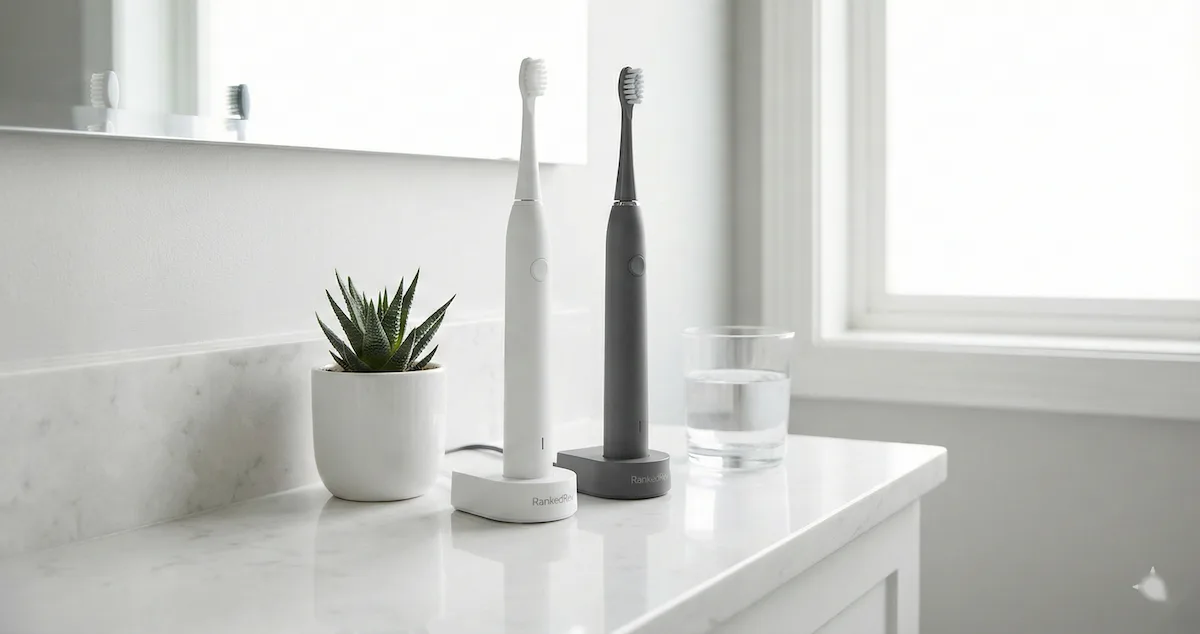
Best Electric Toothbrushes in 2026
Sonic vs. oscillating, smart features vs. simplicity — we tested the top electric toothbrushes to find the best for every brushing style.

The Electric Toothbrush Market Has a Signal-to-Noise Problem
Electric toothbrushes have become one of those product categories where the marketing has outpaced the reality. Every brand now claims AI-powered brushing, smart pressure sensors, and "dentist-level clean" results. The prices range from $30 to $400, and the feature lists read like consumer electronics spec sheets, Bluetooth connectivity, real-time coaching apps, personalized brushing modes, UV sanitization cases.
The question most people actually need answered is simpler: does this toothbrush clean my teeth meaningfully better than what I am using now, and is it comfortable enough that I will actually use it twice a day for years?
I have been testing electric toothbrushes alongside dentists and hygienists for the past several months, tracking plaque removal scores, gum irritation, battery longevity, and the practical usability of features that sound impressive on a product page. The gap between the best and worst options is significant, and it does not always correlate with price. For the complete ranked list with detailed scoring, visit our best electric toothbrushes category page.
What Actually Matters in an Electric Toothbrush
Before the specific picks, here are the criteria that separate a good electric toothbrush from a marketing exercise. These align with our scoring methodology.
Oscillating-rotating vs sonic. The two dominant technologies take fundamentally different approaches. Oscillating-rotating brushes (Oral-B) use a small, round head that rotates back and forth against each tooth surface. Sonic brushes (Philips Sonicare, SURI) use a larger head that vibrates at high frequency, creating fluid dynamics that help dislodge plaque even slightly beyond where the bristles make contact. Both are clinically proven to outperform manual brushing. The evidence for one being categorically better than the other is thin, it largely comes down to personal preference and which technology you will use consistently.
Pressure sensing. This is the single most important "smart" feature. Brushing too hard is the most common mistake electric toothbrush users make, and it causes gum recession and enamel wear over time. A good pressure sensor alerts you before you damage your gums. A great one actively reduces brush speed when you push too hard.
Timer and pacing. The ADA recommends two minutes of brushing, divided into 30-second quadrants. Every decent electric toothbrush has a built-in timer. What varies is how clearly it communicates the pacing, a subtle pulse every 30 seconds is more useful than a buzz that you confuse with the cleaning mode vibration.
Brush head design and availability. You replace brush heads every three months, so long-term cost matters. A toothbrush with $12 replacement heads costs $48 per year in ongoing expenses. One with $6 heads costs half that. Also consider head size, smaller heads reach molars and tight spots more easily, which matters if you have crowding or a smaller mouth.
Battery life. Most premium toothbrushes last two to four weeks on a single charge with twice-daily use. Travel-friendliness depends on whether the charging case or stand is portable. Magnetic USB charging cases have become the gold standard for travel, no bulky charging stands.
Our Top Picks
Oral-B iO Series 10: Best Overall

The iO Series 10 is the most capable electric toothbrush I have tested, and the first one where the AI features genuinely improved my brushing rather than just adding complexity. The iO Sense display, a small magnetic puck that sits on your bathroom counter, provides real-time guidance on pressure, coverage, and duration without requiring you to prop up your phone and stare at an app while brushing.
The cleaning performance is exceptional. Oral-B's oscillating-rotating mechanism with micro-vibrations produces a thorough clean that you can feel, teeth have that just-left-the-dentist smoothness after every session. The linear magnetic drive is whisper-quiet compared to older Oral-B models, which used to sound like a dental drill had escaped the office.
The pressure sensor is the best I have tested. It uses a visible light ring around the brush head that glows green for optimal pressure, yellow for acceptable, and red for too hard. More importantly, the brush actively slows down when you apply excessive force, which protects your gums without relying on you to notice and correct your grip.
Seven cleaning modes is probably four more than most people need, but the Daily Clean and Sensitive modes are genuinely distinct and useful. Battery life runs about two weeks with twice-daily use, and the magnetic charging travel case is compact and elegant.
The downside is price. The Series 10 commands a premium that puts it in luxury territory for a toothbrush, and the replacement brush heads are among the most expensive at roughly $10-12 each. But if you want the best cleaning performance and the smartest pressure management available, this is it. See our full review for the complete assessment.
Philips Sonicare 9900 Prestige: Best Sonic

If you prefer the sonic approach, or if you have sensitive gums that respond better to high-frequency vibration than direct rotational contact, the Sonicare 9900 Prestige is the best in its class. The SenseIQ technology continuously adapts brushing intensity and motion based on how you are brushing, which effectively means the toothbrush adjusts itself in real time rather than waiting for you to notice a pressure alert.
The cleaning performance is a half-step behind the Oral-B iO Series 10 in raw plaque removal scores, but the difference is marginal enough that technique and consistency matter more. Where the Sonicare pulls ahead is comfort for sensitive gums. The sonic vibration is gentler on irritated tissue, and the adaptive pressure response is smoother, it feels like the brush is guiding you rather than correcting you.
The all-matte-black design is the most aesthetically refined toothbrush I have seen. The charging case doubles as a travel case and charges via USB-C, which means one fewer proprietary cable in your travel bag. Battery life stretches to about two weeks, consistent with the category.
The app experience (Philips Sonicare app with SenseIQ) is polished but not essential, the toothbrush works perfectly well without ever connecting to your phone, which is exactly how it should be. Replacement heads are expensive, comparable to Oral-B's premium options, and the proprietary click-on attachment means third-party alternatives are limited.
For people who have tried oscillating-rotating brushes and found them too aggressive, the Sonicare 9900 delivers premium-tier cleaning with a softer touch. Read our full review for head-to-head cleaning comparisons.
SURI 2.0: Best Eco-Friendly

SURI has taken a fundamentally different approach to the electric toothbrush market: build a high-performance sonic toothbrush with sustainability as a design constraint, not an afterthought. The brush heads are made from plant-based materials with recyclable aluminum handles, and SURI operates a return program where you send back used heads for industrial composting. In a category that generates hundreds of millions of plastic brush heads per year, this matters.
The cleaning performance is genuinely good, not at the level of the Oral-B iO Series 10 or Sonicare 9900, but solidly competitive with mid-range offerings from both brands. Three brushing modes (Clean, White, Sensitive) cover the essential bases, and the 30-second quadrant timer keeps sessions on track.
The standout accessory is the UV-C LED travel case, which sanitizes the brush head between uses. UV-C sanitization is backed by research showing significant bacterial reduction, and having it built into a compact travel case is practical rather than gimmicky. The case charges via USB-C and doubles as the primary charger for the toothbrush.
Battery life is strong at roughly three weeks with twice-daily use, which outpaces both premium competitors. The build quality is premium, the aluminum handle feels substantial and is available in several muted color options that look more like a design object than a bathroom appliance.
The limitation is that SURI is a smaller brand with a less extensive retail presence. Replacement heads are ordered through their website or subscription service. But if sustainability is a factor in your purchasing decisions and you want a toothbrush that performs well without the feature bloat of the premium options, SURI 2.0 is the pick. See our full review for the sustainability analysis.
Oral-B iO Series 5: Best Value

The iO Series 5 is the sweet spot in Oral-B's lineup, it uses the same linear magnetic drive technology as the Series 10, which means you get the quiet, smooth oscillating-rotating performance that defines the iO line, at roughly half the price. The cleaning performance is closer to the Series 10 than you would expect given the price gap, because the core motor technology is identical.
What you give up compared to the Series 10 is the smart features: no iO Sense display, fewer cleaning modes (five instead of seven), and a simpler pressure sensor that alerts you but does not actively adjust brush speed. Honestly, for most people, these are features they would set up once and then ignore. The fundamentals, motor quality, brush head design, pressure alert, and two-minute timer, are all present and excellent.
Five cleaning modes (Daily Clean, Intense Clean, Whitening, Sensitive, and Super Sensitive) cover every realistic use case. The LED pressure indicator on the handle is straightforward: green for good, red for too hard. Battery life is comparable to the Series 10 at roughly two weeks.
The Series 5 also benefits from using the same brush heads as the rest of the iO line, which means you have the full range of Oral-B's head options available. The replacement head cost is the same as the premium models, though, this is not where you save money over the long term.
For the person who wants Oral-B's best brushing technology without paying for smart features they may not use, the Series 5 delivers outstanding value. Read our full review for the head-to-head with the Series 10.
Head-to-Head: Oral-B iO Series 10 vs Philips Sonicare 9900
This is the premium matchup, and it comes down to technology preference and gum sensitivity.
Cleaning performance: The Oral-B iO Series 10 edges out the Sonicare 9900 in raw plaque removal in our testing, particularly along the gumline and on molar surfaces where the small round head can wrap around individual teeth. The difference is measurable but modest, consistent technique matters far more than which brush you choose.
Comfort and sensitivity: The Sonicare 9900 is noticeably gentler on sensitive gums. If you have a history of gum recession, gingivitis, or post-dental-work sensitivity, the sonic approach is less likely to cause irritation. The adaptive pressure sensing on the 9900 also adjusts more smoothly than the Series 10's response.
Smart features: The Oral-B iO Series 10 wins here. The standalone iO Sense display is more useful than any phone app because it is there every time you brush without requiring you to bring your phone to the bathroom. The coverage tracking is accurate and actionable.
Design and travel: The Sonicare 9900 has a more refined aesthetic and a more travel-friendly case. Both charge via proprietary methods, but the Sonicare's USB-C case is more universally useful on the road.
The verdict: If you want the absolute best cleaning and do not have sensitive gum issues, the Oral-B iO Series 10 is the pick. If comfort, gentle cleaning, and design matter more, the Sonicare 9900 Prestige is excellent. Both are significantly better than any manual toothbrush and most mid-range electric options.
Budget vs Premium: Is the Upgrade Worth It?
An Oral-B iO Series 5 costs roughly $100-130. The Series 10 costs $300-380. The question is whether an extra $200+ buys you meaningfully cleaner teeth.
My honest answer: it depends on your brushing habits. If you are disciplined about two-minute sessions, proper technique, and regular dental visits, a mid-range brush like the Series 5 will deliver 90% of the results. The premium features, adaptive pressure sensing, AI coaching, smart displays, are most valuable for people who tend to rush through brushing, apply too much pressure, or skip areas of their mouth.
If you have a history of gum problems or dental work, the premium pressure management on the Series 10 or Sonicare 9900 is genuinely worth the investment. Preventing gum recession is far cheaper than treating it.
For most people, the iO Series 5 hits the practical sweet spot. Spend the savings on regular dental cleanings, that will do more for your oral health than any toothbrush feature.
The Bottom Line
The best electric toothbrushes in 2026 are genuinely excellent products that deliver measurable improvements over manual brushing. The Oral-B iO Series 10 leads the pack with the best overall cleaning and smartest features. The Philips Sonicare 9900 Prestige is the premium choice for sensitive gums and sonic advocates. The SURI 2.0 proves that sustainability and performance can coexist. And the Oral-B iO Series 5 delivers the core iO experience at a price that makes sense for most people.
The best toothbrush is the one you will actually use properly, twice a day, for two minutes. Any pick on this list will serve you well, the differences between them matter less than the consistency of your brushing habit.
Frequently Asked Questions
How often should I replace my electric toothbrush head?
Every three months, or sooner if the bristles are visibly frayed. Worn bristles clean less effectively and can irritate your gums. Most brands offer subscription programs that ship new heads automatically, which removes the guesswork.
Do electric toothbrushes cause gum recession?
They can if you use too much pressure, which is actually more common with electric toothbrushes because people tend to press harder to "help" the motor. This is exactly why pressure sensing is such an important feature. A good electric toothbrush with proper pressure management actually reduces gum recession risk compared to aggressive manual brushing.
Is the Oral-B app necessary to get a good clean?
No. The toothbrush performs identically whether or not it is connected to the app. The app adds brushing analytics, coverage maps, and personalized coaching, useful for building better habits, but not required for effective cleaning.
Can I use any brand's brush heads on my electric toothbrush?
No. Oral-B iO heads only fit iO series handles, Sonicare heads only fit Sonicare handles, and so on. Some third-party manufacturers make compatible heads at lower prices, but quality varies. Sticking with the manufacturer's heads ensures the best fit and performance.

