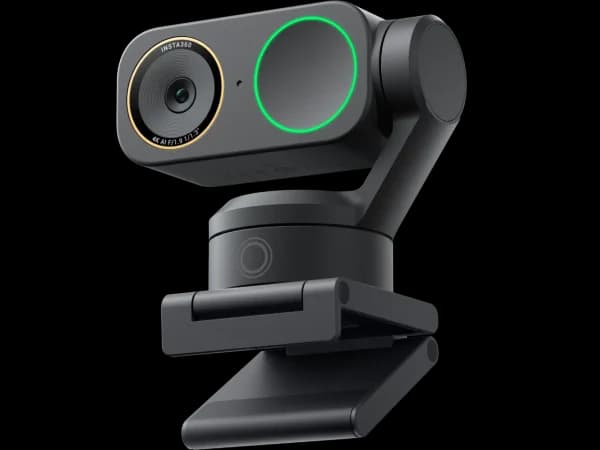

Insta360 Link 2C Pro Review
The Insta360 Link 2C Pro takes the already-excellent Link 2C and upgrades it with a much larger sensor. The low-light improvement is immediately noticeable, and the AI features remain best-in-class for a compact webcam. If you work in varied lighting conditions, the Pro upgrade is worth it.

Insta360 Link 2C Pro Review
The Insta360 Link 2C Pro takes the already-excellent Link 2C and upgrades it with a much larger sensor. The low-light improvement is immediately noticeable, and the AI features remain best-in-class for a compact webcam. If you work in varied lighting conditions, the Pro upgrade is worth it.
Insta360 Link 2C Pro Review
The Insta360 Link 2C Pro takes the already-excellent Link 2C and upgrades it with a much larger sensor. The low-light improvement is immediately noticeable, and the AI features remain best-in-class for a compact webcam. If you work in varied lighting conditions, the Pro upgrade is worth it.

Insta360 Link 2C Pro Pros & Cons
Pros
- Upgraded 1/1.3-inch sensor delivers noticeably better low-light than Link 2C
- AI auto-framing with advanced background blur and virtual backgrounds
- Compact form factor maintains the Link 2C's clean, minimal design
Cons
- No gimbal — all tracking remains digital crop from the larger sensor
- Relatively new (Jan 2026) with limited long-term reliability data
- Price premium over Link 2C is significant for the sensor upgrade alone
Overview
The Insta360 Link 2C Pro answers the one criticism of the original Link 2C: low-light performance. By upgrading to a 1/1.3-inch sensor — the same size found in the flagship Link 2 Pro — Insta360 has eliminated the most meaningful gap between their compact and gimbal webcam lines. The result is a compact, gimbal-free webcam with AI features that rival cameras costing $50 more, paired with low-light performance that approaches the Logitech MX Brio.
Everything else carries over from the Link 2C: AI auto-framing, whiteboard mode, desk view, gesture controls, and the excellent Link Controller app. The Pro suffix here genuinely means a meaningful upgrade, not a marketing exercise.
Features Deep-Dive
1/1.3-Inch Sensor Upgrade
The sensor upgrade is the entire reason the Pro exists, and the difference is tangible. In well-lit rooms, the improvement over the standard Link 2C is subtle — slightly less noise, marginally better dynamic range. In dim rooms, the gap opens dramatically. The larger sensor gathers significantly more light, producing cleaner footage with less grain and better color accuracy in evening lighting, home offices with a single desk lamp, or rooms without direct overhead lighting. If you've ever looked washed out or grainy on a video call, the Pro's sensor is the most direct fix short of buying better lights.
AI Auto-Framing and Whiteboard Mode
The same excellent AI suite from the Link 2C carries over unchanged. Auto-framing is smooth and responsive, keeping you centered through posture shifts, head turns, and chair movements. Whiteboard mode detects your whiteboard, corrects perspective, enhances marker contrast, and overlays your video in a corner. Desk view angles downward to capture documents and objects. These features work identically to the Link 2C — the Pro upgrade is purely about sensor quality, not AI capabilities.
Compact Form Factor
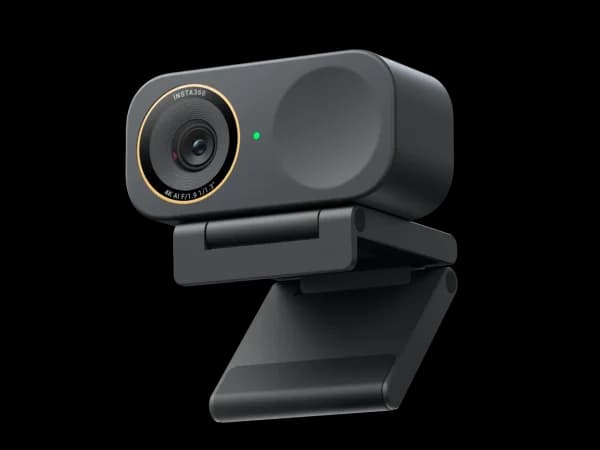
The Link 2C Pro maintains the same compact, clipless design as its predecessor. The magnetic mount keeps things clean, and the camera doesn't draw attention when mounted on a monitor. Despite housing a significantly larger sensor, the body size increase over the standard Link 2C is minimal. Insta360 managed the sensor upgrade without sacrificing the discreet form factor that makes the Link 2C line appealing.
Pricing Analysis
At $200, the Link 2C Pro sits at the same price as the Logitech MX Brio, Insta360 Link 2, and Elgato Facecam 4K — but offers a different balance of strengths. The MX Brio has a slightly larger sensor (1/1.2" vs 1/1.3") but weaker AI features. The Link 2 has a gimbal for physical tracking but uses a smaller standard sensor. The Facecam 4K offers lens filters and Stream Deck integration but no AI features or microphone. The Link 2C Pro's combination of a large sensor, advanced AI features, and compact body is unique at this price. It's arguably the most well-rounded webcam in the entire roundup.
Who Is This For?
Insta360 Link 2C Pro works best for:
- Remote professionals in varied lighting who want the AI features of the Link 2C without sacrificing low-light performance — home offices with inconsistent lighting, spaces that transition from daylight to artificial light, or rooms without ideal overhead coverage
- Users upgrading from the Link 2C who love the features and form factor but found the standard sensor lacking in dim conditions — the Pro is the exact same experience with meaningfully better image quality when light is scarce
- Anyone who wants the best compact all-rounder — the combination of large sensor, AI tracking, whiteboard mode, desk view, and compact design makes this the most feature-complete non-gimbal webcam available
Who Should NOT Use This
Insta360 Link 2C Pro might not be the right choice if:
- You need physical tracking — the Pro remains a digital-tracking-only webcam. If you walk around during presentations, the Insta360 Link 2 ($200) or Link 2 Pro ($250) with their gimbals are better suited, even though they're bulkier
- Your budget is tight — at $200, you're paying a $50 premium over the standard Link 2C for the sensor upgrade. If your workspace has good lighting, the Link 2C at $150 produces nearly identical results for less
Bottom Line
The Insta360 Link 2C Pro takes the already-excellent Link 2C and upgrades it with a much larger sensor. The low-light improvement is immediately noticeable, and the AI features remain best-in-class for a compact webcam. If you work in varied lighting conditions, the Pro upgrade is worth it.
FAQ
Is the Pro worth $50 more than the standard Link 2C?
If your workspace has consistent, good lighting — a bright overhead light, a desk lamp, or natural daylight — the standard Link 2C ($150) produces great results, and the Pro's sensor advantage is marginal. If you work in a room with dim or variable lighting — a single desk lamp, evening calls after sunset, or a space with poor overhead coverage — the Pro's larger sensor makes a visible, meaningful difference. The $50 premium buys you better low-light performance, full stop.
How does the Link 2C Pro compare to the Logitech MX Brio?
Both are $200 webcams with large sensors. The MX Brio has a slightly larger sensor (1/1.2" vs 1/1.3") and includes a privacy shutter, giving it a marginal edge in the absolute worst lighting conditions. The Link 2C Pro has significantly better AI auto-framing, whiteboard mode, desk view, gesture controls, and a more capable companion app. For pure image quality in a dark room, the MX Brio has a slight edge. For everything else, the Link 2C Pro offers more practical value.
Should I get the Link 2C Pro or the Link 2 Pro with the gimbal?
The Link 2C Pro ($200) is compact, silent, and uses digital tracking. The Link 2 Pro ($250) adds a 3-axis gimbal for physical tracking, making it bulkier and audible during movement. If you're seated during calls and want the cleanest desk setup, get the 2C Pro. If you present, teach, or demo products and need the camera to physically follow you, the gimbal on the Link 2 Pro is worth the $50 and extra bulk.
Who Is Insta360 Link 2C Pro Best For?
Professionals who want the best compact webcam with superior low-light performance and AI features
The Bottom Line
The Insta360 Link 2C Pro takes the already-excellent Link 2C and upgrades it with a much larger sensor. The low-light improvement is immediately noticeable, and the AI features remain best-in-class for a compact webcam. If you work in varied lighting conditions, the Pro upgrade is worth it.
Buy on AmazonKey Specs
Scoring Breakdown
Resolution, frame rate, dynamic range, color accuracy, and sharpness of video output
Image quality in dimly lit environments, noise handling, and sensor sensitivity
Speed and accuracy of autofocus, plus AI-powered face/body tracking capabilities
Built-in microphone clarity, noise cancellation, and suitability for calls/streaming
Physical construction quality, mounting system, privacy features, and aesthetic design
Companion app quality, customization options, HDR modes, and background effects
Overall price-to-performance ratio considering features and build quality