
Pure Protein Chocolate Peanut Butter Bar Review
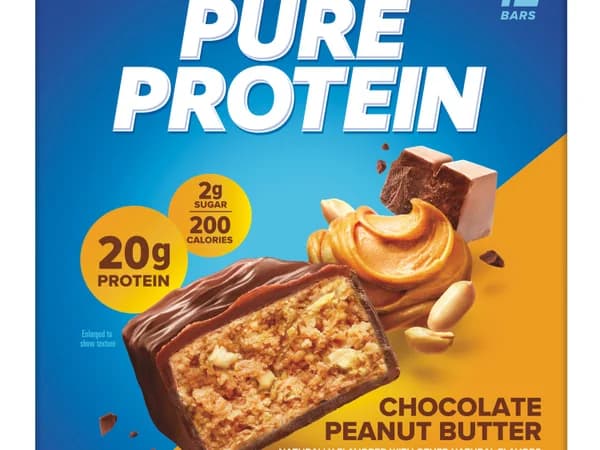
Pure Protein wins on value — 20g protein at ~$1.33/bar is the cheapest protein per gram in this comparison. The whey blend is effective. But sucralose and likely artificial flavors earn it some of the lowest ingredient scores. This is the bar for those who count macros and dollars, not ingredient labels.

Pure Protein Chocolate Peanut Butter Bar Review
Pure Protein wins on value — 20g protein at ~$1.33/bar is the cheapest protein per gram in this comparison. The whey blend is effective. But sucralose and likely artificial flavors earn it some of the lowest ingredient scores. This is the bar for those who count macros and dollars, not ingredient labels.
Pure Protein Chocolate Peanut Butter Bar Review
Pure Protein wins on value — 20g protein at ~$1.33/bar is the cheapest protein per gram in this comparison. The whey blend is effective. But sucralose and likely artificial flavors earn it some of the lowest ingredient scores. This is the bar for those who count macros and dollars, not ingredient labels.

Pure Protein Chocolate Peanut Butter Bar Pros & Cons
Pros
- Best value in this comparison at ~$1.33/bar with 20g protein per bar
- Whey protein blend provides good bioavailability and complete amino acids
- Widely available at nearly every grocery store, convenience store, and pharmacy
Cons
- Contains sucralose — a controversial artificial sweetener penalized in our scoring
- Likely contains artificial flavors alongside the sucralose sweetening
- Minimal transparency about sourcing, testing, or manufacturing practices
Overview
Pure Protein Chocolate Peanut Butter is the bar you buy when you have done the math and decided that protein per dollar is the metric that matters most. At roughly $1.33 per bar with 20g of protein, no other product in this comparison delivers more protein for less money. The whey protein blend provides good bioavailability, and the chocolate peanut butter flavor is credible enough to eat without grimacing. For the college student, the budget-conscious meal prepper, or anyone who views protein bars as functional fuel rather than a culinary experience, Pure Protein delivers the numbers.
The cost savings come from somewhere, and in this case they come from ingredient quality. Sucralose provides the sweetness, likely artificial flavors contribute to the taste, and transparency about sourcing and manufacturing practices is minimal at best. Our ingredient purity score of 3.0 ties Quest for the lowest in the comparison, and the transparency score of 4.0 is the lowest outright. Pure Protein does not pretend to be clean or artisanal. It is a mass-market product engineered for protein delivery at the lowest possible cost, and it executes that mission with remarkable efficiency. Whether that mission aligns with your values is the question this review helps you answer.
This product is best for budget buyers who want the most protein per dollar and are not concerned about artificial sweeteners.
Features Deep-Dive
The Unbeatable Protein-Per-Dollar Math
The numbers tell a stark story. At $1.33/bar with 20g protein, Pure Protein delivers approximately 15g of protein per dollar spent. For context: Quest delivers 10.1g per dollar, think! delivers 10g per dollar, Barebells delivers about 6g per dollar, and RXBAR delivers roughly 4.8g per dollar. Pure Protein is not marginally cheaper -- it is in a different league of cost efficiency. Scale that over a month: if you eat one bar daily, Pure Protein costs roughly $40/month while Quest costs $62 and Barebells costs $90. That $50/month difference between Pure Protein and a premium bar adds up to $600/year -- enough to buy a solid gym membership. For consumers operating on tight budgets, and particularly for populations like college students or early-career professionals who need affordable protein supplementation, the economics are genuinely compelling. The question is never whether Pure Protein is the cheapest way to get protein from a bar. It clearly is. The question is what that cheapness costs in other dimensions.
Whey Protein Blend Effectiveness
Despite the budget positioning, Pure Protein's actual protein source is respectable. The whey protein blend (typically a combination of whey protein concentrate and whey protein isolate) provides good bioavailability, a complete amino acid profile, and effective leucine content for supporting muscle protein synthesis. Our protein source quality score of 7.5 is actually higher than KIND (6.0) and Orgain (6.5), and competitive with think! (7.0). This is an important point: Pure Protein did not cut corners on the protein itself. The whey blend is a legitimate, effective protein source that your body can actually utilize. Where Pure Protein cuts costs is in everything surrounding the protein -- the sweeteners, flavors, and production transparency. It is like a car with a solid engine but questionable upholstery: the core function works well, even if the surrounding details are less inspiring.
The Transparency Gap
Pure Protein's lowest-in-comparison transparency score (4.0) reflects a pattern common in mass-market sports nutrition: the product tells you what is in it (because labeling laws require that), but volunteers very little beyond the legal minimum. There is minimal information about protein sourcing (where the whey comes from, whether cows are grass-fed or grain-fed), no third-party testing certifications for heavy metals or contaminants, and no public commitment to ingredient sourcing standards. This does not mean the product is unsafe -- it is sold in major retailers and meets all FDA requirements. But for consumers who have learned to value transparency as a proxy for quality (think Informed Sport certification, NSF Certified for Sport, or B Corp standards), Pure Protein's silence on these topics is itself informative. The brand is optimizing for price and macros, not for earning trust through disclosure.
Pricing Analysis
At roughly $16 for a box of 12 (~$1.33 per bar), Pure Protein is the least expensive option in this comparison by a meaningful margin. The next cheapest options -- KIND and Orgain at $1.50/bar -- cost 13% more while delivering significantly less protein (12g and 10g respectively). The budget tier competitors with comparable protein counts (think! at $2.00/bar, Quest at $2.08/bar) cost 50-56% more per bar.
The value argument is strongest when you compare protein delivery. Pure Protein's 15g of protein per dollar dwarfs every competitor. But value is not purely mathematical. If you factor in ingredient quality, Pure Protein's 3.0 purity score means you are getting the cheapest possible protein with the cheapest possible surrounding ingredients. think! costs $0.67 more per bar but avoids sucralose and scores 5.0 on ingredient purity. Quest costs $0.75 more but delivers an additional gram of protein with higher protein source quality. For most budget-conscious buyers, the relevant comparison is Pure Protein versus think!: an extra $0.67/bar buys you sucralose-free zero-sugar at the same 20g protein level. Whether that $0.67 is worth it depends entirely on how much you care about sucralose.
Who Is This For?
Pure Protein Chocolate Peanut Butter Bar works best for:
- College students and young professionals on tight budgets who need affordable protein supplementation. At ~$40/month for daily use, Pure Protein is the most accessible way to add 20g of quality whey protein to your daily intake without straining a limited food budget.
- High-volume protein consumers who eat multiple bars per week and feel the cumulative cost difference. If you go through 3-4 bars per week, Pure Protein saves $30-50/month compared to premium options -- savings that compound into hundreds of dollars annually.
- Purely macro-focused fitness enthusiasts who evaluate food by protein, calories, and cost, and who are not particularly concerned about ingredient sourcing or artificial sweetener content. If your food philosophy is "hit the macros," Pure Protein is the most efficient tool for the job.
- Emergency stash buyers who keep protein bars in desk drawers, glove compartments, and gym bags as backup nutrition. At $1.33/bar, stocking multiple locations is financially painless, and the widespread availability means restocking is effortless.
Who Should NOT Use This
Pure Protein Chocolate Peanut Butter Bar might not be the right choice if:
- You avoid sucralose or artificial sweeteners. Pure Protein uses sucralose for sweetening, and the ingredient list likely includes artificial flavors. If you have drawn a line at artificial sweeteners, think! achieves the same 20g protein at 0g sugar without sucralose for $0.67 more per bar. That modest premium buys a meaningfully cleaner sweetener profile.
- Ingredient transparency matters to you. Pure Protein's transparency score of 4.0 is the lowest in our comparison. There is no third-party testing certification, no sourcing disclosure, and minimal information about manufacturing practices. If you want to know where your protein comes from and how it is processed, brands like RXBAR, Orgain, or Garden of Life provide significantly more visibility.
- You want an enjoyable eating experience. Our taste-texture score of 7.0 is the lowest in the budget tier. Pure Protein is perfectly edible, but it tastes like what it is: an affordable, mass-produced protein bar. If the eating experience matters to you, spending an extra $0.50-1.00 per bar on Quest (8.5), KIND (8.0), or think! (7.5) delivers a noticeably more pleasant experience.
Bottom Line
Pure Protein wins on value -- 20g protein at ~$1.33/bar is the cheapest protein per gram in this comparison, and the whey blend is genuinely effective. The trade-offs are sucralose, likely artificial flavors, and minimal transparency. This is the bar for those who count macros and dollars, not ingredient labels.
FAQ
Is Pure Protein Chocolate Peanut Butter worth the price?
In pure protein-per-dollar terms, Pure Protein is the best value in this comparison and it is not close. You get 20g of whey protein for $1.33 -- roughly 50% cheaper per gram of protein than Quest or think!. The question is whether you are comfortable with the ingredient profile that enables that price. If sucralose and minimal transparency are acceptable trade-offs, Pure Protein's value is unbeatable. If they are not, think! at $2.00/bar is the most cost-effective step up in ingredient quality.
How does Pure Protein compare to Quest and think!?
All three deliver high protein (20-21g) at budget prices, but with different compromise strategies. Pure Protein is cheapest ($1.33/bar) but uses sucralose and has the least transparency. Quest ($2.08/bar) has the highest protein (21g) but uses both sucralose and erythritol. think! ($2.00/bar) avoids sucralose specifically but uses sugar alcohols. If budget is the top priority, Pure Protein wins. If avoiding specific sweeteners matters, think! or Quest may be worth the premium, depending on which sweetener you find most objectionable.
Is the whey protein in Pure Protein actually effective?
Yes. The whey protein blend provides good bioavailability and a complete amino acid profile regardless of the bar's budget positioning. Whey protein's effectiveness for muscle protein synthesis is one of the most well-established findings in sports nutrition research. The protein source quality score of 7.5 reflects this -- the whey itself is solid. The lower scores in other categories (ingredient purity, transparency) do not diminish the protein's actual biological effectiveness.
Can I use Pure Protein bars as meal replacements?
You can, but they are not designed for that purpose. At roughly 200 calories and 20g protein, a Pure Protein bar provides adequate protein but insufficient calories, fat, fiber, and micronutrients for a complete meal. If you are skipping a meal occasionally and grabbing a bar instead, it works in a pinch. If you are routinely replacing meals with bars, you are missing significant nutritional needs. Pair the bar with fruit, nuts, or vegetables to approximate a more balanced meal.
Who Is Pure Protein Chocolate Peanut Butter Bar Best For?
Budget buyers who want the most protein per dollar and are not concerned about artificial sweeteners
The Bottom Line
Pure Protein wins on value — 20g protein at ~$1.33/bar is the cheapest protein per gram in this comparison. The whey blend is effective. But sucralose and likely artificial flavors earn it some of the lowest ingredient scores. This is the bar for those who count macros and dollars, not ingredient labels.
Try Pure Protein Chocolate Peanut Butter Bar TodayKey Specs
Scoring Breakdown
Evaluates overall cleanliness of the ingredient list. Penalizes artificial sweeteners (sucralose, acesulfame K), sugar alcohols (erythritol, maltitol, sorbitol), artificial preservatives, artificial colors/flavors, and seed oils. Rewards whole food ingredients, organic certification, and minimal processing.
Assesses the quality and bioavailability of protein sources. Ranks: grass-fed whey isolate > whey concentrate > egg white > collagen > multi-source plant blend > single-source plant protein. Considers amino acid completeness and digestibility (PDCAAS score).
Analyzes total sugar content and sweetener types. Penalizes high sugar (>8g), sugar alcohols, and artificial sweeteners. Rewards natural sweeteners (dates, honey, monk fruit) and low total sugar while maintaining palatability.
Evaluates protein-to-calorie ratio, fiber content (3g+ preferred), and overall macronutrient distribution. Higher protein per calorie scores better. Balanced fat content and adequate fiber are preferred.
Third-party certifications including USDA Organic, Non-GMO Project Verified, NSF Certified for Sport, Informed Sport, Kosher, B Corp status, and independent lab testing verification.
Based on aggregated consumer reviews, expert taste tests, and texture assessments across major review sources. Considers flavor variety, chewiness vs. chalkiness, and overall enjoyment.
Full ingredient disclosure, clear allergen labeling, sourcing information (e.g., grass-fed, organic origin), nutritional claim accuracy, and company transparency practices.