
No Cow Peanut Butter Chocolate Chip Protein Bar Review
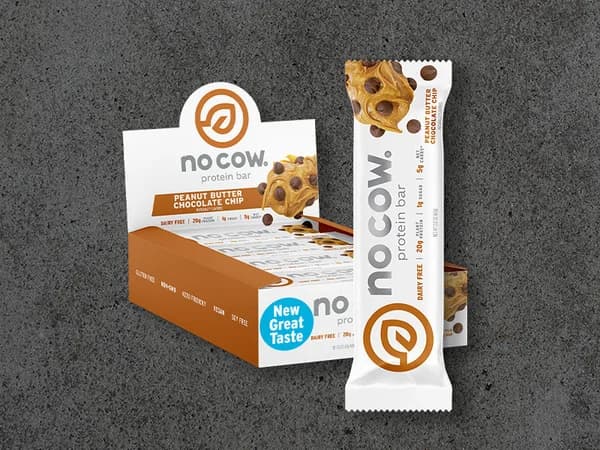
No Cow achieves an impressive 20g protein with 1g sugar in a fully vegan bar. The brown rice and pea protein blend provides decent (though not complete) amino acids. The allulose sweetener is natural but its classification remains debated. Strong macros for the plant-based category.

No Cow Peanut Butter Chocolate Chip Protein Bar Review
No Cow achieves an impressive 20g protein with 1g sugar in a fully vegan bar. The brown rice and pea protein blend provides decent (though not complete) amino acids. The allulose sweetener is natural but its classification remains debated. Strong macros for the plant-based category.
No Cow Peanut Butter Chocolate Chip Protein Bar Review
No Cow achieves an impressive 20g protein with 1g sugar in a fully vegan bar. The brown rice and pea protein blend provides decent (though not complete) amino acids. The allulose sweetener is natural but its classification remains debated. Strong macros for the plant-based category.

No Cow Peanut Butter Chocolate Chip Protein Bar Pros & Cons
Pros
- 20g plant protein with only 1g sugar — one of the best macro profiles among vegan bars
- Dairy-free and vegan with brown rice and pea protein blend
- No artificial sweeteners — uses allulose, a naturally occurring rare sugar
Cons
- Allulose classification is debated — technically a rare sugar, not a traditional sweetener
- No major third-party certifications for purity or banned substance testing
- Some consumers report a slight aftertaste from the allulose sweetening
Overview
No Cow occupies a unique position in the protein bar landscape: it delivers the macro profile that vegan consumers have been told they cannot have. Twenty grams of plant protein with only 1g of sugar in a fully dairy-free bar — numbers that match or beat most whey-based competitors. The brown rice and pea protein blend provides a reasonably complete amino acid profile, and the use of allulose as a sweetener avoids both the sugar count of dates and the digestive controversy of maltitol.
The Peanut Butter Chocolate Chip flavor is the bestseller in No Cow's lineup for good reason. The peanut butter flavor reads as authentic rather than artificial, and the chocolate chips add textural contrast to what would otherwise be a uniformly dense bar. It is not going to fool anyone into thinking they are eating a Reese's Cup, but it delivers genuine flavor satisfaction for a plant protein bar — a category where the bar (pun noted) has historically been very low.
Where No Cow falls short is in the certification and transparency departments. Despite positioning itself as a health-conscious, plant-forward brand, it carries no major third-party certifications — no NSF for Sport, no USDA Organic, no Non-GMO Project Verified. The ingredient list is cleaner than many competitors but longer than RXBAR's famously short roster. No Cow lives in the middle ground: better macros than the whole-food bars, cleaner ingredients than the engineered bars, but not the best at either extreme.
Features Deep-Dive
Vegan Macro Engineering
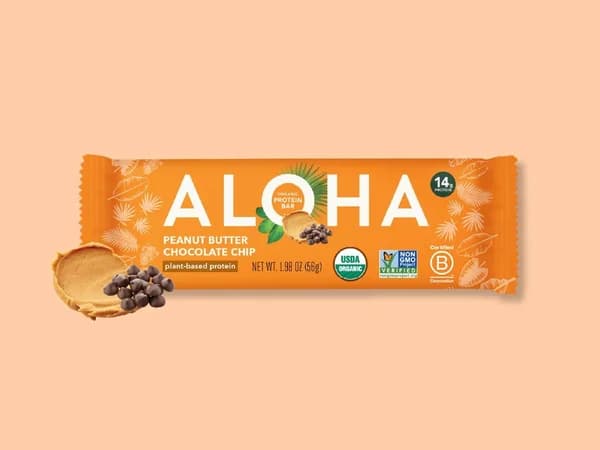
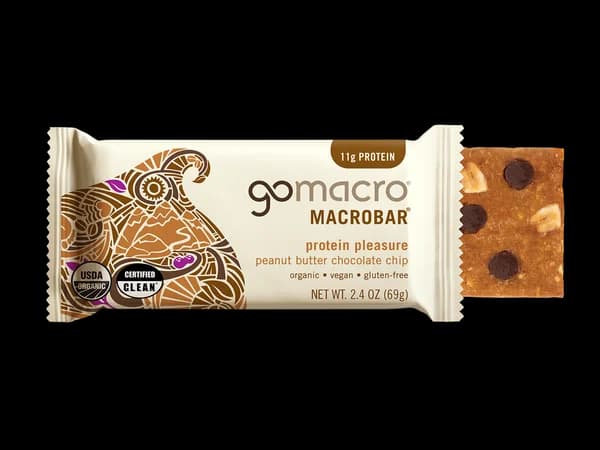
The standout achievement here is the macro profile. Hitting 20g of protein with 1g of sugar in a vegan bar is a formulation feat that most plant-based brands have not cracked. ALOHA manages 14g protein with 5g sugar. GoMacro gets 12g protein with 8g sugar. No Cow's numbers put it in direct competition with whey-based bars while using entirely plant-based protein sources.
The brown rice and pea protein combination is well-established in plant protein science. Pea protein is rich in lysine but low in methionine; brown rice protein has the inverse profile. Together, they create a complementary amino acid profile that approaches whey-level completeness, though the bioavailability still lags behind animal proteins by roughly 15-20%.
For vegan athletes and macro-focused plant-based eaters, these numbers change the calculus. Previously, hitting protein targets without dairy required either very high-calorie bars or protein powder supplementation. No Cow makes it possible to hit 20g in a 210-calorie package without compromising vegan principles — something that genuinely did not exist at this quality level five years ago.
The Allulose Advantage (and Controversy)
No Cow uses allulose as its primary sweetener, which is a genuinely interesting choice. Allulose is a rare sugar naturally found in small quantities in figs, raisins, and maple syrup. It tastes like sugar — because it is structurally a sugar — but the human body does not metabolize it for energy. It provides approximately 70% of sugar's sweetness with essentially zero calories and near-zero glycemic impact.
The FDA does not require allulose to be listed as sugar on nutrition labels, which is why No Cow can claim 1g sugar while still tasting sweet. This regulatory distinction is scientifically supported — allulose genuinely does not behave like sugar metabolically — but it creates an information gap that bothers some consumers. You are eating a sweet-tasting bar with "1g sugar" because of a regulatory carve-out, not because the bar lacks sweetness.
Compared to maltitol (used by Barebells), allulose has a dramatically better digestive tolerance profile. Most users experience no GI effects at typical consumption levels. Compared to dates (RXBAR), allulose adds sweetness without the sugar load. The trade-off is that allulose is a relatively new food ingredient with a shorter safety track record than established sweeteners, though current research is consistently positive.
Taste and Texture Assessment
The Peanut Butter Chocolate Chip flavor succeeds primarily because peanut butter is a forgiving flavor base for plant protein bars. The natural earthiness of pea and brown rice protein blends into the peanut butter rather than fighting against it, the way it might with a vanilla or cookies-and-cream flavor. The chocolate chips are real chocolate and provide needed textural contrast — crunchy bites against the otherwise uniform chewiness.
The texture is dense and slightly sticky, typical of bars that rely on plant protein and fiber for structure. It is less dense than RXBAR but noticeably heavier than Barebells or Built Bar. Some users report a mild aftertaste that arrives a few seconds after swallowing — this is the allulose, and sensitivity to it varies. Most people do not notice it; those who do find it mildly distracting rather than unpleasant.
At room temperature, No Cow bars are firm but pliable. Refrigeration makes them quite hard and difficult to bite through. Warming them slightly improves the texture. If you stash these in a gym bag, they will perform better on warm days than cold ones.
Pricing Analysis
No Cow prices at approximately $2.25 per bar ($27 for a box of 12), making it one of the more affordable options in this comparison. The cost per gram of protein comes out to roughly $0.11/g — the best ratio among plant-based bars and competitive with even the cheapest whey-based options like Pure Protein.
For vegan consumers, this pricing is particularly noteworthy. Plant-based protein bars have historically commanded significant premiums over conventional bars. No Cow undercuts RXBAR ($2.33/bar for only 12g protein) and matches Garden of Life ($2.33/bar) while delivering equivalent protein to both. ALOHA charges $2.50/bar for 14g protein, making No Cow the better value by a wide margin within the vegan protein bar category.
The brand is available through Amazon, most natural grocery chains, and an increasing number of conventional supermarkets. Subscribe & Save options on Amazon can push the per-bar cost below $2.00, which makes No Cow genuinely competitive with budget whey protein bars on a per-gram-of-protein basis.
Who Is This For?
No Cow Peanut Butter Chocolate Chip Protein Bar works best for:
-
Vegan macro trackers who need to hit protein targets without dairy and are tired of plant bars that deliver 10-14g of protein with high sugar. No Cow's 20g protein at 1g sugar profile is genuinely rare in the plant-based space and removes the traditional compromise between vegan eating and protein optimization.
-
Dairy-sensitive consumers who want the macro profile of a whey protein bar but cannot tolerate lactose or casein. No Cow delivers whey-competitive numbers without any dairy-derived ingredients, making it a practical swap for anyone who has reluctantly abandoned conventional protein bars due to digestive issues from dairy.
-
Sugar-conscious snackers who want sweetness without the metabolic impact. Allulose provides a real sugar-like taste experience while keeping the declared sugar at 1g and avoiding the digestive complications of sugar alcohols like maltitol. If sugar-free candy and gum make your stomach uncomfortable but you still want a sweet bar, allulose may be the answer.
-
Budget-conscious plant-based eaters who recognize that vegan protein is typically more expensive per gram. At $0.11/g of protein, No Cow competes with conventional whey bars on value, which is unusual for a plant-based product.
Who Should NOT Use This
No Cow Peanut Butter Chocolate Chip Protein Bar might not be the right choice if:
-
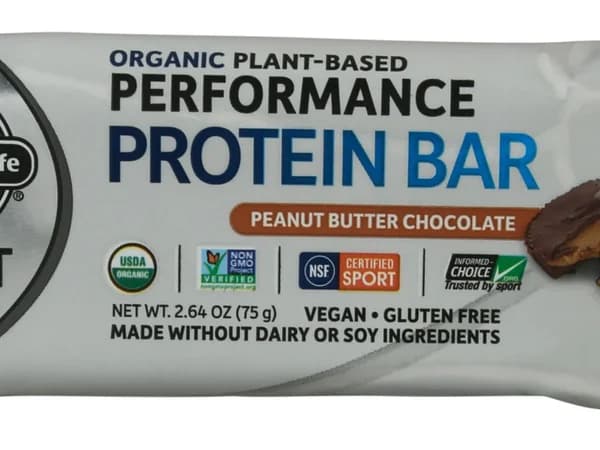
You need third-party verification. No Cow carries no NSF for Sport, USDA Organic, or Non-GMO Project Verified certifications. For competitive athletes, this is a meaningful gap. For consumers who rely on certifications as quality signals, Garden of Life offers similar protein with a full certification stack.
-
You are uncomfortable with novel sweeteners. Allulose has strong early research support but lacks the decades-long safety record of sugar, honey, or even stevia. Its regulatory classification is still evolving internationally — it is approved in the US and Japan but not yet in the EU. If you prefer sweeteners with longer track records, RXBAR uses only dates and KIND uses honey.
-
Texture is a dealbreaker for you. No Cow bars are dense, chewy, and slightly sticky. If you have tried plant protein bars before and found the texture off-putting, No Cow improves on the category but does not transcend it. Built Bar and Barebells offer fundamentally different, lighter eating experiences (though neither is vegan).
Bottom Line
No Cow Peanut Butter Chocolate Chip delivers the macro profile that vegan protein bar consumers have been waiting for: 20g protein, 1g sugar, reasonable taste, and a price point that does not punish you for avoiding dairy. The brown rice and pea protein blend provides solid amino acid coverage, and allulose offers sweetness without the sugar load of dates or the digestive issues of maltitol.
The gaps are in credentialing and ingredient novelty. No certifications validate the sourcing, and allulose is still establishing its long-term safety record. But for vegan or dairy-free consumers who prioritize macros, No Cow is the clearest answer in this comparison — nothing else in the plant-based category matches this combination of protein, low sugar, and value.
FAQ
Is the brown rice and pea protein blend as good as whey?
It is close but not equivalent. The combined amino acid profile covers all essential amino acids, but the bioavailability is approximately 15-20% lower than whey protein. In practical terms, 20g of No Cow protein provides roughly the muscle-building stimulus of 16-17g of whey. If your total daily protein intake is adequate, this gap is negligible. If you are optimizing every gram in a caloric deficit, whey has an edge.
Does allulose cause digestive issues like maltitol?
For the vast majority of users, no. Allulose is absorbed in the small intestine and excreted largely unchanged, without the fermentation in the large intestine that causes gas and bloating from maltitol. Some users report mild effects at very high doses, but at the levels present in a single No Cow bar, digestive issues are uncommon. This is one of allulose's primary advantages over other sugar substitutes.
Is No Cow actually healthy or just good macros?
Both, with caveats. The macro profile is genuinely strong and the absence of sugar alcohols and artificial sweeteners is a positive. However, the ingredient list includes processed components like soluble corn fiber, palm kernel oil, and natural flavors. No Cow is cleaner than Barebells or Quest but more processed than RXBAR or KIND. It sits in the practical middle ground where macros are optimized without being completely whole-food based.
How does No Cow compare to ALOHA bars?
ALOHA uses USDA Organic ingredients and carries Non-GMO certification, which No Cow lacks. However, ALOHA delivers only 14g protein with 5g sugar compared to No Cow's 20g protein with 1g sugar — a significant macro advantage for No Cow. ALOHA also costs about $0.25 more per bar. Choose ALOHA for organic certification, No Cow for macro optimization.
Can I use No Cow as a meal replacement?
A single bar at 210 calories and 20g protein is a light meal at best. It works as a meal supplement or snack but lacks sufficient calories, fiber, and micronutrient variety to constitute a full meal. Pairing it with fruit and a handful of nuts creates a more complete nutritional picture. For actual meal replacement, look at options in the 350-400 calorie range.
Who Is No Cow Peanut Butter Chocolate Chip Protein Bar Best For?
Vegan macro-counters who want high protein and low sugar without dairy
The Bottom Line
No Cow achieves an impressive 20g protein with 1g sugar in a fully vegan bar. The brown rice and pea protein blend provides decent (though not complete) amino acids. The allulose sweetener is natural but its classification remains debated. Strong macros for the plant-based category.
Try No Cow Peanut Butter Chocolate Chip Protein Bar TodayKey Specs
Scoring Breakdown
Evaluates overall cleanliness of the ingredient list. Penalizes artificial sweeteners (sucralose, acesulfame K), sugar alcohols (erythritol, maltitol, sorbitol), artificial preservatives, artificial colors/flavors, and seed oils. Rewards whole food ingredients, organic certification, and minimal processing.
Assesses the quality and bioavailability of protein sources. Ranks: grass-fed whey isolate > whey concentrate > egg white > collagen > multi-source plant blend > single-source plant protein. Considers amino acid completeness and digestibility (PDCAAS score).
Analyzes total sugar content and sweetener types. Penalizes high sugar (>8g), sugar alcohols, and artificial sweeteners. Rewards natural sweeteners (dates, honey, monk fruit) and low total sugar while maintaining palatability.
Evaluates protein-to-calorie ratio, fiber content (3g+ preferred), and overall macronutrient distribution. Higher protein per calorie scores better. Balanced fat content and adequate fiber are preferred.
Third-party certifications including USDA Organic, Non-GMO Project Verified, NSF Certified for Sport, Informed Sport, Kosher, B Corp status, and independent lab testing verification.
Based on aggregated consumer reviews, expert taste tests, and texture assessments across major review sources. Considers flavor variety, chewiness vs. chalkiness, and overall enjoyment.
Full ingredient disclosure, clear allergen labeling, sourcing information (e.g., grass-fed, organic origin), nutritional claim accuracy, and company transparency practices.