
VIOFO A329S 2CH Review
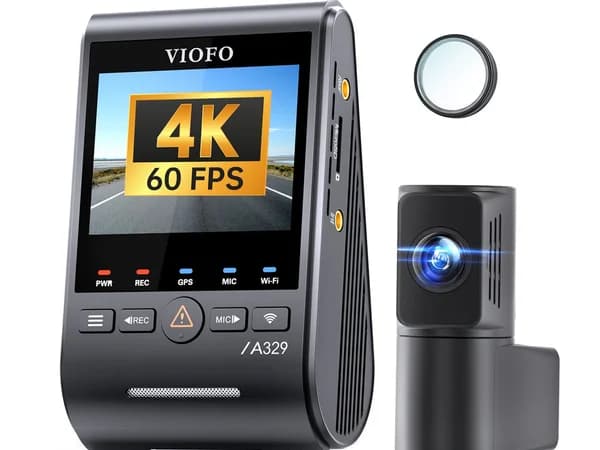
The VIOFO A329S 2CH pushes the boundaries with 4K 60fps recording and SSD storage support. The smoothest footage in our roundup makes license plates and details crystal clear in motion. SSD storage eliminates microSD card failures, though the added bulk and $430 price reflect its enthusiast positioning.

VIOFO A329S 2CH Review
The VIOFO A329S 2CH pushes the boundaries with 4K 60fps recording and SSD storage support. The smoothest footage in our roundup makes license plates and details crystal clear in motion. SSD storage eliminates microSD card failures, though the added bulk and $430 price reflect its enthusiast positioning.
VIOFO A329S 2CH Review
The VIOFO A329S 2CH pushes the boundaries with 4K 60fps recording and SSD storage support. The smoothest footage in our roundup makes license plates and details crystal clear in motion. SSD storage eliminates microSD card failures, though the added bulk and $430 price reflect its enthusiast positioning.

VIOFO A329S 2CH Pros & Cons
Pros
- 4K at 60fps front camera — smoothest high-resolution footage available
- SSD storage support eliminates microSD reliability issues
- Wi-Fi 6 for dramatically faster file transfers to phone
- Sony STARVIS 2 sensor with excellent HDR performance
Cons
- Rear camera is 2K, not 4K — asymmetric channel quality
- SSD enclosure adds bulk and requires separate purchase
- Smart features are basic compared to cloud-connected competitors
Overview
The VIOFO A329S 2CH is the first dash cam to record at 4K 60fps, and the difference is immediately visible. Where every other 4K dash cam in our roundup records at 30fps, the A329S doubles the frame rate, producing footage where license plates on passing vehicles remain razor-sharp and fast-moving details that would blur on other cameras stay crisp. The Sony STARVIS 2 IMX678 sensor on the front camera pairs 8 megapixels with a large 1/1.8-inch format, pulling in substantially more light than smaller sensors and delivering genuinely impressive low-light clarity.
The second headline feature is native SSD storage support. The A329S accepts external solid-state drives up to 4TB via a USB Type-C port, allowing weeks of continuous 4K recording without looping over old footage. For drivers who have experienced the frustration of microSD card failures corrupting critical footage, SSD reliability is a meaningful upgrade. The trade-off is physical bulk: the SSD enclosure adds a visible accessory to your windshield setup. Combined with 2K HDR on the rear channel, Wi-Fi 6 for fast file transfers at up to 30MB/s, and a hybrid parking mode with low-power impact detection, the A329S is a purpose-built enthusiast camera that prioritizes video quality and storage reliability above all else.
Features Deep-Dive
4K 60fps Front Recording — An Industry First
The A329S is the first dash cam to achieve true 4K UHD at 60 frames per second. This matters more than the spec sheet suggests. At highway speeds, a 30fps camera captures a frame every 1-2 feet of travel, meaning fast-moving objects like cross-traffic vehicles or license plates on merging cars can appear blurred between frames. At 60fps, you get twice the temporal resolution, and the practical result is footage where even rapidly moving details are captured cleanly. The front camera uses the Sony STARVIS 2 IMX678 — an 8-megapixel, 1/1.8-inch sensor with an F1.8 aperture and 140-degree field of view. The larger sensor format compared to the 1/2.8-inch sensors found in most competitors means each pixel collects more light, producing cleaner images with less noise in low-light driving. One important caveat: HDR mode on the front channel drops the frame rate to 30fps. If you want the full 60fps advantage, HDR must be disabled on the front camera, though the rear channel can still run HDR independently.
SSD Storage Up to 4TB — Weeks of Uninterrupted Recording
MicroSD cards remain the Achilles' heel of dash cam reliability. They degrade under constant write cycles, and a failed card at the wrong moment means no footage when you need it most. The A329S addresses this head-on by supporting external SSDs up to 4TB via its USB Type-C port with USB 3.0 speeds. A 4TB SSD stores approximately 46 days of continuous 4K front and 2K rear recording before looping — enough that you could drive coast-to-coast and back without overwriting a single clip. SSDs are rated for far more write cycles than microSD cards and are inherently more resistant to vibration and temperature extremes. The A329S also supports traditional microSD cards up to 512GB for users who prefer a simpler setup. The practical trade-off is that the SSD enclosure connects via a cable and needs to be mounted somewhere on the windshield or dashboard, adding bulk and visual clutter. VIOFO sells a dedicated SSD enclosure separately, and it works with standard 2.5-inch SATA SSDs, keeping ongoing storage costs low.
Wi-Fi 6 and Multi-GNSS Positioning
File transfer speeds on dash cams have historically been painfully slow, turning a simple footage review into a multi-minute wait. The A329S uses Wi-Fi 6 operating on both 2.4GHz and 5GHz bands, achieving transfer speeds up to 30MB/s — roughly three times faster than the Wi-Fi 5 found in most competitors. A two-minute 4K clip downloads to your phone in seconds rather than minutes. The built-in GPS module supports GPS, BeiDou, Galileo, and GLONASS satellite systems simultaneously, providing accurate speed and location data stamped into your footage regardless of which constellation has the best signal in your region. Voice control is also built in, allowing hands-free commands to start and stop recording or capture snapshots without taking your eyes off the road.
Hybrid Parking Mode with Low-Power Impact Detection
The A329S offers VIOFO's most sophisticated parking surveillance yet. The hybrid parking mode combines time-lapse recording at 1fps with low-bitrate continuous recording, keeping file sizes manageable while maintaining visual coverage. When the built-in G-sensor detects an impact, the camera wakes within two seconds and records a full-resolution one-minute clip, automatically locking the file so it cannot be overwritten. The low-power impact detection mode draws minimal current from your vehicle's battery, and the system includes automatic shutoff based on preset recording duration or voltage cutoff to prevent a dead battery. A hardwire kit (VIOFO HK6) is required for parking mode functionality and is sold separately.
Pricing Analysis
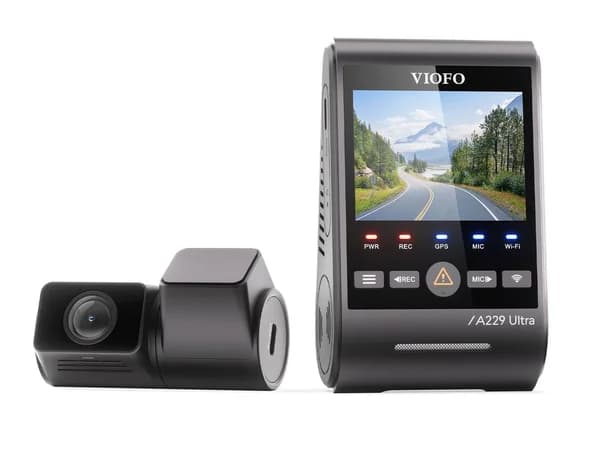
At $430, the A329S sits in the upper-middle tier of our dash cam roundup, below the Thinkware U3000 Pro at $580 but above the VIOFO A229 Ultra 2CH at $330. The $100 premium over the A229 Ultra buys you 60fps recording (versus 30fps), SSD storage support, and Wi-Fi 6 — but the A229 Ultra actually records 4K on both front and rear channels, while the A329S drops to 2K on the rear. If rear resolution matters more than frame rate, the A229 Ultra is the smarter buy. Against the BlackVue DR970X-2CH Plus II at $464, the A329S trades cloud connectivity and BlackVue's discreet cylindrical design for superior front video quality and SSD storage. The SSD support is a hidden value proposition: while the camera costs $430 upfront, a 2TB SATA SSD costs roughly $80-100, far less per gigabyte than high-endurance microSD cards and with dramatically longer lifespan. Over two or three years, the total cost of ownership for the A329S with SSD storage may actually be lower than competitors that chew through microSD cards.
Who Is This For?
- Video quality obsessives who want the absolute best front-channel footage available — 4K at 60fps on the IMX678 produces the sharpest, smoothest dash cam video on the market, especially for capturing license plates and fast-moving details
- Reliability-focused drivers who have experienced microSD card failures and want the peace of mind that comes with SSD storage rated for millions of write cycles and weeks of recording capacity
- Long-haul and road-trip drivers who benefit from storing weeks of footage without looping, plus the multi-GNSS positioning that tracks routes through remote areas where single-constellation GPS drops out
- Tech enthusiasts who appreciate having the latest connectivity standards like Wi-Fi 6 and USB 3.0, and who are comfortable with a slightly more involved installation to maximize performance
Who Should NOT Use This
- Dual 4K purists who need matching resolution on both channels — the rear camera records at 2K, not 4K, making the setup asymmetric. The VIOFO A229 Ultra 2CH delivers true dual 4K at $100 less
- Cloud and smart feature users who want live GPS tracking, push notifications, or remote video access — the A329S has no LTE or cloud connectivity. The BlackVue DR970X-2CH Plus II or Thinkware U3000 Pro are built for that workflow
- Minimalist installers who want a clean, compact windshield setup — the SSD enclosure, cabling, and the camera unit itself create a larger footprint than single-unit designs like the Garmin Dash Cam Mini 3 or Nextbase Piqo 2K
Bottom Line
The VIOFO A329S 2CH is the enthusiast's dash cam. Its 4K 60fps front recording is a genuine first in the category, producing footage that is visibly sharper and smoother than any 30fps competitor. SSD storage support solves the most common long-term reliability problem in dash cameras. The trade-offs are real — 2K on the rear, added bulk from the SSD enclosure, and no cloud features — but for drivers who prioritize video quality and recording reliability above all else, the A329S delivers capabilities that no other dash cam in our roundup can match.
FAQ
Does 4K 60fps actually make a difference, or is it just a spec sheet number?
It makes a measurable difference in motion clarity. At highway speeds, a 30fps camera can blur license plates on vehicles moving perpendicular to your travel direction. At 60fps, you get twice the temporal samples, and fast-moving details remain readable. The difference is most obvious when reviewing footage of intersections, merging traffic, and hit-and-run scenarios where identifying a plate number matters. Note that enabling HDR on the front channel drops recording to 30fps, so you need to choose between frame rate and dynamic range on the front camera.
Is SSD storage worth the extra cost and bulk over a microSD card?
For most casual drivers, a high-endurance microSD card is perfectly adequate. SSD storage becomes worth it in two scenarios: if you drive extensively and want weeks of stored footage without overwriting (a 2TB SSD holds roughly 23 days of dual-channel recording), or if you have experienced microSD failure and want the dramatically higher write endurance and vibration resistance of an SSD. The ongoing cost is also lower — a 2TB SSD costs about $80-100 and will outlast dozens of microSD cards.
How does the A329S compare to the older VIOFO A329 (non-S)?
The A329S adds the upgraded Sony STARVIS 2 IMX678 front sensor (replacing the previous generation), Wi-Fi 6 (up from Wi-Fi 5), improved low-power parking detection, and HDR support on both channels. If you already own the A329, the upgrade is meaningful but not transformative. If you are buying new, the A329S is the clear choice.
Can I use the A329S without an SSD?
Absolutely. The A329S accepts standard microSD cards up to 512GB and functions identically to a traditional dash cam. The SSD support is an optional upgrade for users who want extended storage capacity and improved reliability. You do not need an SSD to use the camera.
Who Is VIOFO A329S 2CH Best For?
Enthusiasts who want the highest frame rate 4K recording with SSD storage reliability
The Bottom Line
The VIOFO A329S 2CH pushes the boundaries with 4K 60fps recording and SSD storage support. The smoothest footage in our roundup makes license plates and details crystal clear in motion. SSD storage eliminates microSD card failures, though the added bulk and $430 price reflect its enthusiast positioning.
Buy on AmazonKey Specs
Scoring Breakdown
Resolution, HDR capability, frame rate, sensor quality (STARVIS 2), and overall daytime/rainy footage clarity
Low-light performance, infrared capability, STARVIS 2 sensor optimization, and license plate readability at night
ADAS (collision/lane departure alerts), AI parking mode, cloud storage, LTE connectivity, and app intelligence
Supercapacitor vs battery, operating temperature range, weather resistance, longevity, and warranty
Installation difficulty, app quality, display usability, WiFi transfer speed, voice control, and setup simplicity
Front and rear camera coverage angles, minimizing blind spots
Price-to-performance ratio considering included accessories (SD cards, CPL filters, hardwire kits)