
VIOFO A119M Pro Review
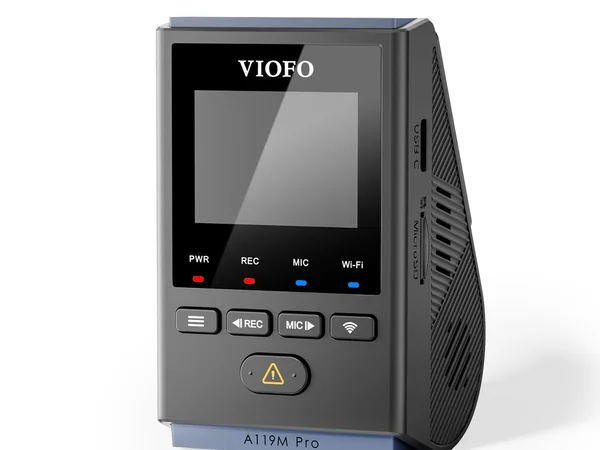
The VIOFO A119M Pro delivers premium 4K HDR sensor quality at a budget price. Sony STARVIS 2 and Wi-Fi 6 at $140 is exceptional value. It's a no-frills single-channel camera, but for drivers who want the best possible footage quality without breaking the bank, it's our top budget pick.

VIOFO A119M Pro Review
The VIOFO A119M Pro delivers premium 4K HDR sensor quality at a budget price. Sony STARVIS 2 and Wi-Fi 6 at $140 is exceptional value. It's a no-frills single-channel camera, but for drivers who want the best possible footage quality without breaking the bank, it's our top budget pick.
VIOFO A119M Pro Review
The VIOFO A119M Pro delivers premium 4K HDR sensor quality at a budget price. Sony STARVIS 2 and Wi-Fi 6 at $140 is exceptional value. It's a no-frills single-channel camera, but for drivers who want the best possible footage quality without breaking the bank, it's our top budget pick.

VIOFO A119M Pro Pros & Cons
Pros
- True 4K HDR with Sony STARVIS 2 sensor at the lowest price in our 4K lineup
- Wi-Fi 6 for fast transfers — rare at this price point
- Voice control and GPS built-in
- Proven VIOFO reliability with supercapacitor design
Cons
- Single-channel front only — no rear camera
- No cloud features or LTE connectivity
- Basic app compared to Garmin or BlackVue offerings
Overview
The VIOFO A119M Pro delivers a combination that rarely exists at this price: a Sony STARVIS 2 IMX678 sensor, true 4K HDR recording, and Wi-Fi 6 connectivity for $140. That sensor is the same class used in dash cams costing two or three times as much, and the difference in footage quality is immediately visible, particularly in low-light and high-contrast scenes where cheaper sensors produce washed-out or noisy results.
VIOFO has built a reputation over several product generations for reliable, no-nonsense dash cameras, and the A119M Pro continues that pattern. The supercapacitor design replaces the lithium battery found in many competitors, which means better heat tolerance during summer parking and a longer operational lifespan. GPS logging, voice control, and a 140-degree wide-angle lens round out a feature set that punches well above its price tier.
The trade-offs are straightforward. This is a single-channel front camera with no rear view, no cloud connectivity, and no LTE option. The companion app is functional but basic compared to the polished ecosystems from Garmin or BlackVue. For drivers who prioritize footage quality per dollar over ecosystem features, those trade-offs are easy to accept.
Features Deep-Dive
Sony STARVIS 2 IMX678 Sensor and 4K HDR
The 1/1.8-inch Sony STARVIS 2 IMX678 sensor is the defining feature of the A119M Pro and the primary reason it earns the top budget pick designation. This 8-megapixel sensor captures true 3840x2160 resolution at 30 frames per second, producing footage with noticeably more detail than the lower-tier sensors found in sub-$100 dash cams like the Miofive S1 E.
HDR processing is where the sensor advantage becomes most apparent. Driving into direct sunlight, passing through tunnels, or navigating mixed lighting at night are scenarios where cheaper cameras either blow out highlights or crush shadows into darkness. The STARVIS 2 architecture handles these transitions with wider dynamic range, keeping license plates readable when headlights are in frame and maintaining detail in shadowed areas simultaneously.
Night footage quality is particularly strong. The STARVIS 2 sensor line was designed specifically for low-light imaging, and the results are visible in clearer street signs, more readable plates at distance, and less color noise in darker frames. For drivers who commute in early morning or evening hours, this sensor performance directly translates to more usable evidence footage.
Wi-Fi 6 Dual-Band Connectivity
Wi-Fi 6 support with dual-band 2.4 GHz and 5 GHz operation is genuinely rare at this price point. Most budget dash cams offer only 2.4 GHz Wi-Fi, which makes transferring 4K footage to a phone painfully slow. The 5 GHz band on the A119M Pro significantly reduces transfer times for large video files.
The practical benefit is that you will actually review footage rather than skipping it because the download takes too long. A one-minute 4K clip can be several hundred megabytes, and the difference between 2.4 GHz and 5 GHz transfer speeds determines whether reviewing footage feels convenient or frustrating. VIOFO's app handles the connection, though the app itself is utilitarian rather than polished. It gets the job done for settings adjustment, live preview, and file download without the refined interface of Garmin Drive or BlackVue's app.
Supercapacitor Design and Build Reliability
VIOFO uses a supercapacitor instead of a lithium-ion battery, a design choice that pays dividends in durability. Lithium batteries degrade in the extreme heat that builds inside a parked car during summer months, potentially swelling or failing after a year or two. Supercapacitors tolerate a much wider temperature range, from -4F to 158F operating temperature, and maintain their capacity over far more charge cycles.
The trade-off is that a supercapacitor stores only enough energy to save the current recording and shut down cleanly when power is cut, rather than running independently for extended periods. For parking mode, you will need the optional HK6 hardwire kit connected to your vehicle's battery. This is standard practice for any serious dash cam installation, and the hardwire kit ensures reliable parking surveillance without the risks of lithium battery degradation.
GPS and Voice Control
Built-in GPS logs your speed and location directly onto the footage as a data overlay. This is essential for insurance claims and accident documentation, providing verifiable proof of where an incident occurred and how fast you were traveling. The GPS data is embedded in the video file metadata, so it can be extracted and mapped using VIOFO's desktop player.
Voice control allows hands-free operation for key functions: starting and stopping recording, taking snapshots, and toggling Wi-Fi. The recognition works reliably for its limited command set. This is not a conversational AI assistant, it is a small set of fixed voice commands that keep your hands on the wheel and eyes on the road. For a $140 camera, having both GPS and voice control included rather than offered as premium add-ons is notable.
Pricing Analysis
At $140, the VIOFO A119M Pro sits at a price point that creates significant separation in both directions. The Miofive S1 E at $50 is the only cheaper 4K option in our lineup, but its sensor quality, particularly in low light and HDR scenarios, is demonstrably inferior. The $90 difference buys a generation leap in sensor technology that is visible in every frame captured after dark.
Looking upward, the Garmin Dash Cam Mini 3 at $150 costs just $10 more but only records at 1440p. You are paying a premium for the Garmin ecosystem, cloud features, and the ultra-compact form factor rather than for raw footage quality. The Vantrue E1 Pro, also at $150, matches the STARVIS 2 sensor class but adds PlatePix HDR and a more compact body for the extra $10.
VIOFO also includes a CPL (circular polarizing) filter and GPS module in the box, accessories that competitors often sell separately for $20-30 each. Factoring in these included accessories, the effective value gap widens further. MicroSD cards up to 512 GB are supported but not included, so budget $15-30 for a quality endurance-rated card. The optional HK6 hardwire kit for parking mode runs approximately $20-25 if you want always-on protection.
Who Is This For?
-
Budget-conscious drivers wanting premium sensor quality who refuse to compromise on footage clarity. The STARVIS 2 sensor delivers night and HDR performance that matches cameras at double the price, making this the best image quality available under $150.
-
Long-distance commuters and road-trippers who drive frequently in varying light conditions. Dawn, dusk, tunnel transitions, and rainy nights are where the A119M Pro's sensor advantage over cheaper alternatives becomes most apparent and most valuable.
-
Practical-minded buyers who want reliability over features and prefer a proven brand with a supercapacitor design that will survive years of summer heat on a windshield without battery degradation or failure.
-
First-time dash cam buyers stepping up from ultra-budget options who want a meaningful upgrade in recording quality without entering the $200-plus territory where dual-channel systems and cloud subscriptions start.
Who Should NOT Use This
-
Drivers who need front and rear coverage: The A119M Pro is a single-channel front camera only. There is no rear camera add-on option. If rear coverage matters for your driving situation, consider the VIOFO A229 Ultra 2CH or the Rove R2 4K Dual, both of which provide dual-channel recording in a single package.
-
Fleet managers or security-focused users wanting remote access: No cloud connectivity, no LTE, and no remote live view means you cannot check on your vehicle remotely. The BlackVue DR970X-2CH Plus II or the Thinkware U3000 Pro offer the cloud and remote monitoring features that fleet and security use cases require.
-
Buyers who prioritize a polished app experience: VIOFO's companion app is functional but bare-bones compared to the Garmin Drive app's refined interface and smart alerts. If the software experience matters as much as the hardware, the Garmin Dash Cam Mini 3 provides a more cohesive ecosystem despite its lower resolution.
Bottom Line
The VIOFO A119M Pro is the clearest value proposition in the dash cam market for drivers who care about footage quality above all else. The Sony STARVIS 2 IMX678 sensor, true 4K HDR recording, Wi-Fi 6, GPS, voice control, and supercapacitor reliability at $140 is a combination no competitor matches at this price. The included CPL filter and GPS module add further value.
What you give up is equally clear: no rear camera, no cloud features, no remote access, and a basic app. These are real limitations, but they are limitations of scope rather than quality. Everything the A119M Pro does, it does at a level that exceeds its price tier. For budget-conscious drivers who want the best possible front-facing footage without paying for features they may not need, this is the camera to buy.
FAQ
How does the VIOFO A119M Pro compare to the Miofive S1 E?
The $90 price difference buys a substantial sensor upgrade. The A119M Pro's Sony STARVIS 2 IMX678 produces noticeably better footage in low light, HDR scenes, and overall detail compared to the Miofive S1 E's sensor. The VIOFO also adds GPS logging, voice control, Wi-Fi 6, and supercapacitor reliability that the S1 E lacks. The Miofive is a capable ultra-budget option for daytime recording, but the A119M Pro is a generation ahead in image quality.
Does the VIOFO A119M Pro support parking mode?
Yes, but parking mode requires the optional HK6 hardwire kit, sold separately for approximately $20-25. The supercapacitor design does not store enough power for extended standalone recording, so the hardwire kit draws from your vehicle's battery with a voltage cutoff to prevent drain. Once hardwired, the camera supports both motion detection and G-sensor triggered recording while parked.
Is Wi-Fi 6 actually worth it on a dash cam?
For a 4K dash cam, yes. A single minute of 4K footage can exceed 300 MB, and transferring that over 2.4 GHz Wi-Fi is slow enough to discourage regular footage review. The 5 GHz band available through Wi-Fi 6 cuts transfer times significantly, making it practical to pull clips to your phone after an incident or interesting drive. If you rarely download footage, the difference is irrelevant, but if you want to actually use the 4K capability, faster transfers matter.
How long can the VIOFO A119M Pro record on a single microSD card?
With a 512 GB card at 4K resolution, expect approximately 8-10 hours of continuous loop recording before the camera begins overwriting the oldest non-locked files. A 256 GB card provides roughly 4-5 hours. For most daily commuters, a 256 GB card covers several days of driving before overwrite. Locked files from G-sensor events are protected from overwrite and must be manually deleted.
Why choose the A119M Pro over the Vantrue E1 Pro at $150?
Both cameras use STARVIS 2 class sensors and offer comparable 4K footage quality. The VIOFO saves $10 and includes a CPL filter in the box, while the Vantrue offers a more compact body and its PlatePix HDR processing for enhanced license plate readability. The A119M Pro has a 1.5-inch LCD screen for on-device playback, which the Vantrue lacks. Choose the VIOFO if you want the lowest price with an on-camera display, or the Vantrue if compact size and plate-focused HDR processing are priorities.
Who Is VIOFO A119M Pro Best For?
Budget buyers who want true 4K HDR with STARVIS 2 quality from a proven brand
The Bottom Line
The VIOFO A119M Pro delivers premium 4K HDR sensor quality at a budget price. Sony STARVIS 2 and Wi-Fi 6 at $140 is exceptional value. It's a no-frills single-channel camera, but for drivers who want the best possible footage quality without breaking the bank, it's our top budget pick.
Buy on AmazonKey Specs
Scoring Breakdown
Resolution, HDR capability, frame rate, sensor quality (STARVIS 2), and overall daytime/rainy footage clarity
Low-light performance, infrared capability, STARVIS 2 sensor optimization, and license plate readability at night
ADAS (collision/lane departure alerts), AI parking mode, cloud storage, LTE connectivity, and app intelligence
Supercapacitor vs battery, operating temperature range, weather resistance, longevity, and warranty
Installation difficulty, app quality, display usability, WiFi transfer speed, voice control, and setup simplicity
Front and rear camera coverage angles, minimizing blind spots
Price-to-performance ratio considering included accessories (SD cards, CPL filters, hardwire kits)