Vantrue E1 Pro Review
The Vantrue E1 Pro packs impressive 4K quality into one of the smallest dash cam bodies available. Voice control and GPS are welcome additions at $150. It's front-only, so pair it with a separate rear cam if you need full coverage, but for a single discreet camera, it's excellent.

Vantrue E1 Pro Review
The Vantrue E1 Pro packs impressive 4K quality into one of the smallest dash cam bodies available. Voice control and GPS are welcome additions at $150. It's front-only, so pair it with a separate rear cam if you need full coverage, but for a single discreet camera, it's excellent.
Vantrue E1 Pro Review
The Vantrue E1 Pro packs impressive 4K quality into one of the smallest dash cam bodies available. Voice control and GPS are welcome additions at $150. It's front-only, so pair it with a separate rear cam if you need full coverage, but for a single discreet camera, it's excellent.

Vantrue E1 Pro Pros & Cons
Pros
- Compact mini design fits discreetly behind any rearview mirror
- Voice control for hands-free recording management
- STARVIS 2 sensor delivers excellent night footage for its size
- GPS built-in with speed and location stamp on footage
Cons
- Single-channel front only — no rear camera option
- Small size means no built-in display for playback
- Wi-Fi transfer speeds are slower than 5GHz competitors
Overview
The Vantrue E1 Pro packs genuine 4K recording into one of the smallest dash cam bodies available. At just 50 x 44 x 44mm and 95 grams, it practically disappears behind a rearview mirror, yet the Sony STARVIS 2 IMX678 sensor and f/1.8 seven-element glass lens deliver footage that rivals cameras twice its size. Vantrue's proprietary PlatePix HDR technology is the standout feature here, combining hardware and software processing to improve license plate legibility in high-contrast and nighttime scenarios beyond what standard 4K HDR alone achieves.
At $150, the E1 Pro sits in a competitive tier alongside the Garmin Dash Cam Mini 3 and Nextbase Piqo 2K. Where those competitors max out at 1440p and 2K respectively, the E1 Pro offers true 3840x2160 resolution at 30fps. The trade-off is that this is a single-channel front camera with no rear or interior option. Drivers needing multi-channel coverage will need to look elsewhere, but for a discreet, feature-rich front camera, the E1 Pro delivers an impressive combination of 4K clarity, built-in GPS, voice control, and future-ready LTE module support.
Features Deep-Dive
Sony STARVIS 2 IMX678 Sensor with PlatePix HDR
The IMX678 is Sony's current-generation STARVIS 2 sensor, designed specifically for automotive and security applications where low-light performance matters. Combined with the f/1.8 aperture and seven-element glass lens, the E1 Pro captures significantly more light than cameras using older STARVIS 1 sensors or narrower apertures. Daytime footage is crisp and detailed, with license plates clearly legible even at moderate distances.
PlatePix is Vantrue's proprietary HDR processing layer, and it represents a meaningful improvement over standard HDR. Rather than simply balancing exposure across the frame, PlatePix specifically targets high-contrast areas where license plates appear — headlights, streetlights, and reflective surfaces that normally wash out plate text. Vantrue claims 50% clearer plate capture than standard 4K HDR, and real-world testing shows plates that are readable in paused footage even when headlight glare would otherwise obscure them. Night footage quality is fair overall, but the plate-specific optimization is genuinely useful for the scenarios where dash cam footage matters most: incidents and collisions.
158-Degree Wide-Angle Lens and 4K Recording
The 158-degree diagonal field of view captures a wider scene than most competitors, covering multiple lanes of traffic and both sides of the road without the severe barrel distortion that plagues ultra-wide lenses. Recording at 3840x2160 at 30fps in MP4 format, the E1 Pro produces footage with enough pixel density to crop into specific areas without losing critical detail. For insurance claims and incident documentation, the combination of wide angle and high resolution means you capture the full context and can still zoom into license plates or road signs after the fact.
The camera also supports lower resolution modes including 2560x1440 HDR at 30fps as the default setting, which balances quality with storage efficiency. With support for microSD cards up to 1TB — a category first that lets you store roughly 66 hours of 4K footage — storage anxiety is effectively eliminated for most drivers.
Built-In GPS and Voice Control
The dual-system GPS logger embeds speed, location, and route data directly into footage metadata. This is not an optional accessory or an add-on module; GPS is integrated into the camera body itself, keeping the installation clean and the total cost predictable. For insurance disputes or speeding ticket challenges, GPS-stamped footage provides objective evidence of your speed and location at the time of an incident.
Voice control supports five languages (English, Japanese, Russian, Chinese, and French) and handles core commands like starting and stopping recording, taking snapshots, and locking emergency files. In practice, voice control is the primary interaction method since the 1.54-inch IPS display, while useful for initial setup and framing, is too small for comfortable navigation through menus while driving. The small buttons on the camera body are similarly fiddly due to the compact form factor, making voice commands the most practical hands-free interface.
Parking Mode and Supercapacitor Design
The E1 Pro offers four distinct parking surveillance modes, making it one of the most versatile parking monitors in its class. Buffered mode records 15 seconds before and 30 seconds after a motion event, ensuring you capture the lead-up to any incident. Collision detection activates recording when the G-sensor detects impact, with five adjustable sensitivity levels. Low bitrate mode drops to 1080p at 15fps for extended recording with minimal storage consumption, and time-lapse mode captures at 1fps, playing back at 30fps for efficient long-duration monitoring.
The supercapacitor power system is a deliberate engineering choice over lithium-ion batteries. Supercapacitors tolerate extreme temperatures far better than batteries — the E1 Pro operates from -20 to 70 degrees Celsius — making it reliable in vehicles parked in summer heat or winter cold. The trade-off is that parking mode requires a hardwire kit for continuous power, since the supercapacitor stores only enough energy for a clean file save during power loss, not extended standalone recording.
Pricing Analysis
At $150, the Vantrue E1 Pro competes directly with the Garmin Dash Cam Mini 3 ($150) and Nextbase Piqo 2K ($150), while undercutting the VIOFO A119M Pro by just $10. Against the Garmin, the E1 Pro offers true 4K versus 1440p and includes PlatePix HDR, but lacks Garmin's mature cloud ecosystem and the Mini 3's even smaller form factor. Against the Nextbase Piqo, the E1 Pro wins on resolution and storage capacity but forgoes the Piqo's SOS emergency features. The VIOFO A119M Pro is the closest spec competitor with its own STARVIS 2 sensor and Wi-Fi 6, but the E1 Pro counters with PlatePix HDR and 1TB storage support versus VIOFO's 512GB limit.
The included CPL filter is a thoughtful addition that typically costs $15-25 as a separate accessory with other cameras, effectively reducing the real cost differential. Optional accessories like the LTE module and wireless remote controller add cost but expand the camera's capability toward cloud-connected territory. For the core package at $150, the E1 Pro offers the most resolution per dollar in the compact dash cam segment.
Who Is This For?
- Stealth-conscious drivers who want a near-invisible camera that hides behind the rearview mirror — the 50mm cube form factor is among the smallest 4K cameras available
- Night driving commuters who need reliable license plate capture in low-light and high-contrast conditions — PlatePix HDR specifically targets the scenarios where standard cameras fail
- Long-haul and fleet drivers who benefit from 1TB storage support and GPS-stamped footage for extended recording without card swaps or overwrites
- Tech-forward buyers interested in future LTE connectivity — the optional module adds cloud access, remote viewing, and geofencing without replacing the camera
Who Should NOT Use This
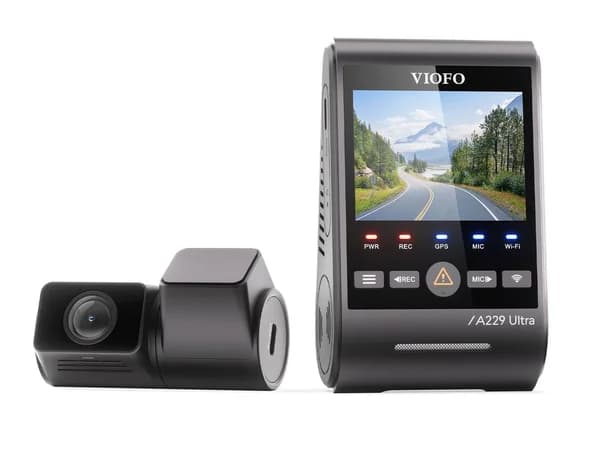
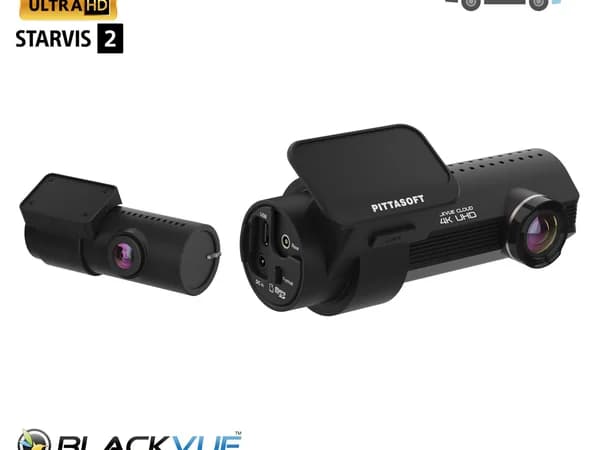
- Drivers needing front and rear coverage — the E1 Pro is single-channel only with no rear camera option, so consider the VIOFO A229 Ultra 2CH or BlackVue DR970X for dual-channel recording
- Users who want on-device playback — the 1.54-inch screen is functional for setup but impractical for reviewing footage; you will rely on the Vantrue app or desktop software for any meaningful playback
- Anyone prioritizing fast Wi-Fi transfers — the E1 Pro's Wi-Fi 5 (2.4/5GHz) transfers at roughly 8MB/s, which is adequate but noticeably slower than the VIOFO A119M Pro's Wi-Fi 6 when downloading large 4K files
Bottom Line
The Vantrue E1 Pro is the compact 4K pick in the dash cam category. It squeezes genuine 4K recording, Sony STARVIS 2 imaging, GPS, voice control, and PlatePix HDR into a body smaller than a golf ball — and does it at $150. The single-channel limitation and tiny display are real trade-offs, but for drivers who want maximum image quality in minimum physical space, the E1 Pro delivers a combination of resolution, night vision, and storage capacity that no other camera this small can match.
FAQ
Does the Vantrue E1 Pro have a screen?
Yes, but manage expectations. The 1.54-inch IPS display is useful for initial setup, confirming the camera angle, and checking recording status. It is not practical for reviewing footage or navigating detailed settings while in the car. Vantrue recommends enabling screensaver mode during driving to avoid distraction, and most owners use the mobile app for settings changes and playback.
How does PlatePix HDR compare to standard HDR?
Standard HDR balances exposure across the entire frame, which helps with general contrast but often still fails to resolve license plates against bright headlights or streetlights. PlatePix applies targeted processing to high-contrast zones where plates typically appear, resulting in noticeably better plate legibility in nighttime and backlit conditions. It is not a guarantee of perfect plate capture in every scenario, but it represents a meaningful improvement over conventional HDR for the specific use case that matters most in dash cam footage.
Can I add a rear camera later?
No. The E1 Pro is a single-channel camera with no rear camera input or expansion port. If you anticipate needing rear coverage, you would need to run a separate standalone rear camera or choose a dual-channel system like the VIOFO A229 Ultra 2CH from the outset. Vantrue does offer dual-channel models in their S-series lineup if you want to stay within the brand.
Is the LTE module worth adding?
The optional LTE module enables cloud features including remote live viewing, vehicle tracking, geofencing alerts, cloud storage, and push notifications for events. It requires a separate data plan. For most daily commuters, the standard Wi-Fi and GPS functionality is sufficient. The LTE module is most valuable for fleet operators, parents monitoring teen drivers, or anyone who wants real-time access to their camera while away from the vehicle.
Who Is Vantrue E1 Pro Best For?
Drivers who want a compact, discreet 4K front camera with voice control and GPS
The Bottom Line
The Vantrue E1 Pro packs impressive 4K quality into one of the smallest dash cam bodies available. Voice control and GPS are welcome additions at $150. It's front-only, so pair it with a separate rear cam if you need full coverage, but for a single discreet camera, it's excellent.
Buy on AmazonKey Specs
Scoring Breakdown
Resolution, HDR capability, frame rate, sensor quality (STARVIS 2), and overall daytime/rainy footage clarity
Low-light performance, infrared capability, STARVIS 2 sensor optimization, and license plate readability at night
ADAS (collision/lane departure alerts), AI parking mode, cloud storage, LTE connectivity, and app intelligence
Supercapacitor vs battery, operating temperature range, weather resistance, longevity, and warranty
Installation difficulty, app quality, display usability, WiFi transfer speed, voice control, and setup simplicity
Front and rear camera coverage angles, minimizing blind spots
Price-to-performance ratio considering included accessories (SD cards, CPL filters, hardwire kits)