Miofive S1 Ultra Review
The Miofive S1 Ultra offers remarkable value with dual 4K cameras and built-in eMMC storage for $200. The elimination of microSD cards is a real reliability advantage. The app needs polish, but for pure hardware value, nothing else in this price range offers dual 4K.

Miofive S1 Ultra Review
The Miofive S1 Ultra offers remarkable value with dual 4K cameras and built-in eMMC storage for $200. The elimination of microSD cards is a real reliability advantage. The app needs polish, but for pure hardware value, nothing else in this price range offers dual 4K.
Miofive S1 Ultra Review
The Miofive S1 Ultra offers remarkable value with dual 4K cameras and built-in eMMC storage for $200. The elimination of microSD cards is a real reliability advantage. The app needs polish, but for pure hardware value, nothing else in this price range offers dual 4K.

Miofive S1 Ultra Pros & Cons
Pros
- Dual 4K front and rear at just $200 — best resolution-per-dollar in the roundup
- Built-in eMMC storage eliminates microSD card failures
- 5GHz Wi-Fi for fast wireless footage downloads
- Sony STARVIS 2 IMX678 sensor for excellent low-light performance
Cons
- Fixed internal storage cannot be expanded or replaced
- App can be slow and occasionally disconnects during transfers
- Newer brand with less track record than VIOFO or BlackVue
Overview
The Miofive S1 Ultra delivers a specification sheet that reads like a product costing twice as much. True dual 4K recording from both front and rear cameras, a Sony STARVIS 2 IMX678 sensor, built-in eMMC storage, and 5GHz Wi-Fi connectivity, all for $200. In a dash cam market where "4K" often means a 4K front camera paired with a 1080p rear, the S1 Ultra gives you matching 4K resolution on both channels without compromise.
The built-in eMMC storage is the feature that separates this camera from nearly every competitor. MicroSD cards are the single most common failure point in dash cams, and Miofive eliminates that vulnerability entirely. No card to corrupt, no card to replace, no compatibility headaches. The trade-off is that you cannot expand or swap that storage, but for most drivers the reliability gain outweighs the flexibility loss.
Miofive is a newer brand without the decade-long track record of VIOFO or BlackVue, and the companion app needs refinement. But for pure hardware value at $200, the S1 Ultra stands alone in offering true dual 4K with a premium image sensor.
Features Deep-Dive
Dual 4K Recording with Sony STARVIS 2 IMX678
The front camera captures at 3840x2160 resolution at 30fps, while the rear records at 3840x2160 at 25fps. Both channels produce footage with outstanding detail, accurate color reproduction, and controlled highlight handling. The Sony STARVIS 2 IMX678 sensor is the same generation found in cameras costing $300 or more, and it shows in the output quality. License plates are legible at meaningful distances, road signs stay sharp even at highway speed, and the 140-degree front field of view captures adjacent lanes without excessive barrel distortion. The rear camera's 115-degree field of view covers the full rear window comfortably. Night footage is where the STARVIS 2 sensor earns its keep. Low-light captures maintain clarity and color accuracy that rival daytime recording, a stark contrast to cheaper sensors that wash out or introduce heavy noise after dark.
Built-in eMMC Storage
This is the S1 Ultra's most distinctive engineering decision. Instead of relying on a microSD card slot, Miofive soldered eMMC flash storage directly onto the circuit board. eMMC is the same storage technology used in smartphones and tablets, designed for continuous read/write cycles, exactly the workload a dash cam demands. MicroSD cards, even high-endurance models, are rated for a finite number of write cycles and can fail without warning. When your dash cam's storage fails silently, you discover the problem only when you actually need the footage. The eMMC approach eliminates this failure mode. The downside is real but manageable: when storage fills up, the camera loops and overwrites the oldest footage automatically, same as any dash cam. You cannot pop in a larger card if you want more capacity, but for the vast majority of drivers who never review footage unless an incident occurs, the built-in storage is more than sufficient.
5GHz Wi-Fi and Connectivity
The S1 Ultra uses 5GHz Wi-Fi rather than the 2.4GHz band found on most budget and mid-range competitors. The practical difference is substantial when transferring 4K footage to your phone. A 1-minute dual 4K clip can exceed 500MB, and on 2.4GHz Wi-Fi that transfer can take several minutes. The 5GHz connection cuts transfer times significantly, making it practical to actually review clips on your phone rather than waiting long enough to give up. Bluetooth 4.2 handles initial pairing and background connection, while built-in GPS logs speed and location data directly into the video metadata. The GPS data is valuable for insurance claims and provides context that raw video alone cannot.
Parking Mode and Supercapacitor Design
The S1 Ultra uses a supercapacitor instead of a lithium battery, a meaningful engineering choice for a device that sits on a dashboard in direct sunlight. Lithium batteries swell and degrade in extreme heat, while supercapacitors tolerate temperature swings from freezing winters to scorching summers without degradation. The supercapacitor provides enough runtime to safely save the current recording when power is cut. Parking mode surveillance requires the optional HWK2 hardwire kit to provide continuous 12V power from your vehicle's battery. Once hardwired, the camera monitors for motion and impact events while your car is parked, recording automatically when triggered. The G-sensor detects collisions and locks the relevant footage from being overwritten.
Pricing Analysis
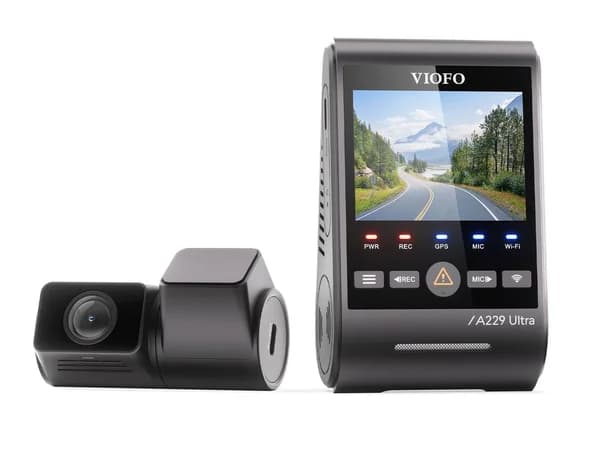
At $200, the Miofive S1 Ultra occupies a unique position in the dash cam market. Its closest competitor at the same price, the ROVE R2-4K DUAL, includes a free 128GB microSD card but records only 1080p from its rear camera. To get true dual 4K from an established brand, you need the VIOFO A229 Ultra 2CH at $330, a 65% price premium. The S1 Ultra delivers dual 4K for $130 less than VIOFO's offering.
The built-in eMMC storage also offsets the card cost that other dash cams require. A quality high-endurance 128GB microSD card runs $20-30, and many drivers go through multiple cards over the life of a dash cam. Factor in those replacement costs and the S1 Ultra's effective value improves further. The optional hardwire kit for parking mode adds roughly $20-25, which is standard across the category. For buyers whose primary concern is video quality per dollar spent, nothing in our 12-camera roundup matches the S1 Ultra's resolution-to-price ratio.
Who Is This For?
- Value-maximizers who want the best specs per dollar: Dual 4K at $200 is unmatched. If you compare spec sheets and want the most camera for the least money, this is your pick.
- Drivers tired of microSD card failures: The built-in eMMC storage removes the most common dash cam failure point. If you have had a microSD card die and lost footage when you needed it, this solves that problem permanently.
- Night drivers and commuters: The Sony STARVIS 2 IMX678 sensor produces night footage that approaches daytime quality. If your commute includes dark rural roads or poorly lit city streets, the low-light performance is a genuine safety advantage.
- Rideshare and delivery drivers: Dual 4K coverage front and rear provides clear evidence of any incident, and the reliability of eMMC storage means the camera is always recording when you need it to be.
Who Should NOT Use This
- Drivers who need expandable storage: If you want to archive weeks of footage without overwriting, the fixed internal storage is a hard limitation. Consider the ROVE R2-4K DUAL with its included 128GB card and support for up to 512GB microSD cards.
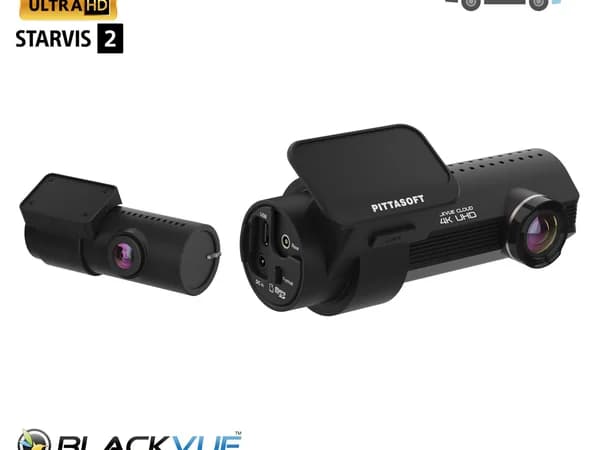
- Users who prioritize app experience and cloud features: The Miofive app works but can be slow and occasionally drops its Wi-Fi connection during transfers. If polished software and cloud connectivity matter to you, the Nextbase Piqo 2K or BlackVue DR970X-2CH Plus II offer superior app ecosystems.
- Buyers who value brand longevity and community support: Miofive is a newer entrant without the years of firmware updates, community forums, and aftermarket accessories that VIOFO, BlackVue, and Thinkware provide. If you want a brand with a proven long-term support track record, the VIOFO A229 Ultra 2CH is the safer choice at $330.
Bottom Line
The Miofive S1 Ultra offers remarkable value with dual 4K cameras and built-in eMMC storage for $200. The elimination of microSD cards is a genuine reliability advantage that no other camera in this roundup replicates. The Sony STARVIS 2 sensor delivers night footage that rivals cameras at twice the price. The app needs polish and the brand lacks the heritage of established competitors, but for pure hardware value, nothing else at this price offers dual 4K with this level of image quality.
FAQ
Does the Miofive S1 Ultra really record 4K from both cameras simultaneously?
Yes. Both front and rear cameras record at 3840x2160 resolution simultaneously. The front captures at 30fps and the rear at 25fps. This is true dual 4K, not the "4K front plus 1080p rear" approach used by many competitors at the same price point. Be aware that dual 4K produces large files, so the 5GHz Wi-Fi connection becomes important for practical footage transfers.
How does the built-in eMMC storage compare to using a microSD card?
eMMC storage is more reliable for continuous write operations because it is designed for the constant recording cycle a dash cam demands. MicroSD cards, even high-endurance models, can fail after heavy use and typically need replacement every 1-2 years in a dash cam. The downside is that eMMC storage cannot be swapped or expanded. For most drivers who only review footage after an incident, this is a favorable trade-off. The camera uses loop recording, automatically overwriting the oldest footage when storage is full while protecting G-sensor-triggered clips from deletion.
Is the Miofive S1 Ultra worth choosing over the VIOFO A229 Ultra 2CH?
It depends on your priorities. Both deliver dual 4K with Sony STARVIS 2 sensors. The Miofive costs $130 less and includes built-in eMMC storage, while the VIOFO uses microSD cards (up to 512GB) and comes from a more established brand with a larger user community and longer firmware support history. If budget matters most and you value storage reliability, choose the Miofive. If you prefer a proven brand with expandable storage and more granular settings, the VIOFO justifies its premium.
Does parking mode work out of the box?
No. The S1 Ultra uses a supercapacitor instead of a battery, so it only runs for a few seconds without external power. To enable 24-hour parking mode surveillance, you need the optional HWK2 hardwire kit, which connects the camera to your vehicle's electrical system and provides continuous power while monitoring battery voltage to prevent drain. This is standard practice across the dash cam category, as most quality cameras use supercapacitors for heat resistance.
Who Is Miofive S1 Ultra Best For?
Value-focused buyers who want true dual 4K with built-in storage and no microSD hassles
The Bottom Line
The Miofive S1 Ultra offers remarkable value with dual 4K cameras and built-in eMMC storage for $200. The elimination of microSD cards is a real reliability advantage. The app needs polish, but for pure hardware value, nothing else in this price range offers dual 4K.
Buy on AmazonKey Specs
Scoring Breakdown
Resolution, HDR capability, frame rate, sensor quality (STARVIS 2), and overall daytime/rainy footage clarity
Low-light performance, infrared capability, STARVIS 2 sensor optimization, and license plate readability at night
ADAS (collision/lane departure alerts), AI parking mode, cloud storage, LTE connectivity, and app intelligence
Supercapacitor vs battery, operating temperature range, weather resistance, longevity, and warranty
Installation difficulty, app quality, display usability, WiFi transfer speed, voice control, and setup simplicity
Front and rear camera coverage angles, minimizing blind spots
Price-to-performance ratio considering included accessories (SD cards, CPL filters, hardwire kits)