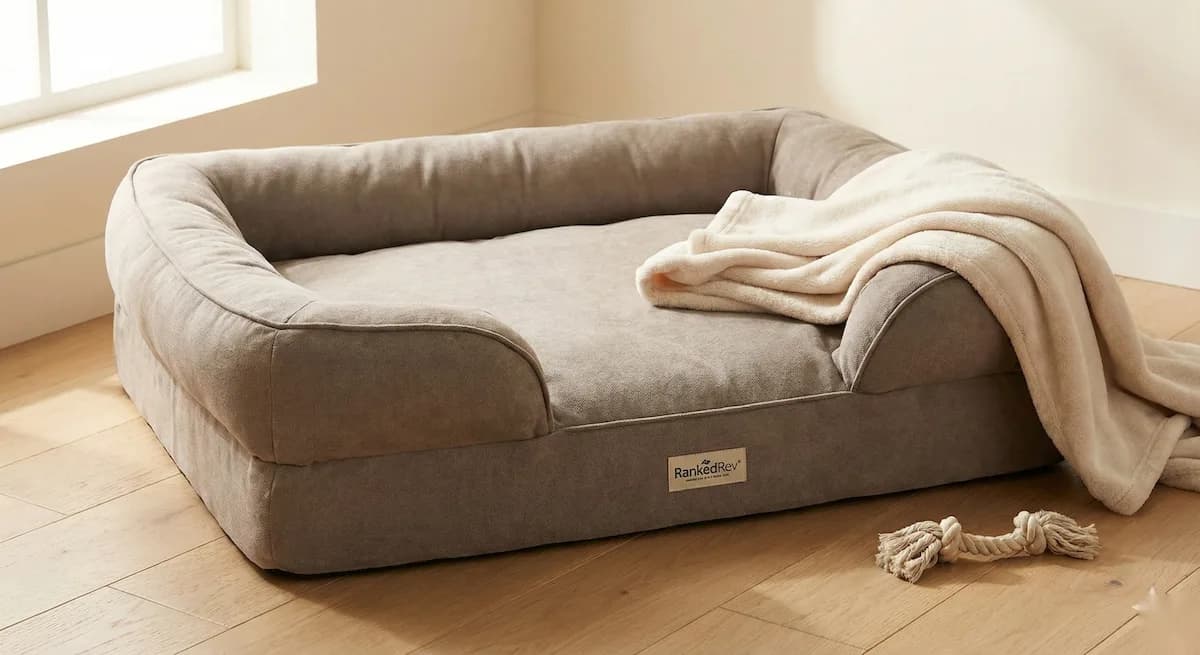
Best Dog Beds in 2026: Orthopedic, Elevated, and Everything In Between
The best dog beds for every size and sleeping style in 2026, from budget-friendly picks to premium orthopedic options.

Why a Runner Cares About Dog Beds
I spend a lot of time thinking about recovery. After a hard training block, long runs, heavy squats, the kind of days where stairs feel like a personal insult, the difference between sleeping on a good mattress and a bad one is the difference between bouncing back in 48 hours or limping through the week. My body has taught me that rest quality is not passive. It is an active part of performance.
So when I started researching dog beds, something clicked. Dogs sleep 12 to 14 hours a day. Senior dogs and large breeds even more. That is not laziness, it is how their bodies repair muscle, support joint health, and regulate everything from immune function to mood. If I would never settle for a cheap mattress after a marathon training cycle, why would I put my dog on a flat pillow stuffed with polyfill and call it good enough?
After months of testing, squishing foam samples, washing covers, and watching how dogs actually settle into these beds, I have narrowed the field to five picks that cover every need and budget. Here is what is actually worth your money in 2026.
What to Look For in a Dog Bed
Before spending anything, run any dog bed through these filters. The market is full of beds that look great in product photos and flatten within a month.
- Foam density and type. This is the single biggest differentiator. High-density memory foam or therapeutic foam holds its shape under a dog's weight for years. Egg-crate foam and polyfill are cheaper but compress much faster. If your dog weighs over 40 pounds, foam quality is not optional, it is the whole game.
- Cover durability and washability. Dogs drool, shed, track in mud, and occasionally have accidents. A removable, machine-washable cover is non-negotiable. Look for reinforced stitching and water-resistant liners underneath, these save the foam when the cover alone is not enough.
- Support profile. Orthopedic beds distribute weight across the entire surface, relieving pressure on hips and joints. Bolster beds provide a headrest and a sense of security for dogs that like to curl up. Elevated beds keep dogs cool by allowing airflow underneath. Match the bed style to how your dog actually sleeps, not how you think they should sleep.
- Size accuracy. Measure your dog from nose to tail base while they are lying stretched out, then add 6 to 12 inches. Beds that are too small force dogs into uncomfortable positions that defeat the purpose of quality foam. Most manufacturers run slightly small, so size up if you are between options.
- Warranty and longevity. A bed that costs $200 but lasts 10 years is cheaper per year than a $30 bed you replace annually. The best manufacturers back their foam with multi-year guarantees against flattening, that confidence tells you something about the product.
With those criteria in mind, here are the five beds that earned their spot.
Our Top Picks
Best Overall
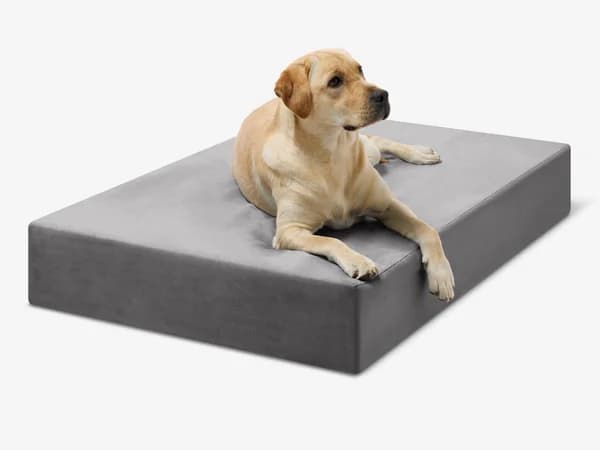
The Big Barker is the bed I recommend to anyone who asks me what to buy for a large or giant breed dog, full stop. Its 7-inch therapeutic foam is calibrated specifically for dogs over 50 pounds, and Big Barker backs it with a 10-year guarantee that the foam will not flatten more than 10 percent. That is not marketing, it is a promise with teeth.
I pressed into this foam with my full body weight and watched it return to shape within seconds. For context, most dog beds in the $50 to $80 range show permanent compression marks after a few weeks of use from a large dog. The Big Barker's foam density is in a different category entirely. It is closer to what you would find in a premium human mattress than a typical pet bed.
The Sleek edition has a clean, low-profile design that does not look like a pet product in your living room. The microfiber cover is machine-washable and holds up well, though it does attract hair between washes. At $200 and up depending on size, it is a real investment, but amortized over the 10-year warranty, you are paying roughly $20 per year. That math works. Read our full review for detailed durability testing.
Best for Destructive Chewers
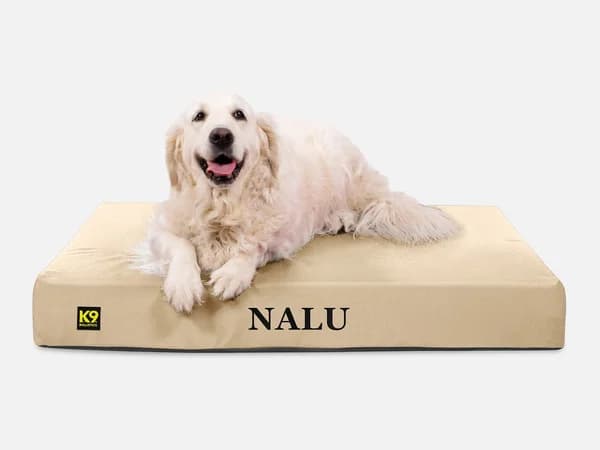
If your dog has destroyed every bed you have ever bought, start here. K9 Ballistics built their reputation on chew-proof construction, and the Tough Orthopedic delivers. The cover is rip-stop ballistic nylon, the same family of materials used in military gear and heavy-duty luggage. It is not indestructible (no fabric is), but it resists scratching, digging, and casual chewing far better than anything else I tested.
Underneath the armor-grade exterior, the CertiPUR-US certified foam provides legitimate orthopedic support. This is not a case of sacrificing comfort for durability, K9 Ballistics managed both. The foam is 5 inches thick and holds up well under repeated use. It is not quite as plush as the Big Barker, but for dogs that would shred a softer bed in an afternoon, that trade-off is obvious.
At around $100, the value proposition is strong. K9 Ballistics also offers a 120-day chew-proof guarantee, if your dog destroys it, they will replace it once. That tells you how confident they are. The only real downside is that the ballistic nylon cover, while tough, is not as cozy-looking as fabric options. Your dog will not care. See our full review for chew-resistance testing results.
Best Mid-Range
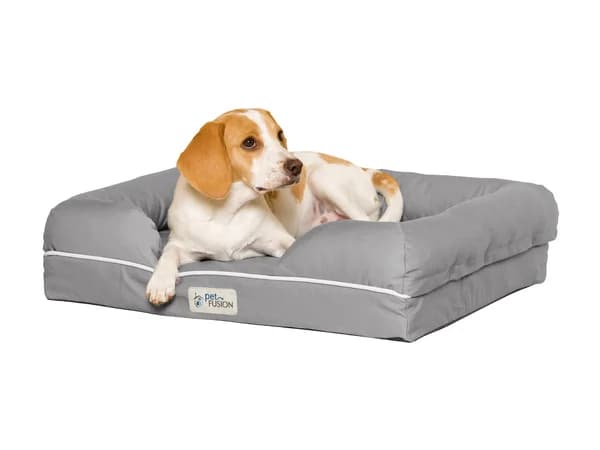
The PetFusion Ultimate Lounge hits a sweet spot that most dog beds miss: genuine memory foam comfort, a water-resistant inner liner, and a price that does not require a deep breath before clicking "buy." At around $120, it sits between the budget picks and the premium tier, and it earns that middle ground.
The 4-inch memory foam base is solid. It is not as thick as the Big Barker's 7 inches, but for dogs under 70 pounds, it provides more than enough support. The bolster edges give dogs something to rest their heads on, which is a style preference, some dogs love it, others ignore it. The polyester and cotton blend cover has a nice hand feel and is machine-washable, and the water-resistant liner underneath has saved the foam from at least a few spilled water bowl incidents in my testing.
Where the PetFusion shows its mid-range roots is in long-term foam retention. After several months of use by a 60-pound dog, the foam started showing some compression in the center, not flat, but noticeably less supportive than day one. For the price, that is a fair trade. Plan on replacing it every two to three years with a heavy dog, or getting significantly longer life with a smaller breed. Check out our full review for the full breakdown.
Best for Hot Climates
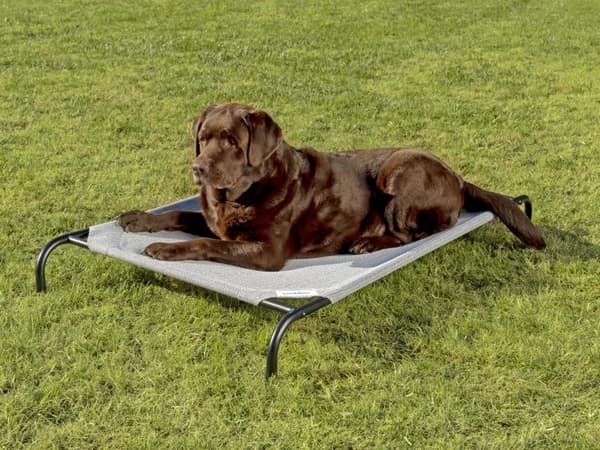
The Coolaroo is a completely different approach to dog bedding, and for the right situation, it is the best option on this list. Instead of foam, it uses a breathable HDPE fabric stretched across a powder-coated steel frame, elevating your dog 7 inches off the ground. Air circulates freely underneath, which makes a dramatic difference in hot climates or for dogs that run warm.
I tested the Coolaroo outdoors through summer heat and it stayed noticeably cooler to the touch than any foam bed sitting on a patio. Cleanup is absurdly easy, hose it off, let it dry in the sun for 20 minutes, done. No covers to remove, no machine washing, no worrying about foam getting wet. For outdoor use, porches, garages, or mudroom staging areas, nothing else comes close to this level of practicality.
The downsides are real: there is zero cushioning. Dogs with joint issues or older dogs that need pressure relief will not get orthopedic support from an elevated mesh bed. It is also not for aggressive chewers, a determined dog can tear through the HDPE fabric, though replacement covers are cheap at around $15. At $38, the Coolaroo is essentially disposable if needed, but most last several years with normal use. Read our full review for long-term durability notes.
Best Budget
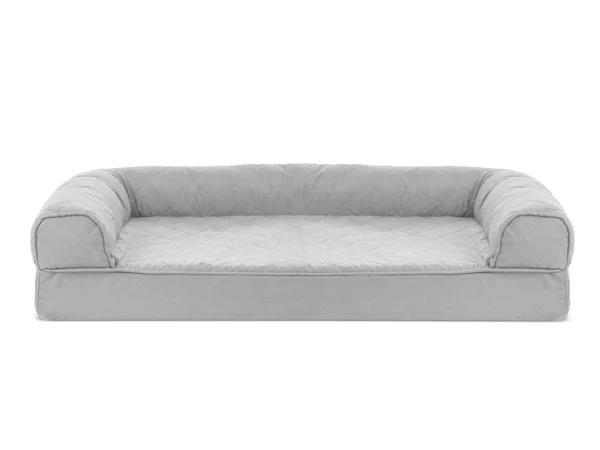
At around $30, the FurHaven Quilted Orthopedic Sofa is the cheapest bed in this guide, and it is genuinely better than it has any right to be at that price. The egg-crate orthopedic foam provides decent support, not in the same league as the Big Barker's therapeutic foam, but noticeably better than flat polyfill stuffing. The sofa-style bolsters on three sides create a cozy nook that dogs tend to settle into quickly.
The quilted cover is soft and machine-washable, and FurHaven offers a wide range of sizes and colors. For puppies, dogs that are still growing, multi-dog households that need several beds, or anyone who wants to test whether their dog even uses a dedicated bed before investing in a premium option, the FurHaven is the obvious starting point.
The honest trade-off is durability. The egg-crate foam compresses significantly faster than solid memory foam, expect noticeable flattening within 6 to 12 months with a dog over 50 pounds. The cover fabric is also thinner and more prone to snagging. At $30, you are buying a bed you will likely replace annually for a large dog. But $30 per year is still a reasonable cost if the premium options are outside your budget. See our full review for detailed foam compression data.
Head-to-Head: Big Barker vs Casper Dog Bed
This is the premium orthopedic showdown, two beds that cost over $200 and promise to support your dog for years. The Big Barker scores 8.9 in our rankings, while the Casper Dog Bed comes in at 8.4. Both are excellent, but they take different approaches.
Choose the Big Barker if:
- Your dog weighs over 50 pounds (the foam is specifically engineered for heavy dogs)
- Long-term durability is your top priority, the 10-year guarantee is unmatched
- You prefer a flat, mattress-style bed without raised edges
- You want the deepest foam available at 7 inches of therapeutic support
Choose the Casper Dog Bed if:
- You want a bed designed by a company that understands human sleep science applied to pets
- The bolster design appeals to your dog's sleeping style, some dogs love having something to lean against
- You prefer the multi-layer foam approach (supportive base plus pressure-relieving top layer)
- Aesthetics matter to you, the Casper looks like a piece of modern furniture
The Big Barker costs around $200 to $370 depending on size and runs 7 inches thick. The Casper starts at $225 and up, with a thinner profile but a dual-layer foam system that blends support and comfort. In my testing, the Big Barker held its shape better over time and provided superior support for dogs over 70 pounds. The Casper felt slightly more plush on day one and has a more polished design, but showed more compression after extended use.
For most large breed owners, the Big Barker is the better long-term investment. For medium dogs under 60 pounds where the extreme foam depth is less critical, the Casper is a strong alternative. Read our full reviews of the Big Barker and Casper for detailed comparisons across every scoring category.
Budget vs Premium: Is It Worth the Upgrade?
After testing beds across every price range, here is the honest framework.
The premium upgrade is worth it for: Large and giant breed dogs. Period. A 90-pound Lab puts enormous sustained pressure on foam for 12-plus hours a day. Budget foam cannot handle that load without compressing quickly, and a flattened bed is worse than no bed at all, it creates pressure points instead of relieving them. If your dog weighs over 50 pounds, spend more upfront or plan to replace cheap beds constantly.
The premium upgrade is also worth it for: Senior dogs with arthritis or joint issues. Quality orthopedic foam measurably reduces pressure on hips, elbows, and shoulders. Multiple veterinary studies have shown that proper sleep surfaces can improve mobility and reduce pain medication needs in older dogs. This is not marketing, it is physiology.
The budget option makes sense for: Puppies and young dogs that are still growing, destructive chewers who will shred anything regardless of price (start with K9 Ballistics instead), multi-dog households where outfitting four or five sleeping spots at $200 each is genuinely impractical, and anyone who is not sure their dog will use a bed at all. Buy a FurHaven, see if your dog adopts it, then upgrade to a Big Barker or PetFusion once you know the bed will actually get used.
The math is straightforward. A $200 Big Barker that lasts 10 years costs $20 per year. A $30 FurHaven replaced annually costs $30 per year, and your dog sleeps on degraded foam for most of that year. The premium bed is literally cheaper over time and provides better support every single day.
The Bottom Line
Dog beds are not a glamorous purchase, but they might be the single most impactful thing you buy for your dog's long-term health. Quality sleep on a supportive surface affects joint health, recovery from activity, and overall comfort, the same principles I have learned from my own fitness journey apply directly here.
For large breeds and senior dogs, the Big Barker Orthopedic is the best bed you can buy. Its 7-inch therapeutic foam and 10-year guarantee make it the clear winner for dogs that need serious support. The K9 Ballistics Tough Orthopedic is the answer for destructive chewers who need comfort without the vulnerability. The PetFusion Ultimate Lounge hits the mid-range sweet spot for most dogs under 70 pounds.
For specific situations, the Coolaroo Original Elevated is unbeatable for hot climates and outdoor use, and the FurHaven Quilted Orthopedic Sofa proves that even $30 can get you real orthopedic foam.
Browse the full best dog beds rankings scored by our methodology, and if you are outfitting your pet setup more broadly, check out our guide to the best dry dog food as well.
Frequently Asked Questions
How often should I replace my dog's bed?
It depends entirely on foam quality and your dog's weight. Premium beds like the Big Barker can last 10 years with a large dog, their warranty guarantees it. Mid-range memory foam beds like the PetFusion typically last 2 to 4 years before the foam compresses enough to lose meaningful support. Budget beds with egg-crate or polyfill should be replaced every 6 to 12 months for dogs over 50 pounds. The test is simple: press your hand into the center of the bed. If you can feel the floor through the foam, the bed is done.
Are orthopedic dog beds actually better for joints?
Yes, and the difference is measurable, not just theoretical. Orthopedic foam distributes a dog's weight across a larger surface area, reducing pressure on bony prominences like elbows, hips, and shoulders. For senior dogs with arthritis, several veterinary studies have documented improved mobility and reduced pain indicators when dogs sleep on quality orthopedic surfaces versus flat or poorly supported beds. For young, healthy dogs, an orthopedic bed is preventive, it protects joints before problems develop, much like how runners invest in quality shoes before injuries force them to.
Should I get an elevated bed or a foam bed?
They serve different purposes and are not interchangeable. Elevated beds like the Coolaroo excel at temperature regulation, ideal for hot climates, outdoor use, or dogs that overheat easily. They provide zero cushioning, though, so they are not a replacement for orthopedic support. Foam beds provide pressure relief and joint support but can trap heat. For many dog owners, the best setup is both: a foam bed indoors for primary sleeping and an elevated bed on the porch or in the yard for warm-weather lounging. If you can only buy one and your dog has no joint issues, choose based on your climate. If joint health is a concern, foam wins.
What size dog bed should I buy?
Measure your dog from the tip of their nose to the base of their tail while they are lying stretched out in their natural sleeping position. Add 6 to 12 inches to that measurement for both length and width. Most dogs shift positions throughout the night and need room to sprawl. The most common mistake I see is buying a bed that looks big enough when the dog is curled up but is too small when they stretch out at 3 AM. When in doubt, size up, I have never heard anyone complain that their dog's bed was too large. Check the manufacturer's weight and size guides, but trust your own measurements over breed-based recommendations.