
Mophie Speedport 70W Wall Charger Review
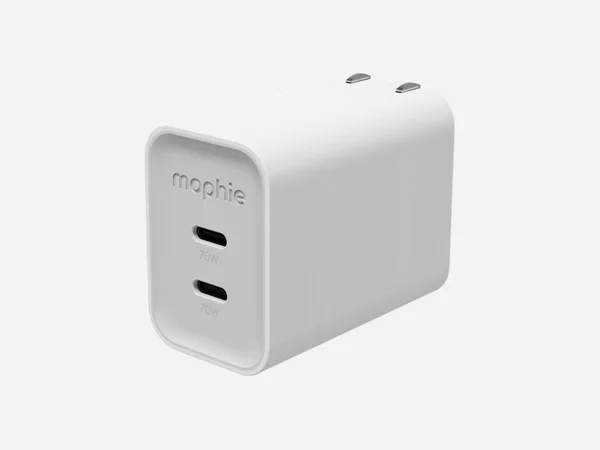
The Mophie Speedport 70W pairs premium build quality with dual USB-C PD charging. Its compact GaN design makes it ideal for charging a laptop and phone simultaneously from a single wall outlet.

Mophie Speedport 70W Wall Charger Review
The Mophie Speedport 70W pairs premium build quality with dual USB-C PD charging. Its compact GaN design makes it ideal for charging a laptop and phone simultaneously from a single wall outlet.
Mophie Speedport 70W Wall Charger Review
The Mophie Speedport 70W pairs premium build quality with dual USB-C PD charging. Its compact GaN design makes it ideal for charging a laptop and phone simultaneously from a single wall outlet.

Mophie Speedport 70W Wall Charger Pros & Cons
Pros
- Premium Mophie build quality with sleek design
- 70W total output across dual USB-C ports
- GaN technology keeps it compact despite high wattage
- PD 3.0 and PPS support for fast charging
Cons
- Only 2 USB-C ports — no USB-A option
- Higher price than competitors at $49.95
- Power splits to 35W per port when both in use
Overview
The Mophie Speedport 70W is the charger for people who care about what sits on their desk as much as what it does. In a market dominated by anonymous black plastic rectangles, Mophie delivers a dual USB-C charger with the kind of industrial design and build quality that justifies its presence next to a MacBook and an iPhone on a clean workspace. The 70W total output splits between two USB-C ports -- enough for a laptop and a phone -- and the GaN internals keep the form factor compact enough to travel with.
The deliberate choice to omit USB-A is the design decision that will either sell you on this charger or send you elsewhere. Mophie is betting that your charging life is entirely USB-C, and for users deep in the Apple ecosystem with a MacBook, iPhone 15 or later, AirPods Pro, and an Apple Watch with a USB-C puck, that bet pays off. You get a cleaner design, a slimmer profile, and no wasted port collecting dust. But if you still carry a single USB-A device -- an older Kindle, a portable speaker, a legacy cable -- the Speedport forces you to bring an adapter or a second charger, which undercuts the simplicity it is designed to provide.
At $49.95, the Speedport costs $10 more than the Baseus PicoGo AE11 while delivering only 3W more total wattage and one fewer port. The premium goes entirely toward build quality, design, and brand assurance. Whether that premium is worth it depends entirely on whether those qualities matter to you -- and for the right buyer, they absolutely do.
Features Deep-Dive
Dual USB-C Design Philosophy
The Speedport's two USB-C ports represent a philosophical commitment rather than a port-count limitation. By eliminating USB-A, Mophie reduces the internal circuitry needed for backward-compatible protocols, which contributes to the charger's compact dimensions and cleaner power path. The primary port delivers up to 70W when used alone -- enough for any MacBook Air and most ultrabooks. When both ports are active, power splits evenly to 35W each.
That 35W-per-port split is the number you need to internalize. It is enough to charge an iPhone at full speed and push a MacBook Air at approximately 80% of its maximum charging rate simultaneously. For most users, this means plugging in both devices overnight or at a desk results in everything being fully charged within a couple of hours. Where it becomes a limitation is if you need to rapidly top off a laptop during a short layover or between meetings -- 35W on a MacBook Pro 14-inch is noticeably slower than the 70W or 96W it can accept.
The port layout places both USB-C connections on the same face, spaced far enough apart that two cables do not crowd each other but close enough that the charger does not need to be oversized. It is a small detail that reflects thoughtful engineering, especially compared to chargers where ports are crammed together so tightly that a right-angle cable blocks the adjacent port.
GaN Technology and Thermal Performance
Mophie uses gallium nitride transistors to achieve 70W in a package that would have required twice the volume with traditional silicon just three years ago. The practical benefit is a charger that generates less heat under load, operates more efficiently, and fits in spaces where a 70W silicon charger simply would not. The thermal management is particularly noteworthy -- during sustained dual-port charging, the Speedport gets warm but never uncomfortably hot, even when sitting directly on a wooden desk surface.
GaN efficiency also affects long-term reliability. Less heat means less thermal stress on internal components, which typically translates to a longer functional lifespan. Mophie backs the Speedport with a standard 2-year warranty, which is respectable but not exceptional in this class. The real confidence comes from Mophie's track record as a Zagg Brands subsidiary with established quality control processes and an accessible customer service infrastructure -- something you may not appreciate until you actually need a warranty claim.
Build Quality and Design Language
Pick up the Speedport and the difference from a $30 Baseus or Amazon Basics charger is immediately apparent. The shell has a soft-touch matte finish that resists fingerprints and feels deliberate in your hand. The edges are precisely radiused with no visible mold lines or seams. The weight suggests density of components rather than empty space. It is the kind of object that looks intentional on a nightstand or desk rather than utilitarian.
The design language clearly targets Apple users. The proportions, the matte finish, the minimalist port arrangement -- everything about the Speedport says it was designed to sit alongside Apple hardware without clashing. Mophie has a long history as an Apple-adjacent accessory brand, and that heritage shows in every design choice. The foldable prongs fold flush with the body, maintaining the clean silhouette even when the charger is in a bag. For users who find generic charger aesthetics grating, the Speedport is one of the few options that actually looks like someone designed it on purpose.
Pricing Analysis
The Speedport's $49.95 price places it in a curious competitive position. You pay 25% more than the Baseus PicoGo AE11 ($39.99) for 3W more total wattage and one fewer port. You pay slightly less than the Belkin BoostCharge Pro ($51.99) but get only two ports instead of three. The price is not paying for charging capability -- it is paying for design, build quality, and the Mophie brand experience.
Whether this represents good value depends entirely on your priorities. If cost-per-watt is your primary metric, the Speedport loses to nearly every competitor. If cost-per-port matters, it loses even harder. But if you value a charger that looks and feels like a premium accessory, that integrates seamlessly into an Apple-centric setup, and that comes from a brand with a proven support infrastructure, the $10 to $12 premium over budget alternatives is modest. Think of it as paying for the full product experience rather than just the wattage output -- similar to how Apple charges more for accessories that could be matched on specs by third parties.
Who Is This For?
- All-USB-C Apple ecosystem users with a MacBook, iPhone 15 or later, and AirPods who want a single desk or nightstand charger that handles their two most important devices without aesthetic compromise
- Design-conscious professionals who keep a clean workspace and find generic chargers visually distracting -- the Speedport is one of the few chargers that looks intentional rather than tolerated
- Minimalists who carry fewer cables and prefer a streamlined two-port setup over a three-port charger with a USB-A port they never use, reducing both physical clutter and decision fatigue
- Mophie brand loyalists who have had positive warranty or support experiences and prefer staying within an ecosystem of accessories from a known, accessible manufacturer
Who Should NOT Use This
- Anyone who still uses USB-A devices regularly: No amount of design refinement compensates for needing a separate adapter or charger for a Kindle, portable speaker, or legacy cable. The Baseus PicoGo AE11 or Belkin BoostCharge Pro both include USB-A ports and cost the same or less.
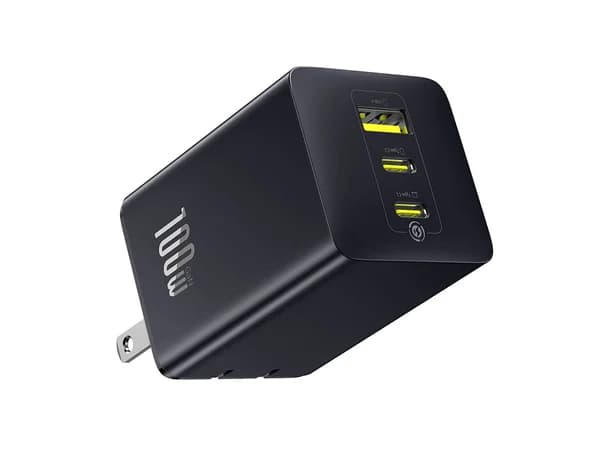
- Users who need to fast-charge a laptop and phone simultaneously at maximum speed: The 35W-per-port split when both ports are active means neither device charges at its potential maximum. If charging speed under dual load is critical, the Baseus EnerFill FE11 at 100W provides substantially more headroom for only $0.04 more.
- Budget-focused buyers who prioritize specifications over experience: The Speedport's premium is entirely in build quality and design. If those qualities do not register as valuable to you, the Baseus PicoGo AE11 delivers comparable charging performance for $10 less with an extra port.
Bottom Line
The Mophie Speedport 70W is the charger for people who notice their charger. It is not the most powerful, the most versatile, or the most affordable option in the mid-range segment. What it is, unambiguously, is the best-looking and best-built. If your charging needs are simple -- a laptop and a phone, both USB-C -- and you care about the tactile and visual quality of every object in your daily carry, the Speedport earns its premium. If you need more ports, more watts, or more value per dollar, look elsewhere without regret.
FAQ
Can the Speedport charge a MacBook Pro 16-inch?
Technically yes, but slowly. The 16-inch MacBook Pro ships with a 140W adapter and can accept up to 240W via MagSafe. At 70W from a single USB-C port, the Speedport will charge it, but at roughly half the speed of the included charger. Under heavy load, the laptop may only maintain its charge rather than gaining. For a MacBook Air or 13-inch MacBook Pro, the Speedport's 70W is much closer to full speed and perfectly adequate for daily use.
Why no USB-A port? Is Mophie being stingy?
It is a deliberate design choice rather than a cost-cutting measure. Removing USB-A simplifies the internal power circuitry, contributes to the compact form factor, and aligns the product with Mophie's target customer -- someone whose entire device ecosystem has moved to USB-C. If you view it as the charger equivalent of Apple removing the headphone jack, you understand Mophie's logic. Whether you agree with that logic depends on your device inventory.
How does the 35W split compare to other dual-port chargers?
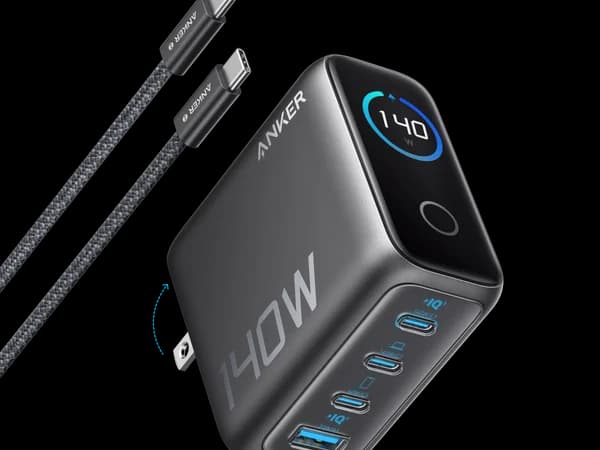
The 35W/35W even split is standard for 70W dual-port chargers. The Belkin BoostCharge Pro 70W splits differently across its three ports, typically prioritizing the first USB-C port. The Anker 100W Smart Display gives you more total wattage to split, resulting in higher per-port allocations under multi-port load. If the 35W split feels limiting, the issue is not the Speedport's distribution logic -- it is that 70W total is not enough for your multi-device needs, and you should look at 100W-class chargers instead.
Is the Mophie warranty and support actually better than competitors?
Mophie, as a Zagg Brands subsidiary, maintains dedicated customer support channels with phone, email, and chat options. Claims are processed through a centralized system with tracking. By contrast, Baseus support routes through their direct store or Amazon seller channels, which can be inconsistent. Belkin matches Mophie with a similarly established support infrastructure. The 2-year warranty length is standard, but the support experience during a claim is where Mophie and Belkin differentiate from budget brands.
Who Is Mophie Speedport 70W Wall Charger Best For?
Apple ecosystem users wanting a premium dual-port charger for MacBook and iPhone
The Bottom Line
The Mophie Speedport 70W pairs premium build quality with dual USB-C PD charging. Its compact GaN design makes it ideal for charging a laptop and phone simultaneously from a single wall outlet.
Buy on AmazonKey Specs
Scoring Breakdown
Maximum wattage output, power per port, and multi-device power distribution efficiency.
Physical size, weight, foldable prongs, and overall travel-friendliness.
Number of ports, port types (USB-C/USB-A), and multi-device charging flexibility.
Fast charging protocol support including PD 3.0/3.1, PPS, QC, UFCS, and SCP.
Materials, safety certifications (TUV, UL), thermal management, and overall construction.
Price-to-performance ratio, wattage-per-dollar, and included accessories like cables.
Display/monitoring, touch controls, smart power allocation, and device identification.