
Optimum Nutrition Gold Standard 100% Whey Review
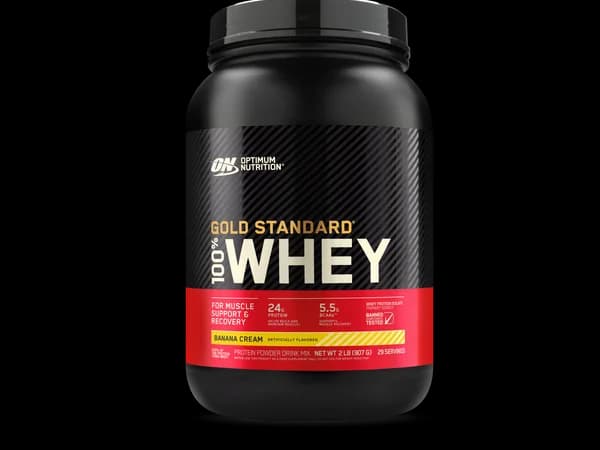
Gold Standard has been the world's best-selling protein powder for over a decade, and the value proposition is hard to beat — 74 servings at $1.08 each with Informed Choice certification. The trade-off is artificial ingredients and a whey blend rather than pure isolate.

Optimum Nutrition Gold Standard 100% Whey Review
Gold Standard has been the world's best-selling protein powder for over a decade, and the value proposition is hard to beat — 74 servings at $1.08 each with Informed Choice certification. The trade-off is artificial ingredients and a whey blend rather than pure isolate.
Optimum Nutrition Gold Standard 100% Whey Review
Gold Standard has been the world's best-selling protein powder for over a decade, and the value proposition is hard to beat — 74 servings at $1.08 each with Informed Choice certification. The trade-off is artificial ingredients and a whey blend rather than pure isolate.

Optimum Nutrition Gold Standard 100% Whey Pros & Cons
Pros
- Informed Choice certified — the most popular protein powder worldwide for a reason
- Outstanding value at $1.08/serving with 74 servings in the 5lb size
- Excellent taste and mixability across 20+ flavor options
Cons
- Contains artificial flavors (acesulfame potassium) and soy lecithin
- Uses whey blend (isolate, concentrate, peptides) rather than pure isolate
- Does not publish independent lab test results or batch-level COAs
Overview
There is a reason Optimum Nutrition Gold Standard 100% Whey has been the world's best-selling protein powder for over a decade, and it is not because of clever marketing. At $1.08 per serving in the 5lb tub, with 74 servings and Informed Choice certification, Gold Standard delivers a combination of value, taste, and reliability that competitors have struggled to match for years. Double Rich Chocolate has become something of a cultural touchstone in gym culture — the flavor that every other chocolate protein is measured against.
But best-selling does not mean best. Gold Standard is a whey blend, combining whey protein isolate (listed first) with whey protein concentrate and whey peptides. This is not the same as a pure isolate, and the protein-per-calorie ratio reflects that. It also contains acesulfame potassium (an artificial sweetener), soy lecithin (an emulsifier), and artificial flavors — ingredients that a growing segment of consumers actively avoids. Glanbia, the Irish dairy conglomerate that owns Optimum Nutrition, does not publish independent lab test results or batch-level certificates of analysis, which is a transparency gap that feels increasingly conspicuous as newer brands lean into radical openness about their testing protocols. Gold Standard's Informed Choice certification provides banned substance screening, but Informed Choice is a tier below the stricter Informed Sport certification that some competitors carry. None of these are dealbreakers for most consumers. Gold Standard remains an exceptional value play with taste that genuinely sets the bar. But if you have moved past the "just give me protein" phase and started caring about ingredient purity, sourcing transparency, or clean-label formulations, you will find Gold Standard's ingredient list harder to overlook.
Features Deep-Dive
Value Economics: The 5lb Tub Calculation
The math on Gold Standard's 5lb tub is genuinely difficult to beat. At roughly $80 for 74 servings, you are paying $1.08 per serving — or about $0.045 per gram of protein at 24g per serving. For context, premium competitors like Momentous Essential Whey Isolate run $2.50+ per serving, and even budget-friendly options like Levels Grass-Fed Whey hover around $1.50-2.00 per serving depending on the size purchased. Over a year of daily use, Gold Standard costs approximately $394 versus $912+ for a mid-range premium protein. That $500+ annual difference buys a lot of creatine, or a decent gym membership. The value equation becomes even more favorable when you consider that Gold Standard is available at virtually every supplement retailer, grocery chain, and warehouse club, which means you can often find it on sale. Costco, Amazon, and Target regularly discount the 5lb tub below the $80 MSRP. For a household where two people use protein powder daily, the savings over premium alternatives can approach $1,000 annually. That is a material financial consideration that no amount of grass-fed sourcing or minimalist ingredient lists can entirely dismiss.
Taste and Mixability: Why Double Rich Chocolate Became Iconic
Gold Standard's taste portfolio is one of its strongest competitive advantages, and it is not close. With over 20 flavors available, including seasonal and limited editions, ON has iterated on flavor science for decades. Double Rich Chocolate is the flagship for good reason — it tastes genuinely like chocolate milk when mixed with cold water, without the chalky, protein-y undertaste that plagues many competitors. Vanilla Ice Cream, Mocha Cappuccino, and Cookies and Cream are also consistently well-reviewed. The mixability is equally impressive. Gold Standard dissolves cleanly in a standard shaker bottle without clumping, and it works well in both water and milk without becoming excessively thick or foamy. This matters more than it sounds on paper. A protein powder you actually enjoy drinking is one you will use consistently, and consistency is what drives results. Many technically superior proteins — cleaner ingredients, higher protein percentage, better sourcing — lose the real-world effectiveness battle because they taste mediocre and people stop using them after a few weeks. Gold Standard's taste consistency across batches is also noteworthy, reflecting the manufacturing scale and quality control that comes with being the world's top seller.
The Whey Blend Question: Isolate vs. Concentrate vs. Peptides
Gold Standard's label lists whey protein isolate first, followed by whey protein concentrate and whey protein peptides. FDA labeling rules require ingredients to be listed in descending order by weight, so isolate is the primary source. But "primary" could mean 51% or 90% — Optimum Nutrition does not disclose the exact ratio, which is a common practice in the industry but frustrating for informed consumers. Why does this matter? Whey protein isolate is more processed, higher in protein percentage (90%+ by weight), lower in fat and lactose, and generally better tolerated by those with mild dairy sensitivity. Whey concentrate is less processed, cheaper, contains more fat and lactose, and typically runs 70-80% protein by weight. Whey peptides are partially hydrolyzed for faster digestion. The blend approach allows ON to hit a competitive price point while still leading with "isolate" on the label. For most recreational gym-goers, the practical difference between a blended whey and a pure isolate is negligible — you will get your protein either way. But if you are lactose-sensitive, counting every calorie precisely, or simply want to know exactly what ratio of protein types you are consuming, the lack of disclosure is a legitimate drawback.
Informed Choice vs. Informed Sport: Certification Nuance
Gold Standard carries Informed Choice certification, which tests finished products for banned substances through the LGC lab. This is meaningful and puts Gold Standard ahead of proteins with no third-party testing at all. However, Informed Choice is not the same as Informed Sport, and the distinction matters for competitive athletes. Informed Sport tests every single batch before it ships, while Informed Choice conducts periodic testing on products pulled from retail shelves. Both certifications test against the WADA prohibited list, but the batch-level testing of Informed Sport provides stronger assurance against contamination in any specific container you purchase. For recreational gym-goers and casual fitness enthusiasts, Informed Choice certification is perfectly adequate. For NCAA athletes, professional competitors, or anyone subject to drug testing with career-level consequences, the difference between periodic and batch-level testing is not trivial. It is worth understanding which certification your protein carries and whether the testing cadence matches your risk tolerance.
Pricing Analysis
Gold Standard's pricing strategy is built around the 5lb tub, where the per-serving economics are strongest. At $1.08 per serving for 24g of protein, it delivers the best protein-per-dollar ratio of any Informed Choice-certified protein on the market. The smaller 2lb tub runs closer to $1.50-1.70 per serving, which erodes much of the value advantage. The single-serving packets are convenient but terrible value at $3-4 each. If you are going to buy Gold Standard, buy the 5lb tub — the economics of the smaller sizes do not justify the premium. Compared to direct competitors, Gold Standard undercuts Dymatize ISO100 (a pure isolate) by roughly 40%, Levels Grass-Fed Whey by 25-30%, and premium options like Momentous or Transparent Labs by 50-60%. The only proteins that compete on pure cost are generic store brands and unflavored bulk whey, neither of which match Gold Standard's taste or certification. The value proposition is strongest for people who consume protein powder daily and prioritize consistency and affordability over ingredient purity or sourcing transparency. If you use one scoop per day, Gold Standard costs roughly $33 per month — less than most people spend on coffee.
Who Is This For?
Optimum Nutrition Gold Standard 100% Whey works best for:
- Budget-conscious daily protein users who consume one or two shakes per day and want reliable, good-tasting protein without spending $60-90 per month on premium alternatives. The 5lb tub's $1.08 per serving makes it the most cost-effective certified protein available, and the savings compound significantly over months and years of consistent use.
- Beginners and general fitness enthusiasts who want a no-research-required protein powder that tastes good, mixes easily, and delivers 24g of protein per serving without any complicated supplementation protocols. Gold Standard's reputation is earned — it is the safe, default choice for a reason, and there is nothing wrong with choosing it if ingredient purity is not your top priority.
- People who prioritize taste above all else and have tried cleaner or more minimalist protein powders only to find them unpalatable. Gold Standard's flavor science is genuinely best-in-class, and a protein powder you actually drink consistently is more effective than a technically superior one gathering dust in your pantry. The 20+ flavor options also mean you can rotate to avoid flavor fatigue.
Who Should NOT Use This
Optimum Nutrition Gold Standard 100% Whey might not be the right choice if:
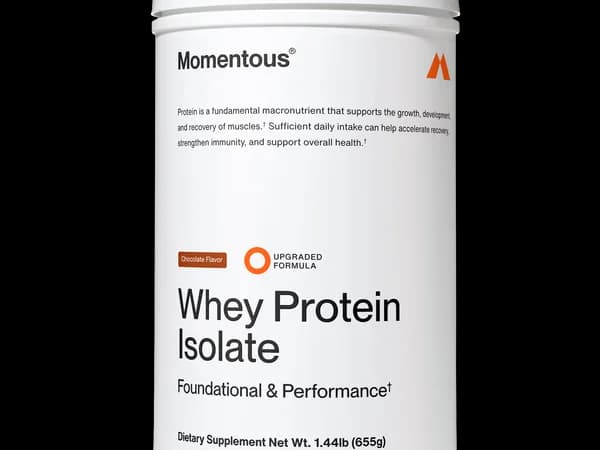
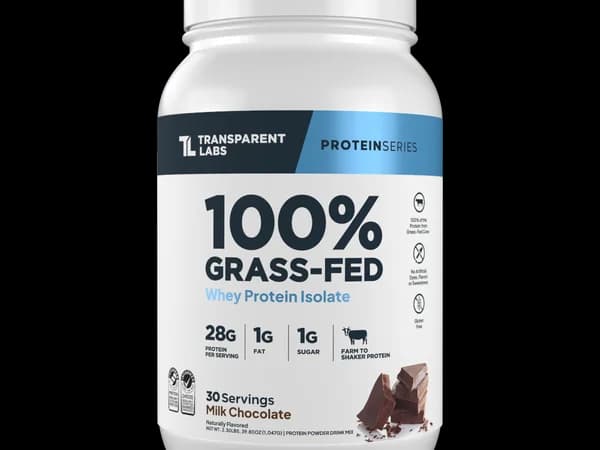
- You avoid artificial sweeteners and ingredients: Gold Standard contains acesulfame potassium, artificial flavors, and soy lecithin. If you follow a clean-label philosophy or are concerned about long-term artificial sweetener consumption, products like Levels Grass-Fed Whey or Naked Whey offer simpler ingredient lists without sacrificing too much on price. Transparent Labs is another option if you want a clean-label whey isolate with full ingredient transparency.
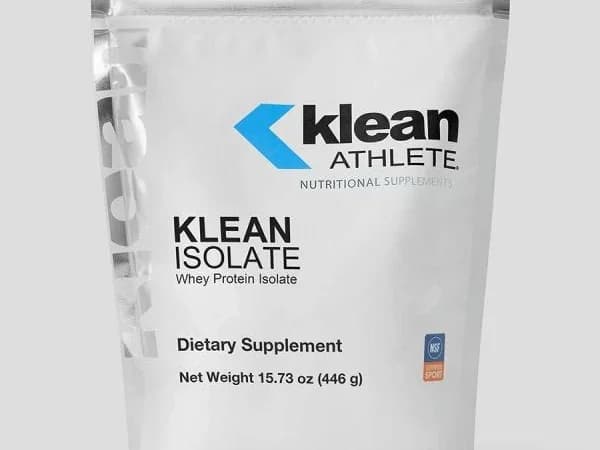
- You are a tested competitive athlete who needs batch-level assurance: Gold Standard's Informed Choice certification provides periodic testing, but not the batch-level testing of Informed Sport. If a failed drug test could end your career or result in a suspension, consider NSF Certified for Sport options like Momentous or Klean Athlete, which provide stronger per-batch assurance against contamination.
- You want full transparency into lab testing and sourcing: Optimum Nutrition does not publish independent lab results, batch COAs, or detailed sourcing information about their whey supply chain. If knowing exactly where your protein comes from and seeing the test data matters to you, brands like Transparent Labs and Momentous offer significantly more disclosure. This is not to say Gold Standard is hiding problems — Glanbia is a massive, reputable dairy company — but the lack of proactive transparency feels outdated compared to newer brands.
Bottom Line
Optimum Nutrition Gold Standard 100% Whey earned its position as the world's best-selling protein powder through an unbeatable combination of value, taste, and availability. It is not the cleanest, most transparent, or most rigorously certified option on the market, but for the majority of protein powder consumers — people who want reliable protein at a fair price and do not want to overthink it — Gold Standard remains the rational default choice. The 5lb tub is one of the best values in sports nutrition, period.
FAQ
Does Gold Standard Whey contain enough protein per serving to build muscle?
Gold Standard provides 24g of protein per serving, which is within the 20-40g range that research suggests is optimal for stimulating muscle protein synthesis in a single meal. For most adults, this is sufficient per serving. If you weigh over 200 lbs or are following a very high-protein diet, you might use 1.5 scoops (36g protein) to better match your per-meal target. The whey blend format means absorption speed is moderate — faster than casein or plant protein, slightly slower than a pure hydrolyzed isolate. For practical purposes, Gold Standard delivers enough protein per serving for muscle building when combined with adequate total daily protein intake and resistance training.
Why does Gold Standard use a whey blend instead of pure isolate?
Cost management. Whey protein concentrate is significantly cheaper than whey protein isolate, and by blending the two (with isolate listed first as the primary ingredient), ON can offer a lower price point while still leading with "isolate" on the label. A pure isolate version would likely cost 30-50% more per serving. For consumers without lactose sensitivity who are not on strict calorie-controlled diets, the practical difference in muscle-building effectiveness between a blended whey and a pure isolate is minimal. The trade-off is slightly higher fat and carbohydrate content per serving and somewhat higher lactose levels, which can cause digestive discomfort for those with dairy sensitivities.
Is Gold Standard Whey safe for drug-tested athletes?
Gold Standard carries Informed Choice certification, which tests for substances prohibited by WADA. For recreational athletes and amateur competitors, this provides meaningful assurance. However, Informed Choice conducts periodic testing of products from retail shelves rather than batch-level testing of every production run. Professional athletes, NCAA competitors, and others subject to strict drug testing with significant career consequences should be aware of this distinction. If batch-level testing is important to you, NSF Certified for Sport products (like Momentous Essential Whey Isolate or Klean Athlete Klean Isolate) provide a higher level of per-batch assurance.
How does Gold Standard compare to Dymatize ISO100?
Dymatize ISO100 is a pure hydrolyzed whey protein isolate, meaning it contains virtually zero lactose and fat, with faster absorption. Gold Standard is a whey blend with isolate as the primary ingredient but also containing concentrate. ISO100 has a higher protein percentage per serving and is better for lactose-sensitive users, but costs roughly 40-50% more per serving. In terms of taste, both are excellent — ISO100 tends to have a thinner, lighter texture while Gold Standard has more body. For budget-focused consumers without dairy sensitivities, Gold Standard's value advantage is significant. For lactose-intolerant users or those who want the purest protein per scoop, ISO100 justifies the premium.
Who Is Optimum Nutrition Gold Standard 100% Whey Best For?
Budget-conscious gym-goers who want proven, great-tasting protein at the best value
The Bottom Line
Gold Standard has been the world's best-selling protein powder for over a decade, and the value proposition is hard to beat — 74 servings at $1.08 each with Informed Choice certification. The trade-off is artificial ingredients and a whey blend rather than pure isolate.
Try Optimum Nutrition Gold Standard 100% Whey TodayKey Specs
Scoring Breakdown
Certification level (NSF Certified for Sport, Informed Sport/Choice, Clean Label Project, Labdoor) and testing rigor
Heavy metal screening results (Consumer Reports data, Clean Label Project Purity Award, published batch COAs), lead/cadmium/arsenic levels
Minimal ingredient count, no artificial sweeteners/colors/fillers, natural flavoring, clean label practices
Protein grams per dollar — calculated from price per serving and protein per serving to identify best value
Protein per serving, amino acid profile, BCAA content, protein source quality (isolate vs concentrate, grass-fed, organic)
Flavor quality, texture, dissolving ease based on aggregated expert reviews and user ratings
Published COAs, ingredient sourcing disclosure, supply chain traceability, formula change communication