
KIND Protein Bar Dark Chocolate Nut Review
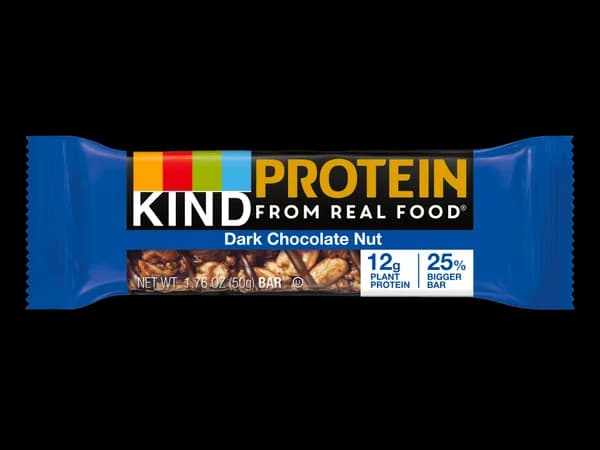
KIND built its brand on visible whole ingredients, and the Dark Chocolate Nut bar delivers that visual appeal. However, the protein comes from soy protein isolate (not the nuts), and palm kernel oil drags down ingredient purity. At 12g protein and 8g sugar, the macros are average. A familiar, accessible option rather than a health-optimized one.

KIND Protein Bar Dark Chocolate Nut Review
KIND built its brand on visible whole ingredients, and the Dark Chocolate Nut bar delivers that visual appeal. However, the protein comes from soy protein isolate (not the nuts), and palm kernel oil drags down ingredient purity. At 12g protein and 8g sugar, the macros are average. A familiar, accessible option rather than a health-optimized one.
KIND Protein Bar Dark Chocolate Nut Review
KIND built its brand on visible whole ingredients, and the Dark Chocolate Nut bar delivers that visual appeal. However, the protein comes from soy protein isolate (not the nuts), and palm kernel oil drags down ingredient purity. At 12g protein and 8g sugar, the macros are average. A familiar, accessible option rather than a health-optimized one.

KIND Protein Bar Dark Chocolate Nut Pros & Cons
Pros
- Recognizable whole nuts and ingredients you can see — visually transparent
- Good taste with a satisfying crunch from whole almonds and peanuts
- Affordable at ~$1.50/bar and widely available in most stores
Cons
- Contains soy protein isolate and palm kernel oil — not the cleanest ingredient list
- ~8g sugar per bar is on the higher side for a protein bar
- Only 12g protein — moderate at best for a product marketed as a protein bar
Overview
KIND built an entire brand on a simple visual promise: you can see the whole nuts and real ingredients right through the wrapper. The Dark Chocolate Nut Protein Bar extends that philosophy into the protein category, and the result is a bar that looks and feels more like real food than most of its competitors. Whole almonds, peanuts, and dark chocolate are visible and recognizable, which creates an eating experience that feels honest and satisfying in a way that engineered protein bars rarely achieve.
The marketing, however, tells a more flattering story than the nutrition label. While the visible whole nuts suggest that nuts are providing the protein, the primary protein source is actually soy protein isolate -- a processed ingredient that contradicts the whole-food visual messaging. Palm kernel oil appears on the ingredient list alongside those photogenic almonds, dragging down the purity score. At 12g protein and approximately 8g sugar, the macros are middling: not enough protein to compete with serious sport nutrition bars, and more sugar than the zero-sugar budget options. KIND's protein bar is really a nut bar with added protein -- a perfectly fine snack that delivers on taste and familiarity but should not be mistaken for a macro-optimized performance product.
This product is best for casual snackers who want a recognizable brand with visible whole ingredients.
Features Deep-Dive
The Whole Ingredient Visual Appeal
KIND's signature transparent wrapper is not just packaging -- it is a trust signal. In a category dominated by opaque wrappers hiding homogeneous brown bars, KIND's approach lets you see exactly what you are eating before you open it. Whole almonds, peanuts, and dark chocolate clusters are visible and identifiable, creating an immediate visual distinction from the processed protein slab aesthetic of Quest, Pure Protein, or think!. The eating experience follows through: you get distinct textures from crunchy nuts, chewy binding, and chocolate coating, rather than the uniform chew of most protein bars. This tactile variety is a genuine advantage -- our taste-texture score of 8.0 is the third highest in the budget tier, and much of that comes from the textural complexity that whole ingredients provide. For people who dislike the "protein bar taste" that characterizes most of this category, KIND offers something that feels closer to a trail mix bar or a chocolate-nut confection.
The Protein Source Disconnect
Here is where KIND's story gets complicated. The visible whole nuts create an implicit promise that the protein comes from those nuts. It does not. Almonds and peanuts contribute some protein, but the heavy lifting is done by soy protein isolate -- a processed ingredient that you cannot see in the bar and that runs counter to the whole-food branding. Soy protein isolate is effective (complete amino acid profile, decent bioavailability) but it is also one of the more controversial protein sources in consumer perception, drawing concerns about phytoestrogens, GMO sourcing, and processing methods. Our protein source quality score of 6.0 reflects this disconnect: the protein works, but the sourcing does not match the brand promise. Additionally, 12g of protein is moderate at best for a product marketed as a "protein bar." Quest delivers 21g, think! delivers 20g, and even Orgain's organic bar matches KIND's count at 10g while being transparent about its snack-first positioning.
Sugar Content in Context
At roughly 8g sugar per bar, KIND sits at the higher end of this comparison. Quest and think! achieve 0g, Pure Protein stays around 2g, and even RXBAR's date-sweetened bar ties KIND at roughly the same level. The sugar in KIND comes from a combination of the chocolate coating and natural sugars in the nuts and binding ingredients. It is not an alarming amount by any standard -- 8g is less than half of what a typical candy bar contains -- but in a comparison where competitors have engineered their way to near-zero sugar, KIND's number stands out. The sugar-sweetener score of 5.5 reflects this middle position: not terrible, but not competitive with bars that have made low sugar a defining feature. For casual snackers who are not tracking every gram, 8g is a non-issue. For macro-counters, it is a reason to look elsewhere.
Pricing Analysis
At roughly $18 for a box of 12 (~$1.50 per bar), KIND ties with Orgain and Pure Protein for the most affordable options in this comparison. The value proposition, however, is complicated. In terms of protein per dollar, KIND delivers 8g of protein per dollar spent -- the second lowest in the comparison after Orgain. Pure Protein delivers nearly twice the protein (20g) at a similar price point ($1.33/bar), and Quest delivers 21g for only $0.58 more per bar.
Where KIND earns its price is the eating experience. If you are buying a bar primarily for taste and the satisfaction of eating something that looks and feels like real food, KIND's $1.50 buys a noticeably more enjoyable experience than Pure Protein's $1.33 bar. Think of it as paying for enjoyment rather than nutrition optimization. The bar also benefits from massive retail distribution -- you can find KIND bars in virtually every grocery store, drugstore, and airport shop, which adds a convenience premium that the price does not explicitly charge for.
Who Is This For?
KIND Protein Bar Dark Chocolate Nut works best for:
- Casual snackers who want a satisfying mid-afternoon bar that looks and tastes like real food rather than a supplement. If you reach for a snack because you are hungry and want something enjoyable, KIND delivers on that basic need better than most protein bars.
- Whole-food visual shoppers who instinctively distrust bars where you cannot see or identify the ingredients. KIND's transparent wrapper and visible nuts provide a comfort level that opaque, engineered bars cannot match, even if the full ingredient list is more complex than the visible ingredients suggest.
- Brand loyalists who already buy KIND snack bars and want something with slightly more protein without leaving a brand they trust. The jump from KIND's regular snack bars (5-7g protein) to the protein line (12g) is incremental but meaningful within the KIND ecosystem.
- People who dislike "protein bar taste" and want something that tastes more like a nut-and-chocolate snack than a sports supplement. The whole nut texture and dark chocolate coating create an eating experience that is closer to trail mix than to a typical protein bar.
Who Should NOT Use This
KIND Protein Bar Dark Chocolate Nut might not be the right choice if:
- You need serious protein content. At 12g protein, KIND is outperformed by nearly every competitor in this comparison. Quest (21g), think! (20g), and Pure Protein (20g) all deliver significantly more protein per bar. If protein is the primary reason you are buying a bar, KIND is not optimized for that purpose.
- You are avoiding soy protein or palm kernel oil. Despite the whole-food visual branding, KIND's ingredient list includes soy protein isolate and palm kernel oil -- two ingredients that health-conscious consumers frequently avoid. If ingredient purity is a priority, Orgain (USDA Organic, no soy) or RXBAR (egg whites, minimal ingredients) align better with that goal.
- You are tracking sugar intake carefully. At ~8g sugar per bar, KIND has the highest sugar content in the budget tier alongside RXBAR. If zero or near-zero sugar is a requirement, Quest, think!, or Pure Protein all deliver substantially less sugar.
Bottom Line
KIND built its brand on visible whole ingredients, and the Dark Chocolate Nut Protein Bar delivers that visual appeal with a genuinely enjoyable eating experience. The reality beneath the marketing is more nuanced: protein from soy protein isolate, palm kernel oil in the ingredients, and macros that are average at best. At $1.50/bar, it is a familiar, accessible, and tasty snack -- just do not mistake it for a protein-optimized performance product.
FAQ
Is KIND Protein Bar worth the price?
At $1.50/bar, KIND is among the cheapest options in this comparison, so value is decent in absolute terms. The question is value relative to purpose. If you want a tasty snack with some protein, $1.50 is a fair price. If you want to maximize protein intake, Pure Protein delivers 20g for $1.33/bar versus KIND's 12g for $1.50/bar -- making Pure Protein nearly two and a half times more protein-efficient per dollar. KIND's value is in the eating experience, not the nutrition optimization.
How does KIND's protein actually come from?
Despite the prominent whole nuts, the primary protein source is soy protein isolate -- a processed ingredient, not the visible almonds and peanuts. Nuts do contribute some protein (almonds have roughly 6g per ounce), but soy protein isolate does the heavy lifting to reach the 12g total. This is perhaps KIND's most notable gap between marketing perception and nutritional reality.
Is KIND a good post-workout bar?
Not really. At 12g protein, KIND falls well below the 20-40g threshold that exercise science identifies for effective post-workout muscle protein synthesis. The 8g sugar also works against the low-sugar profile most athletes prefer after training. For post-workout use, Quest (21g protein, under 1g sugar), think! (20g protein, 0g sugar), or Pure Protein (20g protein, ~2g sugar) are all substantially better choices. KIND is better suited as a snack between meals than as workout nutrition.
Are KIND bars gluten-free?
KIND Protein Bars are labeled gluten-free, though they are manufactured in facilities that may process wheat and other grains. If you have celiac disease or severe gluten sensitivity, the lack of a certified gluten-free seal may be a concern. For general gluten avoidance, the bar's formulation should be suitable.
Who Is KIND Protein Bar Dark Chocolate Nut Best For?
Casual snackers who want a recognizable brand with visible whole ingredients
The Bottom Line
KIND built its brand on visible whole ingredients, and the Dark Chocolate Nut bar delivers that visual appeal. However, the protein comes from soy protein isolate (not the nuts), and palm kernel oil drags down ingredient purity. At 12g protein and 8g sugar, the macros are average. A familiar, accessible option rather than a health-optimized one.
Try KIND Protein Bar Dark Chocolate Nut TodayKey Specs
Scoring Breakdown
Evaluates overall cleanliness of the ingredient list. Penalizes artificial sweeteners (sucralose, acesulfame K), sugar alcohols (erythritol, maltitol, sorbitol), artificial preservatives, artificial colors/flavors, and seed oils. Rewards whole food ingredients, organic certification, and minimal processing.
Assesses the quality and bioavailability of protein sources. Ranks: grass-fed whey isolate > whey concentrate > egg white > collagen > multi-source plant blend > single-source plant protein. Considers amino acid completeness and digestibility (PDCAAS score).
Analyzes total sugar content and sweetener types. Penalizes high sugar (>8g), sugar alcohols, and artificial sweeteners. Rewards natural sweeteners (dates, honey, monk fruit) and low total sugar while maintaining palatability.
Evaluates protein-to-calorie ratio, fiber content (3g+ preferred), and overall macronutrient distribution. Higher protein per calorie scores better. Balanced fat content and adequate fiber are preferred.
Third-party certifications including USDA Organic, Non-GMO Project Verified, NSF Certified for Sport, Informed Sport, Kosher, B Corp status, and independent lab testing verification.
Based on aggregated consumer reviews, expert taste tests, and texture assessments across major review sources. Considers flavor variety, chewiness vs. chalkiness, and overall enjoyment.
Full ingredient disclosure, clear allergen labeling, sourcing information (e.g., grass-fed, organic origin), nutritional claim accuracy, and company transparency practices.