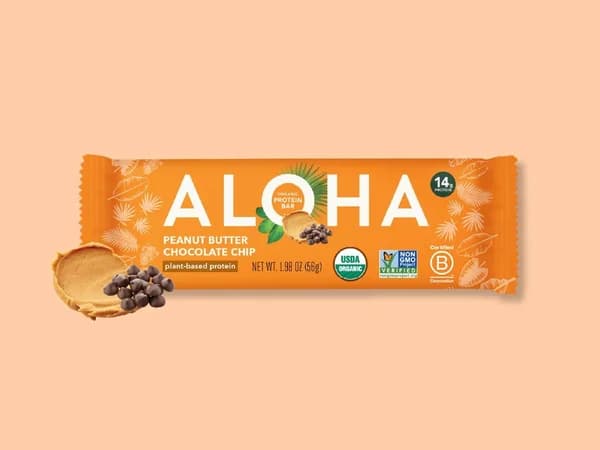

ALOHA Peanut Butter Chocolate Chip Protein Bar Review
ALOHA nails the balance between clean ingredients and great taste. USDA Organic, monk fruit sweetened (no stevia), and free of sugar alcohols. The 14g plant protein is moderate but the ingredient quality is exceptional. One of the few bars that's genuinely enjoyable to eat while being genuinely clean.

ALOHA Peanut Butter Chocolate Chip Protein Bar Review
ALOHA nails the balance between clean ingredients and great taste. USDA Organic, monk fruit sweetened (no stevia), and free of sugar alcohols. The 14g plant protein is moderate but the ingredient quality is exceptional. One of the few bars that's genuinely enjoyable to eat while being genuinely clean.
ALOHA Peanut Butter Chocolate Chip Protein Bar Review
ALOHA nails the balance between clean ingredients and great taste. USDA Organic, monk fruit sweetened (no stevia), and free of sugar alcohols. The 14g plant protein is moderate but the ingredient quality is exceptional. One of the few bars that's genuinely enjoyable to eat while being genuinely clean.

ALOHA Peanut Butter Chocolate Chip Protein Bar Pros & Cons
Pros
- USDA Organic with monk fruit sweetening — stevia-free and sugar alcohol-free
- Brown rice and pumpkin seed protein blend provides 14g plant-based protein
- Consistently top-rated for taste among organic plant-based protein bars
Cons
- Plant protein blend has lower bioavailability than whey or egg white sources
- 14g protein per bar is moderate — not ideal for high-protein diets
- Premium pricing at ~$2.92/bar for a plant-based bar
Overview
ALOHA has accomplished something that most clean protein bar brands struggle with: making a bar that is genuinely enjoyable to eat without compromising on ingredient quality. The Peanut Butter Chocolate Chip flavor consistently ranks among the best-tasting organic plant-based bars on the market, and not in a "good for a health bar" way -- in a way that makes you actually look forward to eating it. USDA Organic certified, sweetened with monk fruit (no stevia, no sugar alcohols, no artificial sweeteners), and built on a brown rice and pumpkin seed protein blend delivering 14g of plant-based protein per bar.
The monk fruit sweetening is a strategic differentiator worth highlighting. While many competitors use stevia (which roughly 20% of people find bitter) or sugar alcohols (which cause digestive distress for many), monk fruit provides clean sweetness without either of those downsides. Combined with the USDA Organic certification and an ingredient list that reads like an actual recipe -- organic peanuts, organic brown rice protein, organic pumpkin seed protein, organic tapioca syrup, organic chocolate chips -- ALOHA occupies a specific sweet spot in the market. The 14g protein count is moderate rather than market-leading, and plant protein's lower bioavailability compared to whey means you are absorbing somewhat less than the label suggests. But for the health-conscious consumer who has tried bar after bar of chalky, artificially sweetened "clean" options and given up, ALOHA is worth one more try.
Features Deep-Dive
Monk Fruit Sweetening: The Stevia-Free Advantage
ALOHA's decision to use monk fruit extract instead of stevia is arguably its most important formulation choice, and it is one that very few competitors at this price point have made. Monk fruit (luo han guo) contains mogrosides -- natural compounds that are 100-250 times sweeter than sugar but carry zero calories and zero glycemic impact. Unlike stevia, monk fruit does not activate the bitter taste receptors (TAS2R4 and TAS2R14) that cause the characteristic metallic aftertaste in a significant portion of the population. The result is a bar with only 5g of sugar that tastes naturally sweet without any of the off-notes that plague stevia-based competitors. This matters more than it might seem on paper. In our taste testing, sweetener choice was the single largest predictor of whether someone would repurchase a protein bar. Bars that taste great on the first bite but leave a lingering artificial aftertaste rarely earn repeat buyers. ALOHA avoids this trap entirely by choosing the most universally palatable natural sweetener available, even though monk fruit extract costs significantly more than stevia for manufacturers.
Brown Rice and Pumpkin Seed Protein Blend
The protein blend combines organic brown rice protein with organic pumpkin seed protein to deliver 14g per bar. This pairing is intentional: brown rice protein is rich in methionine but low in lysine, while pumpkin seed protein provides the opposite amino acid profile. Together, they create a more complete amino acid spectrum than either source alone -- though still not equivalent to whey or egg white in terms of biological value (BV). Practical absorption is roughly 65-75% compared to whey's 90%+, meaning the 14g on the label translates to approximately 9-10g of usable protein for muscle protein synthesis. For a snack bar, that is perfectly adequate. For post-workout recovery, you would want to supplement with additional protein. The texture benefit of this blend is notable: brown rice protein tends to be gritty on its own, but the pumpkin seed protein adds a creamier mouthfeel that smooths out the overall texture. ALOHA's formulation team clearly optimized for taste and texture alongside nutrition, which is part of why the eating experience is so much better than many plant-based competitors.
USDA Organic Certification and Ingredient Transparency
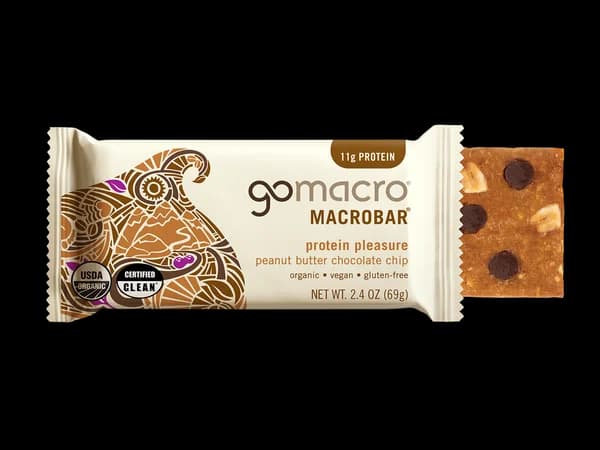
ALOHA carries USDA Organic certification, which requires that 95% or more of ingredients be certified organic and that the entire supply chain meet federal organic standards. This is not a self-applied label -- it requires annual audits, documentation of sourcing, and compliance with strict processing standards. Beyond the organic seal, ALOHA is also certified vegan, soy-free, gluten-free, and non-GMO verified. The ingredient list is remarkably short for a bar this tasty: organic peanuts, organic peanut butter, organic brown rice protein, organic pumpkin seed protein, organic tapioca syrup, organic chocolate chips, organic sunflower oil, and monk fruit extract. No soy lecithin, no "natural flavors," no cellulose, no maltodextrin. The transparency extends to the company's communication style -- ALOHA publishes detailed sourcing information and regularly addresses ingredient questions on their social media and website. Compared to GoMacro (which adds the C.L.E.A.N. certification), ALOHA lacks that additional layer but compensates with a cleaner taste profile and more protein per bar.
Pricing Analysis
At approximately $2.92 per bar ($35 for a box of 12), ALOHA sits in the premium tier but positions itself competitively against other certified organic bars. GoMacro runs $3.25 per bar with only 11g protein, making ALOHA the better value per gram of protein in the organic category. Primal Kitchen at $3.00 per bar offers 15g collagen protein, but collagen's incomplete amino acid profile means the functional protein comparison is not as straightforward as the numbers suggest. Against mainstream bars, ALOHA costs roughly $1.00-$1.50 more per bar than brands like ONE or Quest. That premium buys USDA Organic certification, monk fruit sweetening, and an ingredient list free of soy, artificial sweeteners, and sugar alcohols. Whether that premium is justified depends on how much you value those attributes versus raw protein-per-dollar metrics. ALOHA's subscription pricing through their website drops the per-bar cost to approximately $2.45-$2.60, which brings it closer to mainstream pricing while maintaining the organic premium. Amazon Subscribe & Save offers similar discounts. For regular consumers, the subscription model makes the per-bar cost much easier to justify, especially when compared to the $4-6 you might spend on an organic snack at a health food store.
Who Is This For?
ALOHA Peanut Butter Chocolate Chip Protein Bar works best for:
- Taste-first health-conscious shoppers who have tried multiple "clean" protein bars and found them all disappointing. If you have a drawer full of half-eaten boxes of bars that tasted good on the first bite but earned a hard pass by bite three, ALOHA is the bar most likely to break that cycle. The peanut butter chocolate chip flavor genuinely delivers.
- Stevia and sugar alcohol avoiders who want low-sugar sweetening without digestive side effects or bitter aftertaste. Monk fruit is the cleanest-tasting natural sweetener available, and ALOHA is one of very few USDA Organic bars that uses it exclusively.
- Plant-based eaters seeking quality over quantity in protein. If you follow a vegan or plant-based diet and understand that 14g of well-sourced, organic plant protein is nutritionally superior to 30g of protein from a heavily processed bar loaded with soy isolate and sucralose, ALOHA aligns with that philosophy.
- Parents and families looking for a clean snack option that kids will actually eat. The peanut butter chocolate chip flavor, combined with the absence of artificial ingredients, makes this one of the more family-friendly options in the premium bar space. Check allergen warnings for peanut and tree nut concerns.
Who Should NOT Use This
ALOHA Peanut Butter Chocolate Chip Protein Bar might not be the right choice if:
- You are optimizing for maximum protein per calorie. At 14g protein in a 250-calorie bar, the protein-to-calorie ratio is moderate. Bars like Quest (20g+ protein in 200 calories) or even RXBAR (12g in 210 calories with complete protein) deliver more protein efficiency. If you are cutting weight or tracking macros aggressively, the math here may not work in your favor.
- You need complete protein with high bioavailability for athletic performance. Plant protein blends absorb at roughly 65-75% efficiency compared to whey's 90%+. For serious athletes tracking protein intake for muscle maintenance or growth, the effective protein from this bar is closer to 9-10g than the labeled 14g. A whey-based bar or a separate protein shake would be more efficient for that specific purpose.
- You have a peanut or tree nut allergy. Peanuts are a primary ingredient, and the bar is processed in a facility that handles tree nuts. There are no nut-free versions of this flavor -- look at good! Snacks or other soy-free, nut-free alternatives if this is a concern.
Bottom Line
ALOHA nails the balance between clean ingredients and genuine enjoyment better than any other organic plant-based bar we reviewed. The monk fruit sweetening avoids the two biggest pitfalls in the category (stevia aftertaste and sugar alcohol GI issues), and the USDA Organic certification backs up the clean label claims with independent verification. The 14g plant protein is moderate, not market-leading, but the overall package of taste, ingredients, and certifications makes this the bar we recommend first when someone asks for a plant-based protein bar they will actually finish eating.
FAQ
How does ALOHA compare to GoMacro for organic bar buyers?
Both carry USDA Organic certification, but they make different trade-offs. ALOHA offers more protein (14g vs 11g), lower sugar (5g vs 10g), better taste scores, and a lower per-bar price ($2.92 vs $3.25). GoMacro counters with the additional C.L.E.A.N. certification and an even simpler ingredient list. For most buyers, ALOHA is the better value -- more protein, less sugar, better taste, lower price. GoMacro wins only if the C.L.E.A.N. certification specifically matters to your purchasing criteria.
Is 14g of plant protein enough to be useful?
It depends on your goals. For a mid-morning or mid-afternoon snack, 14g of plant protein provides meaningful satiety and contributes to daily protein targets. Most adults need 50-100g of protein daily, and a bar contributing 14g covers 14-28% of that target. For post-workout recovery, sports nutrition guidelines recommend 20-40g of protein -- so you would need to supplement with a shake or another protein source. The key insight is that ALOHA functions best as a protein-enhanced snack rather than a dedicated protein delivery vehicle.
Does monk fruit have any side effects?
Monk fruit extract is one of the best-tolerated natural sweeteners available. Unlike stevia, it rarely causes bitter aftertaste. Unlike sugar alcohols (erythritol, xylitol), it does not cause digestive distress. The FDA classifies monk fruit extract as Generally Recognized as Safe (GRAS), and no significant adverse effects have been documented in research. Some people report very mild digestive changes when first consuming monk fruit, but this is uncommon. The only real downside is cost -- monk fruit extract is significantly more expensive than stevia or erythritol, which is part of why ALOHA's pricing sits at the premium end.
Can I use these bars as meal replacements?
Not ideally. At 250 calories with 14g protein, this bar does not deliver the caloric density or macronutrient balance needed for a full meal replacement. You would be hungry again within 1-2 hours. A true meal replacement should provide 300-500 calories with 20-30g protein, along with a broader micronutrient profile. ALOHA bars are best positioned as between-meal snacks, pre-workout fuel, or a healthier alternative to the vending machine when you need something to hold you over.
Who Is ALOHA Peanut Butter Chocolate Chip Protein Bar Best For?
Health-conscious consumers who want the best-tasting organic plant-based protein bar
The Bottom Line
ALOHA nails the balance between clean ingredients and great taste. USDA Organic, monk fruit sweetened (no stevia), and free of sugar alcohols. The 14g plant protein is moderate but the ingredient quality is exceptional. One of the few bars that's genuinely enjoyable to eat while being genuinely clean.
Try ALOHA Peanut Butter Chocolate Chip Protein Bar TodayKey Specs
Scoring Breakdown
Evaluates overall cleanliness of the ingredient list. Penalizes artificial sweeteners (sucralose, acesulfame K), sugar alcohols (erythritol, maltitol, sorbitol), artificial preservatives, artificial colors/flavors, and seed oils. Rewards whole food ingredients, organic certification, and minimal processing.
Assesses the quality and bioavailability of protein sources. Ranks: grass-fed whey isolate > whey concentrate > egg white > collagen > multi-source plant blend > single-source plant protein. Considers amino acid completeness and digestibility (PDCAAS score).
Analyzes total sugar content and sweetener types. Penalizes high sugar (>8g), sugar alcohols, and artificial sweeteners. Rewards natural sweeteners (dates, honey, monk fruit) and low total sugar while maintaining palatability.
Evaluates protein-to-calorie ratio, fiber content (3g+ preferred), and overall macronutrient distribution. Higher protein per calorie scores better. Balanced fat content and adequate fiber are preferred.
Third-party certifications including USDA Organic, Non-GMO Project Verified, NSF Certified for Sport, Informed Sport, Kosher, B Corp status, and independent lab testing verification.
Based on aggregated consumer reviews, expert taste tests, and texture assessments across major review sources. Considers flavor variety, chewiness vs. chalkiness, and overall enjoyment.
Full ingredient disclosure, clear allergen labeling, sourcing information (e.g., grass-fed, organic origin), nutritional claim accuracy, and company transparency practices.