
Anker SOLIX C300 DC Review
The Anker SOLIX C300 DC is the most portable power station in our lineup. At under 8 lbs with 288Wh of LiFePO4 power, it's perfect for weekend camping trips and emergency phone charging.

Anker SOLIX C300 DC Review
The Anker SOLIX C300 DC is the most portable power station in our lineup. At under 8 lbs with 288Wh of LiFePO4 power, it's perfect for weekend camping trips and emergency phone charging.
Anker SOLIX C300 DC Review
The Anker SOLIX C300 DC is the most portable power station in our lineup. At under 8 lbs with 288Wh of LiFePO4 power, it's perfect for weekend camping trips and emergency phone charging.

Anker SOLIX C300 DC Pros & Cons
Pros
- Ultra-compact at only 7.7 lbs
- 288Wh LiFePO4 battery with 3,000+ cycle lifespan
- Fast 1-hour charge to 80%
- Detachable light tower included
- Car charging and solar compatible
- Great for laptops, phones, and small devices
Cons
- 300W output limits appliance compatibility
- No AC outlet - DC and USB only
- Smaller capacity than competitors at this price
- No app connectivity
Overview
The Anker SOLIX C300 DC takes a different approach to portable power: maximum portability at the expense of AC outlets. At just 7.7 lbs with 288Wh of LiFePO4 capacity, it's the power station you'll actually bring on hikes, bike tours, and ultralight camping trips where every ounce matters.
The deliberate omission of AC outlets keeps weight down and focuses the design on what ultralight users actually need: USB ports for devices, DC outlets for camping gear, and the included light tower for illumination. It's not for everyone, but for the right user, it's the most practical option available.
Features Deep-Dive
Ultralight Design
At 7.7 lbs, the C300 DC is dramatically lighter than any competitor with similar capacity. For backpackers, cyclists, and kayakers, this weight savings represents real-world benefit—the difference between bringing backup power and leaving it home.
The compact form factor fits in backpack pockets and bike panniers. It's genuinely portable rather than "portable with an asterisk."
Detachable Light Tower
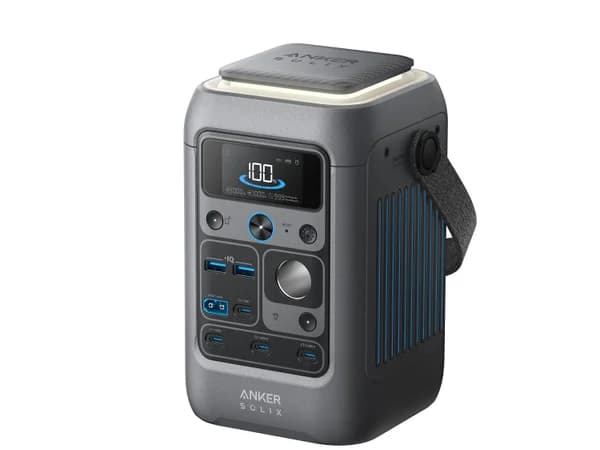
The included light tower provides bright, adjustable illumination for camping and emergencies. It detaches from the unit and connects via cable, enabling flexible positioning. This thoughtful inclusion adds genuine utility for outdoor use.
Fast DC Charging
The C300 DC reaches 80% charge in one hour via AC adapter—fast enough to top off during any access to power. Solar charging accepts panels up to 100W for slower but grid-independent charging during extended trips.
LiFePO4 Longevity
The 3,000+ cycle rating ensures the C300 DC will outlast years of regular use. For a unit that might see frequent charge cycles during heavy travel use, this longevity matters significantly.
DC and USB Focus
Multiple USB-A ports, USB-C (with PD), and DC outputs handle modern camping electronics: phones, cameras, drones, lights, fans, and small appliances. The deliberate omission of AC inverter electronics saves weight and complexity.
Pricing Analysis
At $199, the C300 DC offers entry-level pricing with premium battery chemistry. You're paying for the ultralight design, Anker's build quality, and LiFePO4 longevity. The tradeoff is capacity and the absence of AC outlets.
For users who specifically need DC/USB power without AC capability, the value proposition is strong. For users who need AC outlets, the C300 DC simply doesn't fit—no amount of value matters if it can't do what you need.
Who Is This For?
The Anker SOLIX C300 DC makes sense for:
- Backpackers and hikers who need backup power without serious weight
- Bicycle tourists with limited pannier space and weight sensitivity
- Kayakers and paddlers wanting compact, waterside-safe power
- Festival attendees carrying gear all day who need phone charging
- Emergency kit builders wanting lightweight backup for evacuations
Who Should NOT Use This
The C300 DC isn't the right choice if:
- AC outlets are required: There are none—this is DC/USB only
- Higher capacity needed: 288Wh limits extended trips
- You need to power appliances: No AC means no blenders, no small heaters, no laptop chargers without USB-C
- Maximum features wanted: The C300 DC is deliberately minimalist
Bottom Line
The Anker SOLIX C300 DC serves users who prioritize portability above all else. Its deliberate limitations enable genuinely ultralight power backup that you'll actually carry. For the right use case, nothing else comes close.
FAQ
Why no AC outlets?
AC outlets require inverter electronics that add weight and complexity. By focusing on DC and USB output, Anker achieves the lightest design possible. Users who need AC should look at other options; those who don't benefit from the weight savings.
Can it charge a laptop?
Via USB-C Power Delivery, yes—if your laptop supports USB-C charging. Many modern laptops do, including MacBooks and most Windows ultrabooks. Laptops requiring proprietary AC adapters won't work.
Is 288Wh enough for backpacking trips?
For phone and camera charging, yes. A smartphone needs roughly 10-15Wh per charge, meaning 20+ phone charges per full battery. Add camera batteries, headlamps, and other small devices, and the C300 DC handles multi-day trips comfortably.
How does the light tower work?
The light tower detaches and connects via cable, allowing you to position it separately from the power station. Brightness adjusts from dim night light to bright area illumination. It's a genuinely useful inclusion for camping.
Who Is Anker SOLIX C300 DC Best For?
Ultralight camping and travel where portability is priority over power
The Bottom Line
The Anker SOLIX C300 DC is the most portable power station in our lineup. At under 8 lbs with 288Wh of LiFePO4 power, it's perfect for weekend camping trips and emergency phone charging.
Buy on AmazonKey Specs
Scoring Breakdown
Watt-hours per pound and overall energy density. Evaluates how much usable power the station provides relative to its size and weight.
Continuous watts, surge capacity, and number/variety of outlets. Determines what devices and appliances you can actually run.
Time to full charge via AC wall outlet and maximum solar input wattage. Faster charging means less downtime between uses.
Weight, dimensions, handles, and wheels for transport. Considers ease of carrying to campsites, loading in vehicles, and storage.
LiFePO4 cycle count, warranty length, and expected battery lifespan. All products in this category use LiFePO4 chemistry for maximum durability.
Smartphone app control, UPS function, display quality, expandability, and smart home integration options.
Price per watt-hour considering capacity, features, and warranty. Evaluates overall cost-effectiveness.