
ASUS ROG Azoth Extreme Review
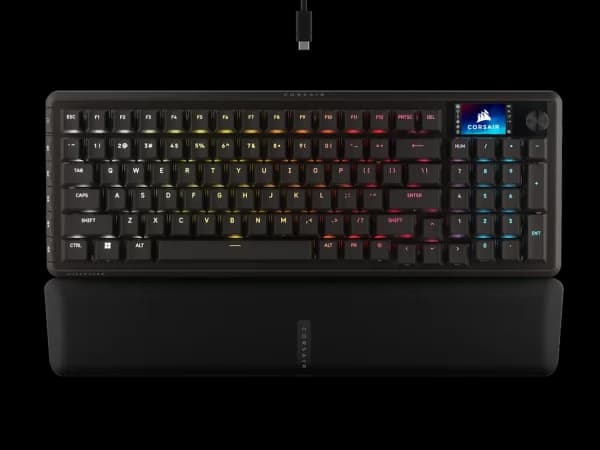
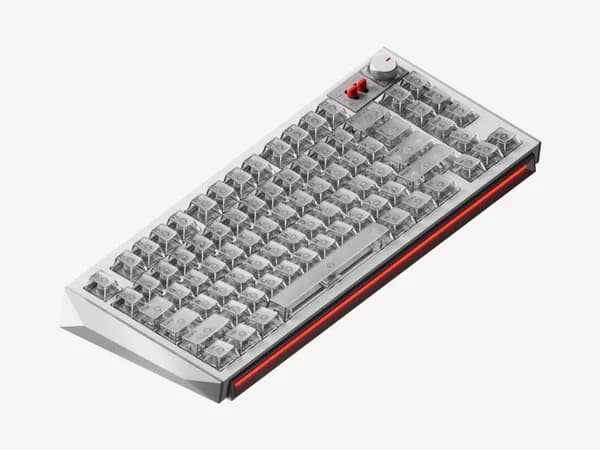
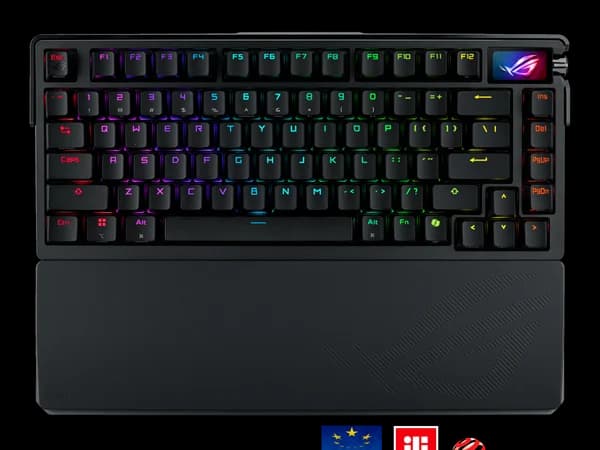
The ROG Azoth Extreme is a statement piece — CNC aluminum, carbon fiber, OLED touchscreen, and tri-mode wireless in a beautifully crafted 75% package. The $500 price is justified only for those who demand the absolute best build quality.

ASUS ROG Azoth Extreme Review
The ROG Azoth Extreme is a statement piece — CNC aluminum, carbon fiber, OLED touchscreen, and tri-mode wireless in a beautifully crafted 75% package. The $500 price is justified only for those who demand the absolute best build quality.
ASUS ROG Azoth Extreme Review
The ROG Azoth Extreme is a statement piece — CNC aluminum, carbon fiber, OLED touchscreen, and tri-mode wireless in a beautifully crafted 75% package. The $500 price is justified only for those who demand the absolute best build quality.

ASUS ROG Azoth Extreme Pros & Cons
Pros
- Premium CNC aluminum case with carbon fiber weight
- Tri-mode wireless with 1KHz polling and ROG SpeedNova
- OLED touchscreen display with customizable widgets
- Gasket mount with silicone dampening for exceptional acoustics
Cons
- Extremely expensive at $500 — double the nearest competitor
- ROG NX Snow mechanical switches (not Hall Effect/magnetic)
- 1KHz polling rate lags behind 8KHz HE competitors for gaming
Overview
The ROG Azoth Extreme is not trying to be the fastest keyboard you can buy. It is trying to be the finest. At $500, it costs double the nearest competitor in this category, and it justifies that price through materials, craftsmanship, and acoustic engineering rather than raw input speed. This is a critical distinction: while the keyboard market races toward higher polling rates and Hall Effect switch technology, ASUS chose a different direction entirely.
The Azoth Extreme uses ROG NX Snow mechanical switches -- traditional mechanical switches, not Hall Effect or magnetic. It polls at 1KHz, not 8KHz. On paper, those specifications look dated next to competitors half its price. But judging this keyboard by competitive gaming metrics misses the point. The CNC-machined aluminum case with a carbon fiber weight, the gasket mount with silicone dampening layers, the OLED touchscreen display -- these are not features designed to shave milliseconds off input latency. They are designed to make every keypress feel and sound exceptional.
The result is a keyboard that scores at the top of the category in build quality, acoustics, and overall fit-and-finish while deliberately trailing in raw gaming performance metrics. Whether that trade-off makes sense depends entirely on what you value. For buyers who see a keyboard as a long-term investment in daily tactile experience rather than a competitive gaming tool, the Azoth Extreme offers something no Hall Effect board in this roundup can match. For pure competitive gamers chasing every millisecond, $500 buys a keyboard that is technically slower than options costing less than half as much.
Features Deep-Dive
CNC Aluminum Case and Carbon Fiber Weight
The Azoth Extreme's case is CNC-machined from a single block of aluminum, a manufacturing process that produces tolerances and surface quality impossible to achieve with stamped or cast construction. The difference is immediately apparent when you pick up the keyboard. There is no flex, no hollow resonance, no gaps between panels. Every surface meets precisely, and the anodized finish has a depth that stamped aluminum simply cannot replicate.
The carbon fiber counterweight on the underside serves both functional and aesthetic purposes. It adds mass that dampens vibration, contributing to the keyboard's remarkably solid sound profile. Carbon fiber also signals the Azoth Extreme's positioning: this is a material associated with supercars and aerospace, not gaming peripherals. The weight it adds keeps the keyboard planted on a desk without feeling cumbersome.
Comparing this to the aluminum top plates on keyboards like the Apex Pro TKL Gen 3 is not a fair fight. The Apex Pro uses aluminum as a structural element within a broader plastic housing. The Azoth Extreme is aluminum through and through, with carbon fiber reinforcement. The material difference is visible, audible, and tangible.
Gasket Mount and Acoustic Engineering
The Azoth Extreme's gasket mounting system with silicone dampening layers produces a typing sound and feel that belongs more in the custom keyboard community than the gaming peripheral world. Gasket mounting suspends the plate on elastomer strips rather than screwing it rigidly to the case, allowing controlled flex that distributes impact force and reduces high-pitched metallic ping.
The silicone dampening layers between the plate, PCB, and case bottom absorb resonance that would otherwise produce hollow or reverberant sound signatures. The combined effect is a deep, satisfying "thock" on every keypress -- the kind of sound that custom keyboard builders spend hundreds of dollars and dozens of hours trying to achieve. The Azoth Extreme delivers it out of the box.
For typists who spend eight or more hours a day at a keyboard, acoustic quality is not vanity. Harsh, high-pitched key sounds contribute to fatigue and distraction. The Azoth Extreme's acoustic tuning makes sustained typing sessions noticeably more pleasant. In a quiet office, the difference between this and a standard mechanical keyboard is immediately obvious to anyone nearby.
OLED Touchscreen and Tri-Mode Connectivity
The Azoth Extreme's OLED touchscreen goes beyond the simple displays on other keyboards. Rather than a small, view-only screen, this is a full touch-enabled display with customizable widgets, system monitoring, media controls, and brightness adjustment accessible without leaving the keyboard. Swiping between pages of information feels responsive and natural. The screen quality itself is sharp and vibrant, and ASUS provides enough widget options that most users will find genuinely useful configurations.
Tri-mode wireless connectivity through ROG SpeedNova 2.4GHz, Bluetooth, and wired USB-C covers every use case. ROG SpeedNova is ASUS's proprietary low-latency wireless protocol, and while it operates at 1KHz rather than the 8KHz that Hall Effect competitors achieve, it delivers reliable and responsive wireless performance for everything outside of pro-level competitive gaming. Bluetooth handles multi-device productivity, and wired mode provides the zero-latency baseline.
The 1KHz polling rate is the specification that will give competitive gamers pause. In the context of Hall Effect keyboards running at 8KHz, 1KHz feels like a generation behind. For the vast majority of users -- even serious gamers who are not competing at the tournament level -- the difference between 1KHz and 8KHz is not perceptible in practice. But the specification gap exists, and at $500, it deserves acknowledgment.
Pricing Analysis
At $500, the ROG Azoth Extreme costs more than double any other keyboard in this comparison. That price is not justified by input performance -- keyboards at $150-250 match or exceed it in polling rate and switch technology. The $500 buys materials, manufacturing precision, and acoustic engineering that no competitor in the gaming keyboard market approaches.
The appropriate comparison is not against other gaming keyboards but against the custom mechanical keyboard community, where CNC aluminum cases alone cost $300-500 before switches, keycaps, or PCBs. Viewed through that lens, the Azoth Extreme delivers custom-tier build quality in a complete, warranty-backed, wirelessly-connected package at a price that undercuts many custom builds.
The ROG NX Snow switches are competent traditional mechanical switches, but they lack the adjustable actuation and Rapid Trigger of Hall Effect alternatives. At $500, some buyers will reasonably feel that traditional switches should not be part of the equation. Others will appreciate the proven reliability and satisfying tactile feel of well-executed mechanical switches in a premium housing.
This is an unapologetically luxury product. The value proposition only works if you value what luxury provides: superior materials, craftsmanship, and sensory experience.
Who Is This For?
The ASUS ROG Azoth Extreme works best for:
- Keyboard enthusiasts and custom keyboard converts who want CNC aluminum, gasket mount acoustics, and premium materials without the time investment and risk of a custom build. The Azoth Extreme delivers the custom keyboard experience in a turnkey product with warranty support.
- Professionals and writers who type all day and prioritize how a keyboard feels and sounds over competitive gaming specifications. The acoustic engineering and build quality make sustained typing sessions more comfortable and more satisfying than any other keyboard in this roundup.
- Luxury tech collectors and desk setup perfectionists who view peripherals as investments in daily experience rather than disposable tools. The carbon fiber weight, CNC aluminum, and OLED touchscreen create a centerpiece that elevates a workspace.
Who Should NOT Use This
The ASUS ROG Azoth Extreme might not be the right choice if:
- Competitive gaming performance is your priority. The ROG NX Snow mechanical switches do not offer adjustable actuation or Rapid Trigger, and the 1KHz polling rate is eight times slower than what Hall Effect competitors deliver. If you play competitive FPS games at a high level, keyboards costing less than half as much will give you a measurable input advantage.
- You cannot justify $500 for a keyboard under any circumstances. The Azoth Extreme is not a value proposition. It is a luxury purchase. If spending $500 on a keyboard feels uncomfortable regardless of what it offers, the ROG Falchion or a mid-range Hall Effect board will deliver excellent daily-driver performance without the premium materials and the associated price tag.
Bottom Line
The ROG Azoth Extreme is the most beautifully constructed keyboard in the gaming peripheral market, full stop. CNC aluminum, carbon fiber, gasket-mount acoustics, and an OLED touchscreen create a sensory experience that no competitor matches. The deliberate choice of traditional mechanical switches over Hall Effect technology means it sacrifices raw competitive gaming speed for proven tactile feel and reliability. At $500, it is a statement about what a keyboard can be when cost is not the primary constraint. For those who value craft over speed, nothing else comes close.
FAQ
Why does a $500 keyboard use traditional mechanical switches instead of Hall Effect?
The Azoth Extreme prioritizes build quality, acoustics, and tactile feel over raw input speed. Hall Effect switches enable adjustable actuation and Rapid Trigger, but the ROG NX Snow mechanical switches deliver a satisfying, proven typing feel that pairs naturally with the gasket mount and acoustic dampening system. ASUS designed this keyboard for the typing and premium experience, not for millisecond-level competitive advantage.
Is the 1KHz polling rate a dealbreaker for gaming?
For casual to serious gaming, no. The difference between 1KHz and 8KHz is 1ms versus 0.125ms of input delay, which is imperceptible to the vast majority of players. For professional-level competitive play where every measurable advantage matters, yes -- 8KHz keyboards exist at less than half the price. The Azoth Extreme is not designed to be the fastest keyboard; it is designed to be the finest.
How does the Azoth Extreme compare to a custom mechanical keyboard build?
A comparable custom build -- CNC aluminum case, gasket mount, quality stabilizers, premium switches, and good keycaps -- typically costs $400-700 and requires significant time, knowledge, and soldering skill. The Azoth Extreme delivers similar or superior build quality in a complete, assembled package with wireless connectivity, an OLED touchscreen, and manufacturer warranty. For anyone who wants the custom keyboard experience without the project, the Azoth Extreme is the most direct path.
Is the OLED touchscreen a gimmick?
No. Unlike the small static displays on other keyboards, the Azoth Extreme's touchscreen provides genuinely interactive widgets -- system monitoring, media controls, brightness, and custom displays -- accessible with a finger swipe. Whether you use it constantly depends on your workflow, but the implementation is polished enough to be useful rather than decorative.
Who Is ASUS ROG Azoth Extreme Best For?
Enthusiasts who want the ultimate luxury wireless keyboard with no budget constraints
The Bottom Line
The ROG Azoth Extreme is a statement piece — CNC aluminum, carbon fiber, OLED touchscreen, and tri-mode wireless in a beautifully crafted 75% package. The $500 price is justified only for those who demand the absolute best build quality.
Buy on AmazonKey Specs
Scoring Breakdown
Switch quality, actuation feel, key travel, and overall typing/gaming experience. Includes switch type characteristics (linear, tactile, clicky, magnetic).
Frame materials (aluminum, plastic, steel), keycap quality (PBT vs ABS), stabilizer quality, weight, and overall construction durability.
Hot-swap support, RGB lighting, media controls, display/OLED, programmable keys, onboard memory, and extra functionality.
Wired/wireless options, Bluetooth, 2.4GHz wireless, USB-C, polling rate, latency, and multi-device pairing.
Software quality, macro programming, per-key RGB control, key remapping, profile management, and modding potential.
Price-to-performance ratio considering build quality, features, and overall package relative to competing options.