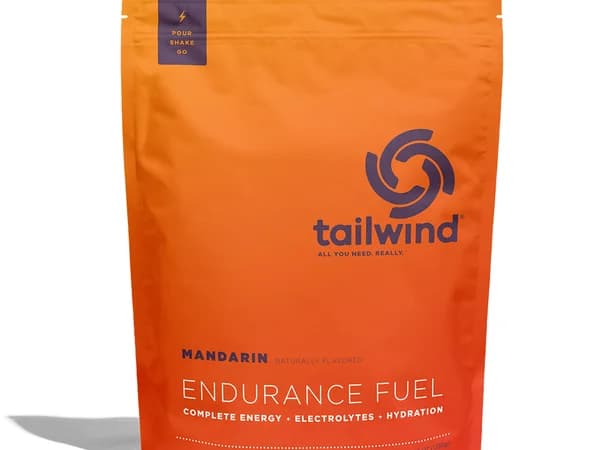

Tailwind Nutrition Endurance Fuel Review
Tailwind is the go-to endurance fuel for ultra runners and long-distance cyclists. It's intentionally high in sugar (organic dextrose) to fuel prolonged exercise, not for daily hydration. If you need calories and electrolytes in one bottle during a race, nothing else compares.

Tailwind Nutrition Endurance Fuel Review
Tailwind is the go-to endurance fuel for ultra runners and long-distance cyclists. It's intentionally high in sugar (organic dextrose) to fuel prolonged exercise, not for daily hydration. If you need calories and electrolytes in one bottle during a race, nothing else compares.
Tailwind Nutrition Endurance Fuel Review
Tailwind is the go-to endurance fuel for ultra runners and long-distance cyclists. It's intentionally high in sugar (organic dextrose) to fuel prolonged exercise, not for daily hydration. If you need calories and electrolytes in one bottle during a race, nothing else compares.

Tailwind Nutrition Endurance Fuel Pros & Cons
Pros
- All-in-one endurance fuel combining calories, electrolytes, and hydration in one mix
- Clean and simple ingredient list with just organic dextrose and electrolytes
- Designed to be the only fuel needed during long endurance events
Cons
- 25g sugar per serving from organic dextrose — highest sugar in this comparison
- Specifically designed for during-exercise fueling — not a daily hydration product
- Lower electrolyte density per serving compared to dedicated electrolyte mixes
Overview
Tailwind Nutrition Endurance Fuel is the odd one out in any electrolyte comparison, and intentionally so. While every other product in this category is trying to deliver electrolytes with minimal or zero calories, Tailwind is doing the opposite: it is a complete endurance fuel that provides calories, electrolytes, and hydration in a single mix. The 25 grams of sugar per serving from organic dextrose is not a weakness to apologize for -- it is the entire point. Dextrose is the fastest-absorbing carbohydrate available, and during prolonged exercise, your body burns through glycogen stores that need replenishing. Tailwind was designed so that an ultra-marathon runner or century cyclist could carry one powder, mix it into their bottles, and never need to fumble with gels, chews, or separate electrolyte tabs.
The formula is remarkably simple: organic dextrose, organic rice dextrin, electrolytes (303mg sodium, 88mg potassium), and natural flavoring. Five ingredients. That simplicity is Tailwind's defining advantage -- and its constraint. It works exceptionally well for its intended purpose, which is fueling exercise lasting two hours or more. For everything else -- daily hydration, light gym sessions, office work -- it is the wrong tool entirely. Understanding that distinction is essential before spending $30.99 on 30 servings.
This product is best for ultra-endurance athletes who need combined calories, electrolytes, and hydration in a single, stomach-friendly mix during long events.
Features Deep-Dive
All-in-One Endurance Fueling
The core proposition of Tailwind is elimination: it eliminates the need to juggle separate products during long events. Traditional endurance nutrition requires coordinating gels for calories, electrolyte tabs or powder for minerals, and water for hydration -- three systems with different timing, different concentrations, and different risks of stomach distress when they interact poorly. Tailwind collapses this into one mixture at one consistent concentration, sipped steadily throughout an event.
The practical benefit is enormous during actual competition or long training sessions. An ultra-runner at mile 40 does not want to think about whether they need a gel or an electrolyte capsule or just water. They want to drink from their bottle and know that their caloric, electrolyte, and hydration needs are all being addressed simultaneously. Tailwind delivers approximately 100 calories per serving (25g of carbohydrate from organic dextrose), which aligns with the commonly recommended 200-300 calories per hour for sustained endurance activity when consuming two to three servings hourly. The 303mg sodium per serving also scales with consumption -- two servings per hour delivers over 600mg sodium, approaching the replacement needs of moderate sweaters in temperate conditions.
Organic Dextrose and Gastric Tolerance
Tailwind's choice of organic dextrose as its sole carbohydrate source is a calculated decision rooted in exercise physiology. Dextrose (glucose) is absorbed directly through the intestinal wall without requiring enzymatic breakdown, which makes it the fastest carbohydrate your body can process during exercise. More importantly, it is the least likely carbohydrate to cause gastrointestinal distress -- the race-ending nausea, cramping, and bloating that plagues endurance athletes who mix fructose-heavy gels with sports drinks containing different sugar types.
This matters because GI distress is not a minor inconvenience in ultra-endurance events; it is the single most common reason athletes DNF (Did Not Finish) in races lasting over four hours. By using only dextrose and keeping the ingredient list to five items, Tailwind minimizes the variables that can trigger stomach problems. The organic rice dextrin in the formula acts as a slow-release carbohydrate complement, providing a steadier energy supply alongside the fast-acting dextrose. Countless ultra-marathon race reports cite Tailwind as the only fuel their stomach could tolerate past the 50-mile mark -- a testimonial that carries real weight in a community where stomach failure is a constant threat.
Simplicity of the Five-Ingredient Formula
In a supplement market drowning in proprietary blends, "performance matrices," and ingredient lists that read like chemistry textbooks, Tailwind's five-ingredient formula is almost startlingly brief. Organic dextrose, organic rice dextrin, citric acid, sodium citrate, and sea salt (with potassium chloride and natural flavors in flavored versions). That is the entire product. There are no amino acids, no B-vitamins, no adaptogens, no caffeine (in the non-caffeinated versions), and no artificial sweeteners or colors.
This simplicity serves two purposes. First, it reduces the likelihood of unexpected ingredient interactions or sensitivities. When something upsets your stomach during a race, a five-ingredient product gives you far fewer suspects than a twenty-ingredient one. Second, it makes the product extraordinarily easy to dose and adjust. Want more calories? Add another scoop. Need more sodium for a hot race? Supplement with salt capsules while keeping your base fuel consistent. The formula is predictable and stackable in a way that complex products are not. For athletes who have spent years dialing in their nutrition strategy, that predictability is worth more than any exotic ingredient addition.
Pricing Analysis
At $30.99 for 30 servings, Tailwind Endurance Fuel costs approximately $1.03 per serving -- which appears expensive compared to zero-calorie electrolyte mixes until you account for what you are actually getting. Each serving delivers 100 calories of endurance fuel plus electrolytes, which replaces both a separate electrolyte product and separate calorie source. A typical endurance gel costs $1.50-$2.50 per packet and delivers 100 calories with minimal electrolytes. An electrolyte tablet costs $0.50-$1.00. Combined, you are spending $2.00-$3.50 per hour on separate products that Tailwind replaces for $2.06-$3.09 per hour (two to three scoops).
The 30-serving bag lasts an athlete doing one long session per week roughly seven to ten weeks, depending on event length and consumption rate. Tailwind also sells a 50-serving bag at a better per-serving rate. For ultra-runners and cyclists who burn through significant quantities during peak training blocks, the economics improve with larger sizes. The important comparison is not Tailwind versus a zero-calorie electrolyte powder -- those are different products for different purposes. The honest comparison is Tailwind versus the combined cost of gels plus electrolyte tabs plus a sports drink, where Tailwind typically breaks even or saves money while being substantially easier on the stomach.
Who Is This For?
Tailwind Nutrition Endurance Fuel works best for:
- Ultra-marathon and ultra-cycling athletes who need a single, reliable fuel source for events lasting four hours or more. If you have experienced the misery of juggling gels, chews, electrolyte capsules, and water during a 100-mile race and watched your stomach rebel at mile 60, Tailwind's all-in-one simplicity solves a real and painful problem. The ultra-endurance community's adoption of this product is not hype -- it reflects genuine gastric tolerance advantages during extreme efforts.
- Endurance athletes with sensitive stomachs who have tried multiple fueling strategies and consistently encounter GI distress during long training sessions or races. The five-ingredient dextrose-based formula is about as gentle as engineered exercise nutrition gets. If fructose-containing gels cause cramping or complex sports drinks trigger nausea past the three-hour mark, Tailwind is worth trying before resigning yourself to real food on the course.
- Minimalist athletes who want one product, one system and refuse to manage a complex nutrition plan with multiple products, timers, and backup options. Tailwind's design philosophy is that your nutrition should be as simple as drinking from your bottle at regular intervals. For athletes who find that elegance appealing -- and who are willing to accept its inherent limitations -- it delivers genuine simplification.
Who Should NOT Use This
Tailwind Nutrition Endurance Fuel might not be the right choice if:
- You are looking for a daily hydration or low-calorie electrolyte product. With 25 grams of sugar and 100 calories per serving, Tailwind is exercise fuel, not desk-side hydration. Drinking it during a normal workday adds unnecessary sugar and calories without the exercise demand to justify them. For daily electrolyte supplementation, virtually any other product in this comparison is a better fit -- Gnarly, LMNT, Key Nutrients, or Nuun all deliver electrolytes without the caloric payload.
- You need high electrolyte density for keto, fasting, or heavy sweat replacement. At 303mg sodium and 88mg potassium per serving, Tailwind's electrolyte content is moderate by design -- it is calibrated for sustained sipping during exercise, not for aggressive mineral replacement. Keto dieters needing 1000mg+ sodium, heavy sweaters replacing major fluid losses, or anyone on a therapeutic electrolyte protocol will find the per-serving electrolyte amounts insufficient without consuming far more sugar and calories than they want.
- You exercise primarily in short, high-intensity sessions. If your typical workout is a 45-minute gym session, a one-hour run, or a CrossFit class, you do not need mid-exercise caloric fueling. Your glycogen stores are sufficient for efforts under 90 minutes for most trained individuals. Tailwind's advantages only manifest during prolonged, steady-state exercise where ongoing carbohydrate delivery becomes necessary.
Bottom Line
Tailwind Nutrition Endurance Fuel is not trying to compete with zero-calorie electrolyte mixes, and evaluating it on those terms misses the point entirely. It is a purpose-built endurance fuel that replaces a complicated multi-product nutrition strategy with a single powder and a water bottle. For ultra-distance athletes, it solves the GI distress problem better than almost anything else on the market. For everyone else, it is 25 grams of sugar they do not need. Know which camp you fall into before buying.
FAQ
Can I use Tailwind for workouts shorter than two hours?
You can, but there is little reason to. For exercise lasting under 90 minutes, most trained individuals have sufficient glycogen stores to perform without external carbohydrate fueling. Adding 25 grams of sugar per serving provides calories your body does not need for that duration. If you simply want electrolyte replacement during a one-hour gym session or short run, a zero-calorie or low-calorie electrolyte product will serve you better. Tailwind's advantages -- sustained energy delivery, stomach-friendly fueling, simplified nutrition logistics -- only become relevant during longer efforts where glycogen depletion is a real performance limiter.
Why does Tailwind have so much sugar compared to other electrolyte products?
Because it is not primarily an electrolyte product -- it is an endurance fuel that happens to include electrolytes. The 25 grams of organic dextrose per serving exists to provide approximately 100 calories of rapidly absorbable carbohydrate during sustained exercise. During long endurance events, athletes need to consume 200-300 calories per hour to maintain performance, and dextrose is the most efficiently absorbed and stomach-friendly carbohydrate source available for this purpose. The sugar is the feature, not a flaw. Comparing Tailwind's sugar content to a zero-calorie electrolyte mix is like comparing a meal replacement shake to black coffee -- they serve fundamentally different purposes.
How do ultra-runners actually use Tailwind during races?
The typical protocol is to mix Tailwind at the recommended concentration in soft flasks or bottles and sip consistently throughout the event rather than consuming it in large boluses. Many ultra-runners carry two 500ml soft flasks and refill at aid stations, mixing fresh Tailwind from packets they carry in their vest. The goal is steady caloric and electrolyte delivery -- roughly 200-300 calories per hour, or two to three servings -- rather than periodic large doses. Some runners supplement with real food (boiled potatoes, PB&J, broth) at aid stations and use Tailwind as their liquid nutrition between stops. The key advantage is that unlike gels, which must be consumed in concentrated form and often cause stomach distress when layered on top of sports drinks, Tailwind delivers the same calories in a diluted, continuously sipped form that the stomach handles far more gracefully over 10, 20, or 30 hours of effort.
Who Is Tailwind Nutrition Endurance Fuel Best For?
Ultra-endurance athletes who need combined calories and electrolytes during long events
The Bottom Line
Tailwind is the go-to endurance fuel for ultra runners and long-distance cyclists. It's intentionally high in sugar (organic dextrose) to fuel prolonged exercise, not for daily hydration. If you need calories and electrolytes in one bottle during a race, nothing else compares.
Try Tailwind Nutrition Endurance Fuel TodayKey Specs
Scoring Breakdown
Full ingredient disclosure with exact amounts, no proprietary blends, third-party testing/certifications (NSF, Informed Sport)
Sodium/potassium/magnesium/calcium balance and total electrolyte content per serving, optimized ratios
Natural ingredients, absence of artificial sweeteners/colors/fillers, clean label score, real food sourcing
Added sugar per serving — lower scores for high added sugar, bonus for natural sweeteners or zero sugar
Flavor quality, dissolves easily, no gritty texture or chalky aftertaste, based on aggregated user reviews
Cost per serving relative to electrolyte content and ingredient quality, subscription/bulk discounts factored
Range of use cases (daily hydration, sports, recovery, medical), flavor variety, format options