
Propel Powder Packets Review
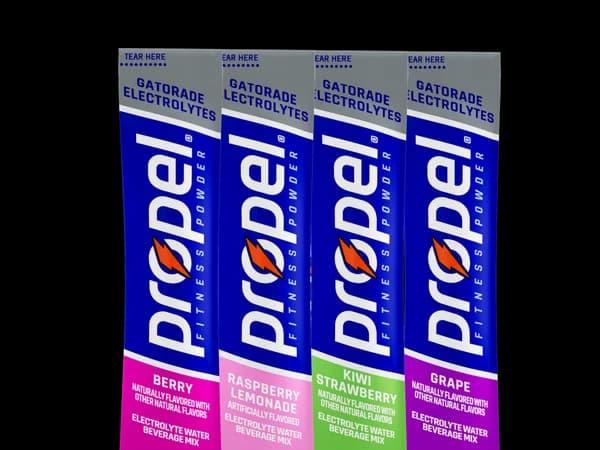
Propel is the budget king at $0.35/serving, but you get what you pay for. Artificial sweeteners, colors, and minimal electrolyte content make it the lowest-quality option in this comparison. It's essentially flavored water with a small electrolyte boost — fine for light use, but serious hydration needs require more.

Propel Powder Packets Review
Propel is the budget king at $0.35/serving, but you get what you pay for. Artificial sweeteners, colors, and minimal electrolyte content make it the lowest-quality option in this comparison. It's essentially flavored water with a small electrolyte boost — fine for light use, but serious hydration needs require more.
Propel Powder Packets Review
Propel is the budget king at $0.35/serving, but you get what you pay for. Artificial sweeteners, colors, and minimal electrolyte content make it the lowest-quality option in this comparison. It's essentially flavored water with a small electrolyte boost — fine for light use, but serious hydration needs require more.

Propel Powder Packets Pros & Cons
Pros
- Cheapest per-serving cost in this comparison at ~$0.35/serving
- Zero sugar and zero calories — good for calorie-conscious hydration
- Ubiquitous retail availability in grocery stores, gas stations, and pharmacies
Cons
- Contains sucralose and acesulfame potassium (artificial sweeteners)
- Very low electrolyte content — only 160mg sodium and minimal other minerals
- Artificial colors and flavors with minimal ingredient transparency
Overview
Propel Powder Packets are the cheapest electrolyte product in this comparison by a wide margin, and the ingredient list reflects that economy. At $3.48 for a 10-pack ($0.35 per serving), Propel costs less than half of what the next cheapest option charges. It is also the most widely available electrolyte product in America, stocked in grocery stores, gas stations, dollar stores, and pharmacies alongside the Gatorade brand that shares its PepsiCo parent company. If you have ever wanted electrolytes and happened to be standing in a 7-Eleven, you have probably seen Propel.
The formula is zero sugar and zero calories, which sounds appealing until you read how it achieves that: sucralose and acesulfame potassium, two artificial sweeteners that a significant and growing segment of health-conscious consumers actively avoids. The electrolyte content is minimal, with just 160mg of sodium and trace amounts of potassium, levels that provide a mild mineral supplement but fall far short of what the body loses during moderate exercise. The addition of vitamins B3, B5, B6, C, and E adds a multivitamin-like element to the formula, though the practical benefit of these vitamins in a hydration context is questionable.
Propel is, in essence, flavored water with a slight electrolyte nudge. It is not pretending to be a performance product or a clinical rehydration solution. It is the product you buy when you want your water to taste like something, cost almost nothing, and include a token amount of electrolytes. For that specific, modest purpose, it works fine. For anything beyond that, the limitations become apparent quickly.
Features Deep-Dive
The Price Advantage and What It Buys
At $0.35 per serving, Propel is in a class of its own on price. The next cheapest option in this comparison is Trace Minerals 40,000 Volts at $0.54, followed by BODYARMOR Flash I.V. at $0.58. Premium products like LMNT ($1.83) and Pedialyte ($2.00) cost five to six times more per serving. For someone on a tight budget who goes through multiple servings per day, the cost difference over a month is significant: $10.50 for Propel versus $55 for LMNT at one serving daily.
What that price buys is limited. The 160mg of sodium per serving is roughly one-third of what Nuun provides (300mg), one-third of what Liquid I.V. delivers (500mg), and one-sixth of what LMNT packs (1000mg). The potassium content is not prominently listed, which typically means it is minimal. You are getting a light mineral sprinkle, not a meaningful electrolyte dose.
The value proposition is honest if you frame it correctly: Propel is a very cheap way to make water taste better while adding a small amount of electrolytes and vitamins. It is not a very cheap way to rehydrate after exercise, recover from illness, or address an electrolyte deficiency. The price is real, but the electrolyte content is proportionally modest. You get what you pay for, and at $0.35, that is not very much.
Ubiquitous Retail Availability
Propel's distribution network is unmatched in this comparison and reflects the full power of PepsiCo's retail infrastructure. The packets are available in every major grocery chain, at Walmart, Target, and Costco, in convenience stores and gas stations, at pharmacies like CVS and Walgreens, and even at dollar stores. In many retail environments, Propel is the only electrolyte powder option available.
This availability matters more than the supplement community acknowledges. The average American does not order electrolytes from a direct-to-consumer website or subscribe to a monthly LMNT delivery. They buy what is available during their regular shopping, and Propel is almost always available. The powder packets fit in a purse, a desk drawer, or a glove compartment, and they dissolve instantly in cold water. The user experience is frictionless: tear, pour, shake, drink.
The retail ubiquity also means that Propel serves as many people's introduction to electrolyte supplementation. Someone who has never thought about electrolytes might grab a Propel variety pack because it was on sale next to the Gatorade, use it for a few weeks, and eventually wonder whether better options exist. In that sense, Propel is a gateway product that may ultimately lead consumers toward more serious electrolyte supplementation even if it is not the destination itself.
Artificial Sweeteners and Ingredient Quality
Propel contains both sucralose and acesulfame potassium, the same two artificial sweeteners found in diet sodas, sugar-free gum, and countless other processed foods. For consumers who do not actively avoid these ingredients, their presence in Propel is unremarkable. For the growing segment of consumers who do, it is an immediate disqualifier.
The debate around artificial sweeteners is evolving. Both sucralose and acesulfame potassium are FDA-approved and classified as generally recognized as safe (GRAS) at the levels present in products like Propel. However, emerging research has raised questions about their potential effects on gut microbiome composition, insulin response, and long-term metabolic health. These studies are preliminary and contested, but they have shifted consumer sentiment measurably. Products that marketed themselves as "zero sugar, zero calorie" five years ago now face the follow-up question: "But what are you using instead of sugar?"
Propel also uses artificial colors and flavors, though specific compounds vary by flavor variety. The overall ingredient profile positions Propel at the opposite end of the spectrum from clean-label products like LMNT, Ultima, or Redmond Re-Lyte. This is a product engineered for taste, shelf stability, and cost minimization, not for ingredient purity. For some buyers, that trade-off is acceptable. For others, it defeats the purpose of supplementation entirely.
Pricing Analysis
At $3.48 for 10 packets ($0.35 per serving), Propel is the undisputed budget champion. The annual cost at one serving per day is roughly $128, compared to $274 for Nuun, $365 for Ultima stick packs, and $668 for LMNT. For a family of four using electrolytes regularly, the savings add up to hundreds of dollars per year.
The question is whether Propel's cost advantage translates to actual value. Value requires receiving something meaningful in exchange for your money. At 160mg of sodium per serving, Propel delivers roughly 16% of the sodium in an LMNT packet at 19% of the price. On a pure cost-per-milligram-of-sodium basis, Propel is actually more expensive than LMNT: $0.35 for 160mg versus $1.83 for 1000mg, or $0.0022/mg versus $0.0018/mg. The "cheapest" product is not necessarily the best value when measured by what it actually delivers.
However, not everyone needs 1000mg of sodium per serving. For someone who eats a sodium-rich diet and wants a lightly flavored, zero-calorie way to stay hydrated throughout the day, Propel's 160mg top-up may be exactly right. The vitamins (B3, B5, B6, C, E) add marginal nutritional value that other budget electrolyte products do not include. Propel is the best value for people whose hydration needs are modest and whose primary goal is better-tasting water at the lowest possible cost.
Who Is This For?
Propel Powder Packets works best for:
- Extreme budget buyers who need the cheapest possible electrolyte option and are unwilling or unable to spend more than a dollar per serving, where Propel's $0.35 price point makes daily electrolyte use financially sustainable in a way that premium products do not
- People who just want their water to taste better and are not tracking electrolyte intake, managing a deficiency, or optimizing athletic performance, but simply prefer flavored water over plain water and want a minimal mineral boost along with it
- Gas station and convenience store shoppers who need electrolytes now, not after placing an online order, and want a product they can find within a five-minute drive of virtually anywhere in America
- Diet soda drinkers looking for a hydration swap who are already consuming sucralose and acesulfame potassium in their regular beverages and see Propel as a lower-calorie alternative to sports drinks without the ingredient concerns that bother clean-label consumers
Who Should NOT Use This
Propel Powder Packets might not be the right choice if:
- You are exercising, sweating, or dealing with dehydration because 160mg of sodium per serving is roughly one-tenth of what the body loses per hour during moderate exercise in warm conditions, making Propel physiologically inadequate for any serious hydration need
- You avoid artificial sweeteners, colors, or flavors since Propel contains sucralose, acesulfame potassium, artificial colors, and artificial flavors, placing it at the bottom of this comparison on ingredient quality and making it unsuitable for consumers who prioritize clean supplementation
- You want ingredient transparency or verifiable electrolyte performance because Propel's minimal electrolyte content and artificial ingredient profile make it functionally closer to a flavored water enhancer than a true electrolyte supplement, and spending slightly more on a product like Nuun ($0.75) or BODYARMOR ($0.58) gets measurably more value
Bottom Line
Propel Powder Packets are the electrolyte product for people whose primary concerns are cost and convenience, full stop. At $0.35 per serving, it is the cheapest option available, and at virtually every retail location in America, it is the most accessible. But with 160mg of sodium, artificial sweeteners, artificial colors, and no meaningful ingredient transparency, Propel is the lowest-quality option in this comparison by most measures. It is flavored water with a light electrolyte garnish, not a serious hydration product. If your budget allows even an incremental step up, the difference in ingredient quality and electrolyte content between Propel and the next tier of products is substantial.
FAQ
Is Propel actually better than just drinking plain water?
Marginally. The 160mg of sodium and small amounts of potassium provide a slight electrolyte boost over plain water, and the vitamins add a minor nutritional element. But the difference is modest enough that a person eating a balanced diet with adequate sodium from food would likely not notice a physiological difference between Propel and water. The primary benefit of Propel over water is taste, not hydration. If flavoring your water with Propel causes you to drink more total fluid throughout the day, that increased volume is probably more beneficial than the electrolytes themselves.
Why is Propel so much cheaper than other electrolyte products?
Three factors drive the price difference. First, PepsiCo's manufacturing scale allows ingredient sourcing and production costs that independent brands cannot match. Second, the ingredient list uses inexpensive artificial sweeteners, colors, and flavors rather than costlier natural alternatives like stevia, plant-based colors, or real fruit extracts. Third, the electrolyte content is minimal, using less of the active ingredients per serving than competitors. The combination of massive scale, cheap ingredients, and low active-ingredient quantities creates a product that can sell profitably at $0.35 while competitors charging three to five times more use costlier ingredients in higher quantities.
Should I switch from Propel to something better?
If you are using Propel purely for flavor and are happy with it, there is no urgent reason to switch. The artificial sweeteners are FDA-approved, and the product is not harmful in normal use. However, if you exercise regularly, sweat noticeably, experience muscle cramps, or have been told by a doctor to increase your electrolyte intake, Propel is not delivering enough electrolytes to make a physiological difference. Moving to Nuun ($0.75/serving) doubles your spending but roughly doubles your sodium intake, eliminates artificial sweeteners, and adds clean-label credentials. Moving to Ultima's canister format ($0.33/serving in bulk) actually costs less than Propel while providing cleaner ingredients and a broader mineral profile with higher magnesium and potassium. The "upgrade" from Propel does not have to be expensive.
Who Is Propel Powder Packets Best For?
Budget shoppers who want the cheapest zero-calorie electrolyte option available
The Bottom Line
Propel is the budget king at $0.35/serving, but you get what you pay for. Artificial sweeteners, colors, and minimal electrolyte content make it the lowest-quality option in this comparison. It's essentially flavored water with a small electrolyte boost — fine for light use, but serious hydration needs require more.
Try Propel Powder Packets TodayKey Specs
Scoring Breakdown
Full ingredient disclosure with exact amounts, no proprietary blends, third-party testing/certifications (NSF, Informed Sport)
Sodium/potassium/magnesium/calcium balance and total electrolyte content per serving, optimized ratios
Natural ingredients, absence of artificial sweeteners/colors/fillers, clean label score, real food sourcing
Added sugar per serving — lower scores for high added sugar, bonus for natural sweeteners or zero sugar
Flavor quality, dissolves easily, no gritty texture or chalky aftertaste, based on aggregated user reviews
Cost per serving relative to electrolyte content and ingredient quality, subscription/bulk discounts factored
Range of use cases (daily hydration, sports, recovery, medical), flavor variety, format options