
Liquid I.V. Hydration Multiplier Review
Liquid I.V. is the most recognizable name in electrolytes, and the taste delivers. However, 11g of added sugar per serving and opaque "natural flavors" labeling put it behind cleaner competitors on ingredient quality. Best for those who want something that tastes great and is available everywhere.

Liquid I.V. Hydration Multiplier Review
Liquid I.V. is the most recognizable name in electrolytes, and the taste delivers. However, 11g of added sugar per serving and opaque "natural flavors" labeling put it behind cleaner competitors on ingredient quality. Best for those who want something that tastes great and is available everywhere.
Liquid I.V. Hydration Multiplier Review
Liquid I.V. is the most recognizable name in electrolytes, and the taste delivers. However, 11g of added sugar per serving and opaque "natural flavors" labeling put it behind cleaner competitors on ingredient quality. Best for those who want something that tastes great and is available everywhere.

Liquid I.V. Hydration Multiplier Pros & Cons
Pros
- Uses Cellular Transport Technology (CTT) for enhanced water absorption
- Widest flavor variety and most widespread retail availability
- Great taste consistently praised in user reviews
Cons
- 11g of added sugar per serving — significantly more than clean-label competitors
- Contains citric acid and natural flavors without full disclosure of sources
- Moderate electrolyte content (500mg sodium) relative to sugar load
Overview
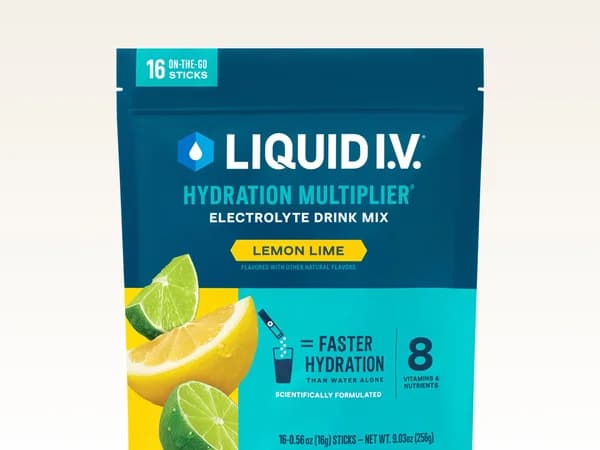
Liquid I.V. Hydration Multiplier is the electrolyte brand your non-health-obsessed friends actually recognize. Acquired by Unilever in 2020, it has blanketed grocery stores, Costco pallets, and Instagram feeds with the promise that one stick pack in water hydrates faster than water alone. The marketing machine behind this product is enormous, and to its credit, the core science is legitimate: Cellular Transport Technology is based on the same sodium-glucose co-transport principles that underpin the World Health Organization's oral rehydration solution guidelines.
But legitimacy and optimization are different things. At 11g of added sugar per serving and 500mg of sodium, Liquid I.V. delivers a moderate electrolyte payload wrapped in more sugar than most competitors in our roundup. The "natural flavors" on the label remain deliberately vague -- Unilever does not disclose the specific flavoring compounds or their sources. For casual hydration needs, the taste is genuinely excellent and the availability is unmatched. For anyone scrutinizing ingredient labels or counting sugar grams, cleaner options exist at comparable or lower prices.
Features Deep-Dive
Cellular Transport Technology and the Science Behind It
Liquid I.V. markets its proprietary Cellular Transport Technology as the reason its product hydrates "2-3x faster" than water alone. Strip away the branding and CTT is an application of sodium-glucose co-transport, a well-established physiological mechanism where glucose and sodium are absorbed together across the intestinal wall, pulling water along with them. This is the same science behind WHO oral rehydration solutions that have saved millions of lives in developing countries.
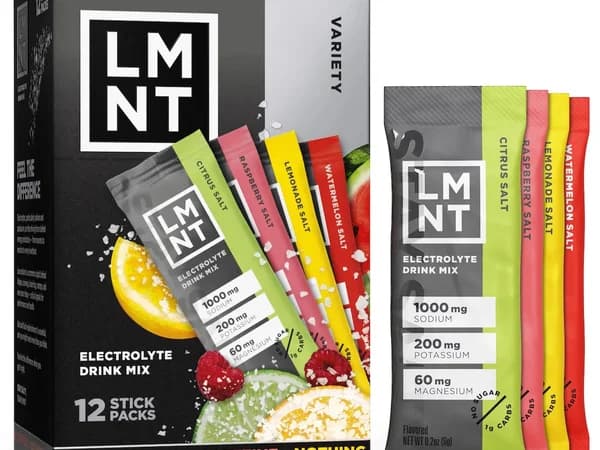
The formulation contains a specific ratio of sodium (500mg), potassium (370mg), and glucose designed to activate this co-transport pathway. The science itself is not controversial -- sodium-glucose co-transport is textbook physiology. What is debatable is whether 11g of added sugar represents the optimal ratio for a consumer hydration product or whether it is simply the amount needed to make the drink taste like flavored lemonade rather than a medical solution. DripDrop achieves similar co-transport activation with 7g of sugar in its original formula, and products like LMNT skip sugar entirely while providing more sodium per serving. Liquid I.V.'s CTT works, but it is not the only way to achieve enhanced absorption, and it comes with a sugar cost that adds up across daily use.
Flavor Variety and Taste Quality
This is where Liquid I.V. genuinely earns its market dominance. With roughly 15 flavors spanning Lemon Lime, Passion Fruit, Watermelon, Strawberry, Acai Berry, Concord Grape, Pina Colada, and seasonal limited editions, no competitor in our roundup comes close to this breadth. The flavors taste like something you would actually want to drink -- sweet, smooth, and without the metallic or bitter aftertaste that plagues many electrolyte products. The 11g of sugar plays a direct role in this palatability, and that is a trade-off worth acknowledging honestly.
User reviews consistently rate taste as the primary reason for repeat purchases. The flavors mix cleanly in 16 ounces of water without clumping, excessive sediment, or the chalky texture common in cheaper powder mixes. The sweetness level falls between a sports drink and a juice, which makes it accessible to people who find clinical-tasting ORS solutions unpleasant but also means it tastes more like a sugary beverage than a health supplement to anyone accustomed to cleaner options.
Retail Availability and Convenience
Liquid I.V. has the widest retail footprint of any electrolyte product in our roundup, and it is not close. You can buy it at Costco (often in 30-count value packs), Target, Walmart, CVS, Walgreens, Whole Foods, most major grocery chains, and Amazon. The individual stick-pack format is genuinely convenient -- tear, pour into a water bottle, shake, and drink. Each packet is pre-measured, so there is no scooping or guessing. The packets are small enough to carry in a jacket pocket, gym bag, or travel kit.
This ubiquity matters for a product you might need urgently. When you wake up dehydrated from a flight, realize you forgot your usual electrolytes at home, or need something at a gas station during a road trip, Liquid I.V. is the one product you can reliably find at virtually any retailer in the United States. No other product in this category has distribution anywhere close to this level, and for many buyers, that accessibility outweighs concerns about ingredient purity.
Ingredient Transparency Concerns
The ingredient list includes "natural flavors" without further specification -- a labeling practice that is technically legal but increasingly out of step with the transparency standards that brands like LMNT and Redmond Re-Lyte have established. Under FDA rules, "natural flavors" can encompass hundreds of different flavoring compounds derived from plant or animal sources, and manufacturers are not required to disclose which specific compounds they use or where they source them. For most consumers, this is a non-issue. For anyone with specific allergies, dietary restrictions, or simply a preference for knowing exactly what they are consuming, the opacity is frustrating.
The sugar source is cane sugar, which is at least identifiable. But at 11g per serving, daily use adds 77g of sugar per week -- equivalent to roughly 19 teaspoons. For someone already managing sugar intake from other dietary sources, this adds a meaningful amount. Liquid I.V. has introduced a Sugar-Free line using stevia and erythritol, which addresses this concern but is a separate product with different taste characteristics and is not as widely available.
Pricing Analysis
At $24.99 for 16 stick packs, Liquid I.V. runs $1.56 per serving -- mid-pack in absolute terms but expensive relative to what you get per electrolyte gram. For comparison, DripDrop delivers a more precise ORS formula at $1.12 per serving, Skratch Labs provides real fruit ingredients at $1.10 per serving, and bulk powder options like Redmond Re-Lyte drop below $0.50 per serving with superior electrolyte content. Where Liquid I.V. partially recoups its value is at Costco, where 30-count boxes regularly sell for around $25-28, bringing the per-serving cost down to roughly $0.85-$0.93 -- a significantly better proposition.
The Unilever acquisition brought economies of scale that keep prices stable and drive frequent promotional pricing, subscription discounts on the brand's website, and bundle deals at major retailers. If you buy exclusively at retail single-box pricing, Liquid I.V. is one of the more expensive options for the electrolyte content delivered. If you buy in bulk at Costco or through subscriptions, the value equation improves substantially. Either way, you are paying a premium for brand recognition, taste engineering, and convenience over raw electrolyte density.
Who Is This For?
Liquid I.V. Hydration Multiplier works best for:
-
Taste-first hydrators who hate the flavor of most electrolyte products: If previous electrolyte mixes have ended up in your trash because they tasted like salted chalk water, Liquid I.V.'s flavor engineering solves that problem better than anything else in our roundup. The 11g of sugar is the reason it tastes this good, and if you are comfortable with that trade-off, nothing else matches the flavor range and drinkability.
-
Travelers and on-the-go professionals: Flight attendants, road warriors, conference speakers, and frequent flyers who need reliable hydration support in unpredictable environments benefit from both the stick-pack convenience and the unmatched retail availability. When you need electrolytes and forgot to pack your usual brand, Liquid I.V. is the one you can find at the airport terminal store.
-
Casual wellness consumers new to electrolyte supplementation: If you are just starting to think about hydration beyond plain water -- maybe after a doctor's suggestion or a friend's recommendation -- Liquid I.V. is the most approachable entry point. The familiar flavors, simple packaging, and massive brand recognition make it a low-friction first purchase that will not intimidate anyone.
Who Should NOT Use This
Liquid I.V. Hydration Multiplier might not be the right choice if:
-
You are managing daily sugar intake: At 11g of added sugar per serving, daily use adds significant sugar that compounds alongside other dietary sources. If you are tracking macros, managing blood sugar, following a keto or low-carb protocol, or simply trying to minimize added sugar, products like LMNT (zero sugar), Redmond Re-Lyte (zero sugar), or even DripDrop's zero-sugar formula deliver electrolytes without the glycemic impact.
-
You prioritize ingredient transparency over taste: The undisclosed "natural flavors" labeling is a dealbreaker for anyone who has adopted a clean-label standard for their supplements. If you want to know every single compound in your electrolyte mix and why it is there, LMNT and Redmond Re-Lyte publish complete ingredient amounts and source information that Liquid I.V. simply does not match.
-
You need high-sodium replenishment for heavy sweating or keto: At 500mg of sodium per serving, Liquid I.V. provides less than half the sodium of LMNT (1000mg) and significantly less than other performance-oriented options. Heavy sweaters losing substantial sodium during exercise or keto dieters experiencing electrolyte depletion will likely find the sodium content insufficient for their needs.
Bottom Line
Liquid I.V. Hydration Multiplier is the most accessible and best-tasting electrolyte product in our roundup, built on legitimate co-transport science and backed by the retail distribution muscle of Unilever. The trade-offs are real: 11g of added sugar per serving, opaque "natural flavors" labeling, and moderate electrolyte content relative to the sugar load. It is an excellent product for people who value taste and convenience above all else, and a poor fit for anyone who has moved toward cleaner, more transparent supplement standards. The science works, but you can get equal or better hydration from products that ask less of your daily sugar budget.
FAQ
Does Liquid I.V. actually hydrate faster than water?
The sodium-glucose co-transport mechanism behind CTT is real physiology, and there is clinical evidence that ORS-based solutions improve water absorption rates compared to plain water. However, "2-3x faster" is a marketing claim that oversimplifies complex absorption research. For someone who is genuinely dehydrated -- after illness, heavy exercise, or alcohol consumption -- the electrolyte content will meaningfully improve rehydration speed versus water alone. For someone who is normally hydrated and just drinking it as a daily supplement, the benefit is marginal at best. Plain water with a balanced diet covers most people's hydration needs in non-extreme conditions.
How does the Sugar-Free version compare to the original?
Liquid I.V.'s Sugar-Free line replaces cane sugar with stevia and erythritol and contains zero grams of sugar per serving. It still uses the CTT framework but relies on a small amount of allulose and the sodium content to facilitate absorption rather than glucose co-transport. The taste is noticeably different -- lighter, with the mild cooling sensation that erythritol produces and the slight aftertaste that stevia-sensitive palates detect. It is a worthwhile alternative for sugar-conscious buyers, but it is not as widely available in retail stores as the original and currently comes in fewer flavors.
Is the Costco bulk pack a better deal?
Significantly. The Costco 30-count variety pack typically sells for $25-28, bringing the per-serving cost to roughly $0.85-$0.93 -- nearly half the per-stick price of the standard 16-count box at regular retail. If you know you like the product and will use it regularly, buying at Costco transforms Liquid I.V. from one of the more expensive options in our roundup to a reasonably competitive one. The variety packs also let you sample multiple flavors without committing to 16 sticks of a single flavor you might not enjoy.
Why does Liquid I.V. have more sugar than competitors like LMNT or Redmond Re-Lyte?
The sugar serves a functional purpose: glucose is one half of the sodium-glucose co-transport mechanism that drives CTT. Without glucose at the intestinal wall, the co-transport pathway does not activate in the same way. Products like LMNT that contain zero sugar rely on sodium and other electrolytes alone for absorption, which still works but through different physiological pathways. The question is whether 11g is the minimum effective dose for co-transport or whether less sugar could achieve the same result -- DripDrop activates similar co-transport with only 7g, and Cure does it with 4g, suggesting that Liquid I.V.'s sugar content may optimize for taste as much as for absorption science.
Who Is Liquid I.V. Hydration Multiplier Best For?
Mainstream consumers who prioritize taste and convenience over clean-label credentials
The Bottom Line
Liquid I.V. is the most recognizable name in electrolytes, and the taste delivers. However, 11g of added sugar per serving and opaque "natural flavors" labeling put it behind cleaner competitors on ingredient quality. Best for those who want something that tastes great and is available everywhere.
Try Liquid I.V. Hydration Multiplier TodayKey Specs
Scoring Breakdown
Full ingredient disclosure with exact amounts, no proprietary blends, third-party testing/certifications (NSF, Informed Sport)
Sodium/potassium/magnesium/calcium balance and total electrolyte content per serving, optimized ratios
Natural ingredients, absence of artificial sweeteners/colors/fillers, clean label score, real food sourcing
Added sugar per serving — lower scores for high added sugar, bonus for natural sweeteners or zero sugar
Flavor quality, dissolves easily, no gritty texture or chalky aftertaste, based on aggregated user reviews
Cost per serving relative to electrolyte content and ingredient quality, subscription/bulk discounts factored
Range of use cases (daily hydration, sports, recovery, medical), flavor variety, format options