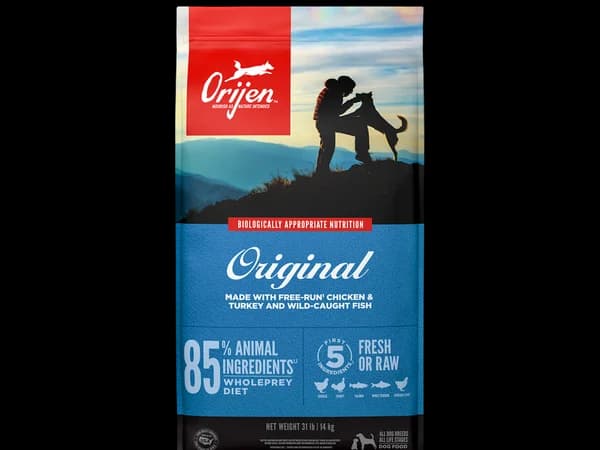

Orijen Original Review
Orijen is widely considered the gold standard of commercial dog food. 85% animal ingredients, WholePrey ratios with organs and cartilage, zero recalls ever. The ingredient list reads like a butcher shop menu. The only real barriers are the ~$2.13/day price and the grain-free DCM concern.

Orijen Original Review
Orijen is widely considered the gold standard of commercial dog food. 85% animal ingredients, WholePrey ratios with organs and cartilage, zero recalls ever. The ingredient list reads like a butcher shop menu. The only real barriers are the ~$2.13/day price and the grain-free DCM concern.
Orijen Original Review
Orijen is widely considered the gold standard of commercial dog food. 85% animal ingredients, WholePrey ratios with organs and cartilage, zero recalls ever. The ingredient list reads like a butcher shop menu. The only real barriers are the ~$2.13/day price and the grain-free DCM concern.

Orijen Original Pros & Cons
Pros
- Zero recalls in brand history — impeccable safety record alongside sister brand ACANA
- 85% animal ingredients from fresh/raw free-run chicken, turkey, and wild-caught fish
- WholePrey ratios include organs and cartilage — mimics natural ancestral diet
Cons
- Most expensive option at ~$2.13/day — ultra-premium pricing
- Very high protein content (38%+) may be too rich for sedentary dogs
- Grain-free formula subject to FDA DCM investigation concerns
Overview
Orijen Original is the dog food that other dog foods aspire to be. With 85% of the formula coming from animal ingredients — including fresh free-run chicken and turkey, wild-caught fish, and cage-free eggs — the ingredient list reads less like kibble and more like a butcher shop menu. Champion Petfoods' WholePrey philosophy means the formula includes not just muscle meat but organs, cartilage, and bone in ratios that mimic a natural prey diet.
Zero recalls in the brand's entire history. Named, traceable protein sources from regional farms and fisheries. In-house manufacturing with no co-packers. Orijen has built arguably the most uncompromising approach to commercial dog food that exists at scale.
The barriers are real: at $2.13 per day for a 50-pound dog, Orijen is among the most expensive options in this comparison. The grain-free formulation carries the DCM caveat. And the 38% protein content, while ideal for active dogs, is more than sedentary pets need. But for owners who define "best" as the highest ingredient quality available in a commercial kibble, Orijen's position at the top is difficult to challenge.
Features Deep-Dive
WholePrey Ratios
Orijen's WholePrey philosophy is the formula's defining concept: animal ingredients are included in ratios that reflect what a dog's ancestors would have consumed from a whole prey animal. This means fresh meat and organs (chicken liver, turkey liver, chicken heart, turkey heart), whole herring meal, and cartilage — not just processed muscle meat. The idea is that organs and connective tissue provide naturally occurring vitamins, minerals, and amino acids that synthetic supplementation approximates but doesn't perfectly replicate.
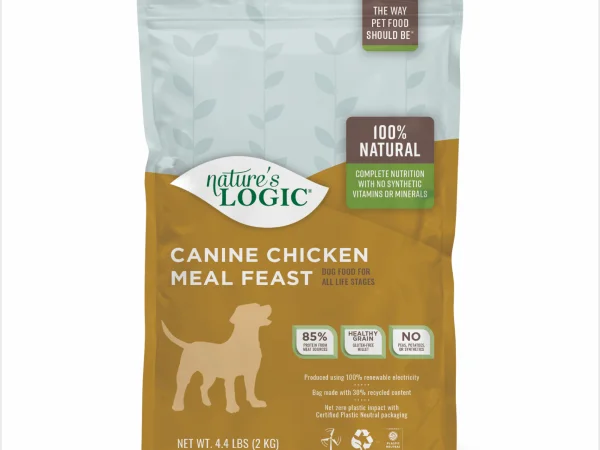
The practical result is a formula that requires fewer synthetic vitamin and mineral supplements than competitors. Orijen still adds some supplements to ensure AAFCO completeness, but the whole-food nutrient density reduces reliance on them — an approach that Nature's Logic takes to its extreme conclusion.
85% Animal Ingredients
This isn't a marketing claim — the formula genuinely derives 85% of its content from animal sources, compared to 50-65% for most premium competitors. The protein comes from six named sources: free-run chicken and turkey, whole Atlantic mackerel, whole herring, chicken liver, and turkey liver. Fresh or raw animal ingredients constitute two-thirds of the animal content, with the remaining one-third from dried or oils.
At 38% crude protein and 18% fat, the macronutrient profile rivals performance formulas like Victor Nutra Pro — but achieved through fresh, named protein sources rather than rendered meals and blood meal. The quality difference is real and measurable in the ingredient list.
Champion Petfoods' Vertical Integration
Champion Petfoods operates their own kitchens in Kentucky (USA) and Alberta (Canada), maintaining control over the entire manufacturing process. They don't use co-packers — a practice that reduces contamination risks and quality variability. The company's NorthStar kitchen in Kentucky processes Orijen products for the US market, using ingredients sourced from regional farms, ranches, and fisheries.
This vertical integration is directly tied to their zero-recall record. When a brand controls the supply chain from ingredient sourcing through final packaging, the points of potential contamination are fewer and more manageable.
Pricing Analysis
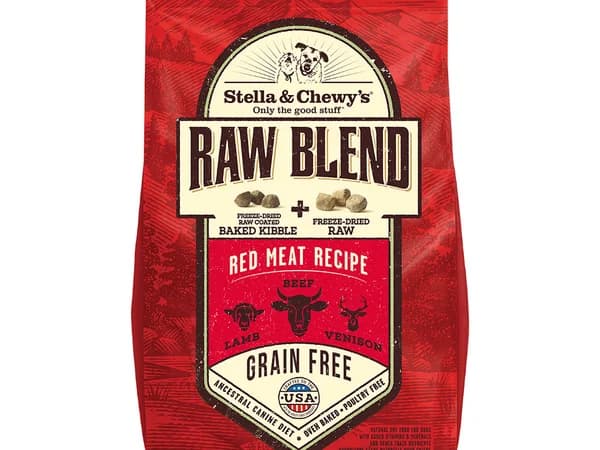
At approximately $100 for a 23.5-pound bag, Orijen costs about $2.13 per day for a 50-pound dog. Only Stella & Chewy's ($2.55/day) costs more in this comparison. The calorie density (approximately 449 kcal/cup) does mean you feed slightly less per serving than lower-calorie formulas, which marginally improves the value calculation — but it's still genuinely expensive.
What you're paying for is quantifiable: 85% animal ingredients vs. 50-65% in competitors, WholePrey organ and cartilage inclusion, zero recall history, and in-house manufacturing. Whether those differentiators produce measurably better health outcomes than a formula like ACANA ($1.60/day) — made by the same company with similar standards — is the honest question. For many dogs, the difference between 85% and 65% animal ingredients may not translate to visible health improvements that justify the $0.53/day premium.
Who Is This For?
Orijen Original works best for:
- "No compromise" owners who want the highest ingredient quality available in a commercial kibble and are willing to pay for it — Orijen delivers more animal-source nutrition per serving than any other product in this comparison
- Active dogs and working breeds that benefit from 38% protein and 18% fat from fresh, whole-food sources — the macronutrient profile supports high energy expenditure without relying on rendered meal-based proteins
- Owners who prioritize safety above all — zero recalls in brand history, in-house manufacturing, and regional ingredient sourcing create a verifiable chain of quality control that most competitors cannot match
Who Should NOT Use This
Orijen Original might not be the right choice if:
- Budget is a factor at all: At $2.13/day, feeding a single large dog costs $65+ per month — and the same manufacturer's ACANA line delivers similar quality standards at $1.60/day with grain-inclusive formulation
- Your dog is sedentary or overweight: 38% protein and 18% fat from calorie-dense (449 kcal/cup) ingredients is significantly more than a typical household pet needs — portion control becomes critical, and overfeeding a formula this rich leads to weight gain quickly
Bottom Line
Orijen Original is the gold standard of commercial dog food for a reason: no other kibble matches its animal ingredient percentage, WholePrey formulation, and safety record simultaneously. The price reflects genuine quality, not marketing positioning. Whether the premium over ACANA (same manufacturer, similar standards, grain-inclusive) is justified depends on how much you value the 85% animal ingredient ratio and WholePrey philosophy.
FAQ
Is Orijen worth the price over ACANA?
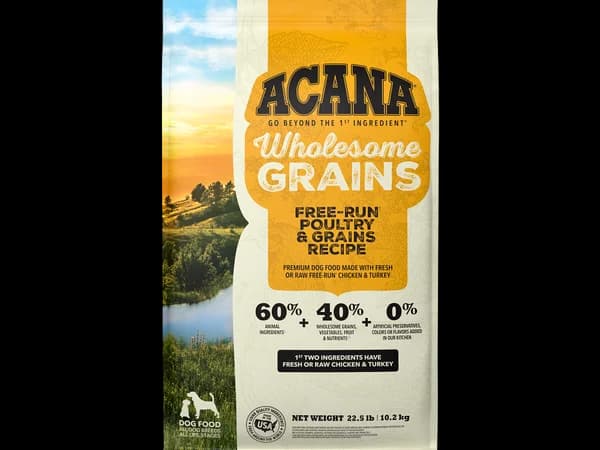
Both are made by Champion Petfoods with zero recall histories and regional sourcing. Orijen offers 85% animal ingredients vs. ACANA's ~60-70%, plus WholePrey organ and cartilage inclusion. ACANA's Wholesome Grains formula eliminates the DCM concern. For most healthy adult dogs, ACANA delivers comparable quality at a meaningful discount. Orijen justifies its premium for owners who specifically value maximum animal ingredient density and the WholePrey approach.
Should I worry about DCM with Orijen?
Orijen is grain-free and uses some legumes (lentils, peas), which places it within the category the FDA investigated. However, Orijen also provides exceptionally high taurine levels through its organ and whole-prey ingredients — and taurine deficiency is one hypothesized mechanism behind diet-related DCM. The risk is not zero, but Orijen's nutritional completeness mitigates some of the concerns. Discuss with your veterinarian if your breed is predisposed.
Is 38% protein too much for my dog?
For moderately active household pets, 38% protein exceeds minimum requirements but isn't harmful for healthy dogs — excess protein is metabolized for energy. However, very sedentary dogs or those with kidney issues should consult a veterinarian before feeding high-protein formulas. Active dogs, working breeds, and puppies benefit most from the elevated protein content. The high caloric density (449 kcal/cup) means you'll feed less volume, which naturally limits total protein intake.
Who Is Orijen Original Best For?
Owners who want the absolute best ingredient quality regardless of cost
The Bottom Line
Orijen is widely considered the gold standard of commercial dog food. 85% animal ingredients, WholePrey ratios with organs and cartilage, zero recalls ever. The ingredient list reads like a butcher shop menu. The only real barriers are the ~$2.13/day price and the grain-free DCM concern.
Try Orijen Original TodayKey Specs
Scoring Breakdown
Quality of protein sources, use of whole/named ingredients, absence of fillers (corn, wheat, soy), byproducts, and artificial additives. Penalizes vague "meat meal" and rewards fresh/raw protein.
Protein/fat/fiber balance, vitamin/mineral completeness, caloric density appropriate for adult dogs, AAFCO compliance with feeding trial data.
Brand recall history over last 5+ years, manufacturing standards, third-party contamination testing, FDA compliance track record.
Named vs unnamed protein sources, sourcing clarity (country of origin, farm certifications), traceability, absence of vague ingredient terms.
Daily feeding cost for a 50 lb dog relative to ingredient quality. Evaluates cost-efficiency — not cheapest overall, but best quality per dollar spent.
Aggregated customer satisfaction for taste acceptance, feeding consistency, kibble texture/size, and overall dog appetite response across sizes.