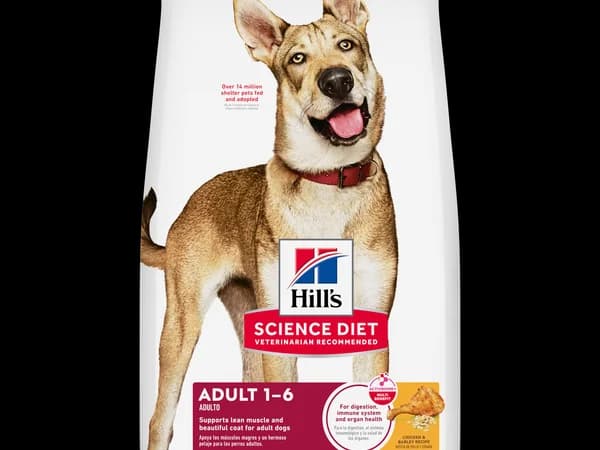

Hill's Science Diet Adult Chicken & Barley Review
Hill's Science Diet is the other pillar of veterinary-recommended nutrition alongside Purina Pro Plan. The formulation is precise and backed by feeding trials. However, corn gluten meal and by-product meal at ~$1.24/day makes it expensive for what you get ingredient-wise. You're paying for the research, not the ingredients.

Hill's Science Diet Adult Chicken & Barley Review
Hill's Science Diet is the other pillar of veterinary-recommended nutrition alongside Purina Pro Plan. The formulation is precise and backed by feeding trials. However, corn gluten meal and by-product meal at ~$1.24/day makes it expensive for what you get ingredient-wise. You're paying for the research, not the ingredients.
Hill's Science Diet Adult Chicken & Barley Review
Hill's Science Diet is the other pillar of veterinary-recommended nutrition alongside Purina Pro Plan. The formulation is precise and backed by feeding trials. However, corn gluten meal and by-product meal at ~$1.24/day makes it expensive for what you get ingredient-wise. You're paying for the research, not the ingredients.

Hill's Science Diet Adult Chicken & Barley Pros & Cons
Pros
- Developed by veterinary nutritionists with extensive feeding trial validation
- Precise nutrient balance designed for optimal adult maintenance
- Clean safety record for dry food lines over the past 5+ years
Cons
- Contains corn gluten meal and chicken by-product meal — not premium ingredients
- Higher price (~$1.24/day) for ingredient quality that trails premium competitors
- Minimal sourcing transparency — ingredient origins are not disclosed
Overview
Hill's Science Diet is the other pillar of veterinary-recommended dog food, alongside Purina Pro Plan. Developed by a team of over 220 veterinarians, food scientists, and nutritionists, every Science Diet formula undergoes actual AAFCO feeding trials rather than simple nutrient profile analysis. The Adult Chicken & Barley recipe exemplifies Hill's philosophy: precision-formulated nutrition where every ingredient serves a measurable purpose.
The ingredient list, however, tells a more complicated story. Chicken sits at the top, but it's followed by whole grain wheat, cracked pearled barley, and chicken by-product meal — ingredients that premium brands have spent years distancing themselves from. Hill's position is that ingredient origin matters less than nutritional outcomes, and their feeding trial data supports this stance.
At approximately $1.24 per day for a 50-pound dog, Science Diet sits at the top of the mid-range bracket — more expensive than both budget picks and comparable Purina Pro Plan, while offering a similar science-over-ingredients value proposition. For owners who trust the veterinary establishment, this is a reliable choice. For ingredient-list readers, the price-to-quality ratio may disappoint.
Features Deep-Dive
Feeding Trial Validated Nutrition
Hill's is one of only three major brands (alongside Purina and Royal Canin) that consistently conducts AAFCO feeding trials on their retail formulas. This means real dogs ate this food for extended periods while researchers monitored weight, body condition, blood work, and overall health. The distinction matters: a formula can meet AAFCO nutrient profiles on paper while failing to deliver those nutrients in a bioavailable form. Feeding trials verify actual nutritional delivery.
The formula targets a precise macronutrient balance: moderate protein (approximately 21-25%), controlled fat, and prebiotic fiber from beet pulp for digestive health. It's engineered for the average adult dog's maintenance needs — not performance, not weight loss, just steady-state health.
Prebiotic Fiber System
Beet pulp — often criticized by ingredient-list enthusiasts — serves as Hill's primary prebiotic fiber source. In veterinary nutrition, beet pulp is actually considered one of the most effective dietary fibers for dogs: it's moderately fermentable, meaning it feeds beneficial gut bacteria without causing the gas and loose stools associated with highly fermentable fibers. It provides both soluble and insoluble fiber in proportions that support firm, consistent stool quality.
Omega-6 and Vitamin E Complex
The formula includes a targeted blend of omega-6 fatty acids and vitamin E designed specifically for skin and coat health. Hill's publishes clinical data showing measurable improvements in coat quality within 30 days of switching to Science Diet — one of the few brands to make outcome-based claims backed by their own research.
Pricing Analysis
At roughly $87 for a 35-pound bag, Hill's Science Diet costs approximately $1.24 per day for a 50-pound dog. This makes it the most expensive mid-range option in this comparison — notably pricier than Purina Pro Plan ($1.06/day), which offers a similar veterinary-backed proposition.
The premium over Pro Plan is difficult to justify on ingredients alone: both use by-product meal and corn/wheat components. Where Hill's may edge ahead is in the specificity of their nutritional targeting and the depth of their clinical research library. Whether that incremental research investment translates to meaningfully better outcomes for your dog is the question — and one that doesn't have a definitive answer. You're paying for the Hill's research ecosystem as much as the food itself.
Who Is This For?
Hill's Science Diet Adult Chicken & Barley works best for:
- Veterinary clinic loyalists whose vet specifically recommends Science Diet — if your dog's doctor suggests Hill's after an examination, there's credible science supporting the recommendation
- Owners managing specific health goals like skin/coat improvement, digestive consistency, or weight maintenance — Hill's precision formulations are designed for measurable outcomes, not just general nutrition
- Older dogs transitioning from Hill's prescription diets — if your dog previously ate a Hill's therapeutic formula and your vet now recommends a maintenance diet, staying within the Science Diet ecosystem ensures nutritional consistency
Who Should NOT Use This
Hill's Science Diet might not be the right choice if:
- Value matters to you: At $1.24/day with corn gluten meal, wheat, and by-product meal, the ingredient-to-price ratio trails nearly every competitor — Diamond Naturals delivers comparable nutritional outcomes at one-fifth the daily cost
- You prioritize ingredient quality on the label: The presence of chicken by-product meal, whole grain wheat, and corn gluten meal puts Science Diet below brands like ACANA, Merrick, or Blue Buffalo in raw ingredient quality — the argument for Hill's is outcomes-based, not ingredients-based
Bottom Line
Hill's Science Diet is veterinary nutrition's establishment pick — precise, researched, and reliable. The ingredient list won't impress label readers, and the price is high for what's in the bag. But for owners who define "quality" by clinical validation rather than ingredient marketing, Hill's 80+ year track record in pet nutrition carries weight.
FAQ
Why is Hill's Science Diet so expensive compared to its ingredients?
You're paying for Hill's research infrastructure: the feeding trials, the team of 220+ veterinary professionals, and the clinical data behind each formula. Competitors with prettier ingredient lists rarely invest in this level of validation. Whether that research premium delivers meaningfully better outcomes for your specific dog is the honest question — for healthy adult dogs with no special needs, the difference may be marginal.
How does Hill's Science Diet compare to Hill's Prescription Diet?
Prescription Diet formulas are therapeutic foods designed to manage specific medical conditions (kidney disease, allergies, obesity, etc.) and require veterinary authorization. Science Diet is the retail maintenance line for generally healthy dogs. The formulation approach and research rigor are similar, but Prescription Diet targets clinical conditions while Science Diet targets everyday wellness.
Is chicken by-product meal safe?
Chicken by-product meal contains organ meats (liver, heart, gizzard) and other parts that humans don't typically eat but are nutritionally dense for dogs. It's not "beaks and feathers" as commonly believed — AAFCO defines by-product meal as clean parts excluding feathers, heads, feet, and intestinal contents. The concern is more about transparency (which parts?) than safety. Many veterinary nutritionists consider by-product meal a legitimate, nutrient-rich protein source.
Who Is Hill's Science Diet Adult Chicken & Barley Best For?
Owners who follow veterinary recommendations and want science-backed formulation
The Bottom Line
Hill's Science Diet is the other pillar of veterinary-recommended nutrition alongside Purina Pro Plan. The formulation is precise and backed by feeding trials. However, corn gluten meal and by-product meal at ~$1.24/day makes it expensive for what you get ingredient-wise. You're paying for the research, not the ingredients.
Try Hill's Science Diet Adult Chicken & Barley TodayKey Specs
Scoring Breakdown
Quality of protein sources, use of whole/named ingredients, absence of fillers (corn, wheat, soy), byproducts, and artificial additives. Penalizes vague "meat meal" and rewards fresh/raw protein.
Protein/fat/fiber balance, vitamin/mineral completeness, caloric density appropriate for adult dogs, AAFCO compliance with feeding trial data.
Brand recall history over last 5+ years, manufacturing standards, third-party contamination testing, FDA compliance track record.
Named vs unnamed protein sources, sourcing clarity (country of origin, farm certifications), traceability, absence of vague ingredient terms.
Daily feeding cost for a 50 lb dog relative to ingredient quality. Evaluates cost-efficiency — not cheapest overall, but best quality per dollar spent.
Aggregated customer satisfaction for taste acceptance, feeding consistency, kibble texture/size, and overall dog appetite response across sizes.