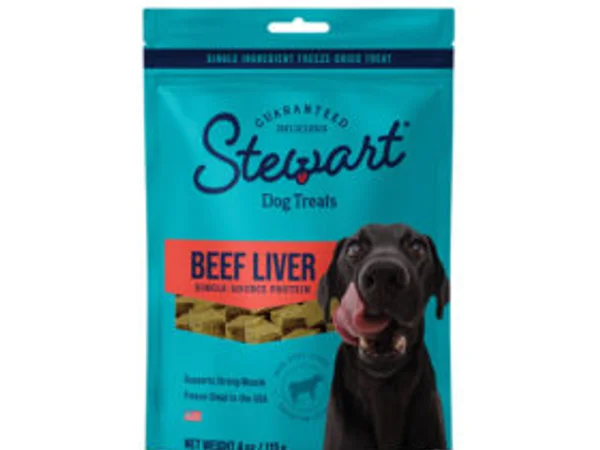

Stewart Freeze Dried Raw Beef Liver Review
Stewart Freeze Dried Beef Liver is as clean as it gets — one ingredient, freeze-dried, nothing else. The transparency score is a perfect 10 because there is literally nothing to hide. Dogs go absolutely wild for the smell and taste. The premium price and crumbly texture are the only downsides.

Stewart Freeze Dried Raw Beef Liver Review
Stewart Freeze Dried Beef Liver is as clean as it gets — one ingredient, freeze-dried, nothing else. The transparency score is a perfect 10 because there is literally nothing to hide. Dogs go absolutely wild for the smell and taste. The premium price and crumbly texture are the only downsides.
Stewart Freeze Dried Raw Beef Liver Review
Stewart Freeze Dried Beef Liver is as clean as it gets — one ingredient, freeze-dried, nothing else. The transparency score is a perfect 10 because there is literally nothing to hide. Dogs go absolutely wild for the smell and taste. The premium price and crumbly texture are the only downsides.

Stewart Freeze Dried Raw Beef Liver Pros & Cons
Pros
- Single ingredient — 100% beef liver with nothing added
- Freeze-dried process preserves nutrients without cooking or additives
- Extremely high palatability — dogs find the aroma irresistible
Cons
- Premium price at $36 for a 14oz container
- Messy and crumbly — pieces break apart in pockets and bags
- Rich liver can cause digestive upset if overfed
Overview
Stewart Freeze Dried Raw Beef Liver is the treat that turns every dog into a desperate, laser-focused negotiator. There is nothing subtle about the reaction -- the moment you crack open the tub, every dog in the room will materialize at your feet with an intensity that borders on unsettling. The reason is simple: this is 100% beef liver, freeze-dried to preserve the raw nutrient profile, with absolutely nothing else added. No fillers, no preservatives, no grains, no sugars, no mystery powders. One ingredient. Period.
That radical simplicity is simultaneously the product's greatest strength and its defining limitation. The ingredient transparency score is perfect because there is literally nothing to scrutinize -- what you see is what your dog eats. The freeze-drying process preserves vitamins, minerals, and enzymes that cooking would destroy, making these treats genuinely nutrient-dense rather than empty calories. But this purity comes at $36.09 for a 14-ounce container, it crumbles into a liver-scented mess in your pockets, and overfeeding rich organ meat can send your dog's digestive system into revolt. Stewart Beef Liver is the purist's treat -- extraordinarily effective, unapologetically messy, and not for the faint of wallet.
Features Deep-Dive
Single-Ingredient Transparency
In a market flooded with ingredient lists that require a chemistry degree to decode, Stewart's one-word ingredient list is almost confrontational in its simplicity: beef liver. That is it. There are no hidden sub-ingredients, no processing aids that fall below labeling thresholds, no natural flavors that could mean almost anything. This makes it the gold standard for dogs with food allergies or sensitivities, because elimination diets depend on knowing exactly what your dog is consuming. If your dog reacts to Stewart Beef Liver, you know with absolute certainty that your dog has an issue with beef -- there is nowhere else for the blame to land. For dogs undergoing allergy testing or restricted diets, this level of clarity is not a luxury; it is a diagnostic tool.
Freeze-Drying vs. Cooking and Dehydrating
The freeze-drying process is what separates Stewart from cooked or dehydrated liver treats. Traditional cooking destroys heat-sensitive nutrients -- B vitamins, certain enzymes, and amino acids that degrade at high temperatures. Dehydrating preserves more than cooking but still involves sustained heat exposure. Freeze-drying removes moisture through sublimation at extremely low temperatures, preserving the nutritional profile of raw liver almost entirely intact. Your dog gets the benefits of raw feeding without the food safety risks, mess, and short shelf life of handling raw organ meat. The resulting texture is light, airy, and brittle, which makes the treats easy to break into smaller pieces for training but also means they crumble and flake with minimal handling. The nutrient density per gram is remarkably high -- liver is one of nature's most concentrated sources of vitamin A, iron, B12, and copper.
Palatability That Borders on Obsession
Let us be direct: the palatability of freeze-dried beef liver is almost unfairly high. Dogs that refuse other treats, dogs that have lost appetite due to illness, dogs that are too distracted to train -- they all respond to freeze-dried liver. The aroma of raw liver, concentrated through freeze-drying, triggers a primal response that processed treats simply cannot replicate. This makes Stewart Beef Liver an exceptional high-value reward for challenging training scenarios: recall training in distracting environments, behavioral modification work, or teaching complex commands where you need your dog's absolute undivided attention. The flip side is that using these as everyday treats can desensitize your dog to lower-value rewards, essentially raising the baseline expectation. Many trainers recommend reserving freeze-dried liver for special training situations rather than routine treat-dispensing to maintain its motivational power.
Pricing Analysis
At $36.09 for 14 ounces, Stewart Freeze Dried Beef Liver runs approximately $2.58 per ounce, placing it firmly in premium territory. That is roughly ten times the per-ounce cost of Milk-Bone and three times the cost of Rachael Ray Nutrish. However, the comparison is slightly misleading because freeze-dried treats are extremely lightweight -- what looks like a small volume of product actually yields a significant number of individual treats. A 14-ounce container, used judiciously, can last a single-dog household four to eight weeks depending on frequency. For training purposes, you can break each piece into three or four fragments, stretching the effective treat count substantially. The real value assessment depends on how you use them. As an everyday casual treat handed out multiple times daily, the cost adds up quickly and is hard to justify over budget alternatives. As a high-value training reward used strategically for specific behavioral goals, the per-session cost is reasonable and the effectiveness is unmatched. The smartest approach for most owners is to keep these as the premium option in a treat rotation rather than the sole daily treat.
Who Is This For?
-
Dog trainers and owners doing serious behavioral work who need a nuclear-option treat that guarantees their dog's attention in any environment. When you are competing with squirrels, other dogs, and passing cars for your dog's focus, freeze-dried beef liver is the one reward that consistently wins.
-
Owners of dogs with food allergies or sensitivities who need absolute ingredient certainty. The single-ingredient formula means you can introduce it during elimination diets with complete confidence about what your dog is consuming. There are no hidden allergens, no cross-contamination concerns from shared processing lines for this ingredient.
-
Raw feeding advocates who want treats that align with their dog's primary diet philosophy. Freeze-dried raw liver delivers the nutritional profile of raw food without the handling hassles, and it will not introduce processed ingredients that contradict a raw feeding approach.
-
Owners of picky eaters or dogs with reduced appetite who struggle to find treats their dog will accept. Illness, medication side effects, and aging can all reduce a dog's interest in food, and freeze-dried liver is often the last treat standing when others fail.
Who Should NOT Use This
-
Mess-averse owners who carry treats in pockets will be frustrated by the crumbly, flaky texture. Freeze-dried liver breaks apart with minimal pressure, leaving liver-scented dust and fragments in your clothing, treat bags, and car seats. If you want a treat that stays intact in a pocket, Rachael Ray Nutrish Savory Roasters or even Milk-Bone biscuits are far more pocket-friendly options.
-
Owners who give frequent daily treats as casual rewards will find the cost unsustainable. If your routine involves handing out five or six treats per day for basic behaviors like sitting before meals or coming inside, a $36 container will not last long enough to justify the expense. Reserve these for high-value situations and use budget treats for routine rewards.
-
Dogs prone to digestive sensitivity with rich foods need careful portion control with beef liver. Liver is extremely rich in nutrients, particularly vitamin A and iron, and overconsumption can cause diarrhea, loose stools, or vomiting. Start with very small amounts and increase gradually. If your dog has a sensitive stomach or a history of pancreatitis, consult your vet before introducing organ meat treats.
Bottom Line
Stewart Freeze Dried Raw Beef Liver is the purest, most effective training treat money can buy. One ingredient, maximum palatability, and complete transparency -- at a premium price and with a mess you will learn to tolerate because the results are undeniable.
FAQ
How should I store freeze-dried beef liver after opening?
Keep the container sealed tightly in a cool, dry place away from direct sunlight. Freeze-dried products are shelf-stable because the moisture has been removed, but they will absorb ambient humidity if left open, becoming chewy and eventually moldy. A properly sealed container stored at room temperature will last several months. Some owners transfer portions to smaller airtight containers for daily use and keep the main supply sealed. Do not refrigerate unless your home is exceptionally warm and humid, as condensation can form when you remove the container and introduce moisture.
Can I rehydrate freeze-dried liver for puppies or senior dogs?
Yes, and this is actually a great use case. Adding a small amount of warm water to freeze-dried liver pieces softens them into a paste-like consistency that puppies and senior dogs with dental issues can eat comfortably. You can also crumble dry pieces over food as a topper to entice reluctant eaters. Start with very small quantities for puppies, as their developing digestive systems may not handle rich organ meat well in large amounts.
Why is my dog getting diarrhea from beef liver treats?
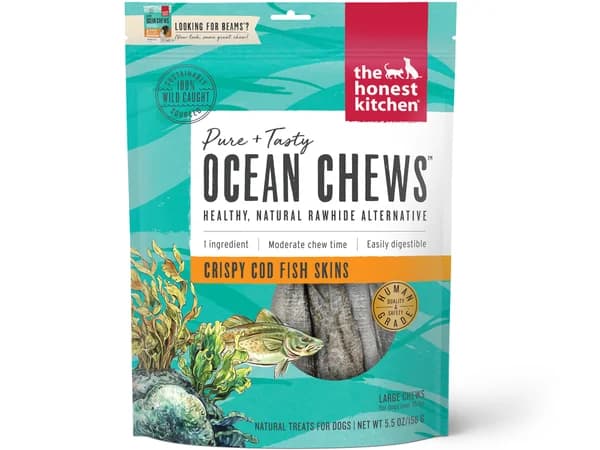
Beef liver is extremely nutrient-dense, and the most common cause of digestive upset is simply feeding too much too quickly. Liver is particularly high in vitamin A, which in excess can cause gastrointestinal distress. Start with one small piece per day and increase gradually over a week. If your dog tolerates one piece but reacts to three, you have found the threshold -- stay below it. Persistent digestive issues after small amounts may indicate that your dog does not tolerate beef well, in which case a different protein source like fish-based Honest Kitchen Ocean Chews would be worth trying.
How does Stewart compare to Stella and Chewy's freeze-dried treats?
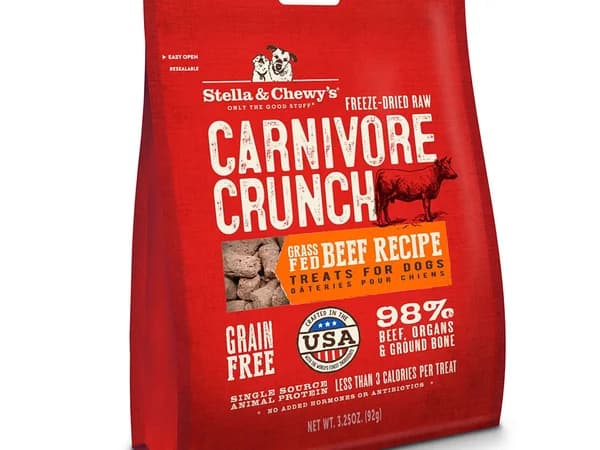
Both are single-ingredient, freeze-dried raw treats, but they differ in protein source, sourcing transparency, and price. Stewart uses beef liver (organ meat), which is more nutrient-dense and aromatic than the whole muscle beef in Stella and Chewy's Carnivore Crunch. Stewart is significantly cheaper per ounce ($2.58 vs. $4.61) and comes in a much larger container (14oz vs. 3.25oz). Stella and Chewy's emphasizes grass-fed sourcing and has stronger ethical sourcing credentials. For pure training effectiveness, Stewart's liver is harder to beat. For sourcing ethics, Stella and Chewy's has the edge.
Who Is Stewart Freeze Dried Raw Beef Liver Best For?
Owners who want the purest single-ingredient treat with maximum transparency
The Bottom Line
Stewart Freeze Dried Beef Liver is as clean as it gets — one ingredient, freeze-dried, nothing else. The transparency score is a perfect 10 because there is literally nothing to hide. Dogs go absolutely wild for the smell and taste. The premium price and crumbly texture are the only downsides.
Try Stewart Freeze Dried Raw Beef Liver TodayKey Specs
Scoring Breakdown
Named protein sources, whole ingredients, absence of fillers (corn/wheat/soy), artificial colors/flavors/preservatives. Penalizes byproducts, unnamed meats, BHA/BHT/ethoxyquin.
Calorie density appropriate for treat use, nutritional value per calorie, protein-to-filler ratio. Training treats evaluated on low-cal suitability (<5 kcal/treat ideal).
Named vs unnamed protein sources, sourcing clarity (country of origin, farm certifications), traceability, absence of vague terms like "animal digest" or "meat meal."
Brand recall history over 5+ years, manufacturing standards, third-party contamination testing, FDA compliance track record.
Dog taste acceptance rate across breeds and sizes, texture quality, aroma appeal, ease of use for training or dental purposes.
Cost per treat, cost per calorie, quality-adjusted value. Best quality per dollar spent, not cheapest overall.